


Case: PepsiCo’s Tesla Semi fleet, USA — the longest-running corporate electric truck experiment
← All case studies · Charging vs Swap framework
Case: PepsiCo’s Tesla Semi fleet, USA — the longest-running corporate electric truck experiment
PepsiCo has run Tesla Semis in daily beverage logistics since 2023 — the most-documented corporate e-truck deployment in the West. What three years of real fleet data says about range, reliability, drivers and depot charging.
2026-08-08 · WattTonne case desk
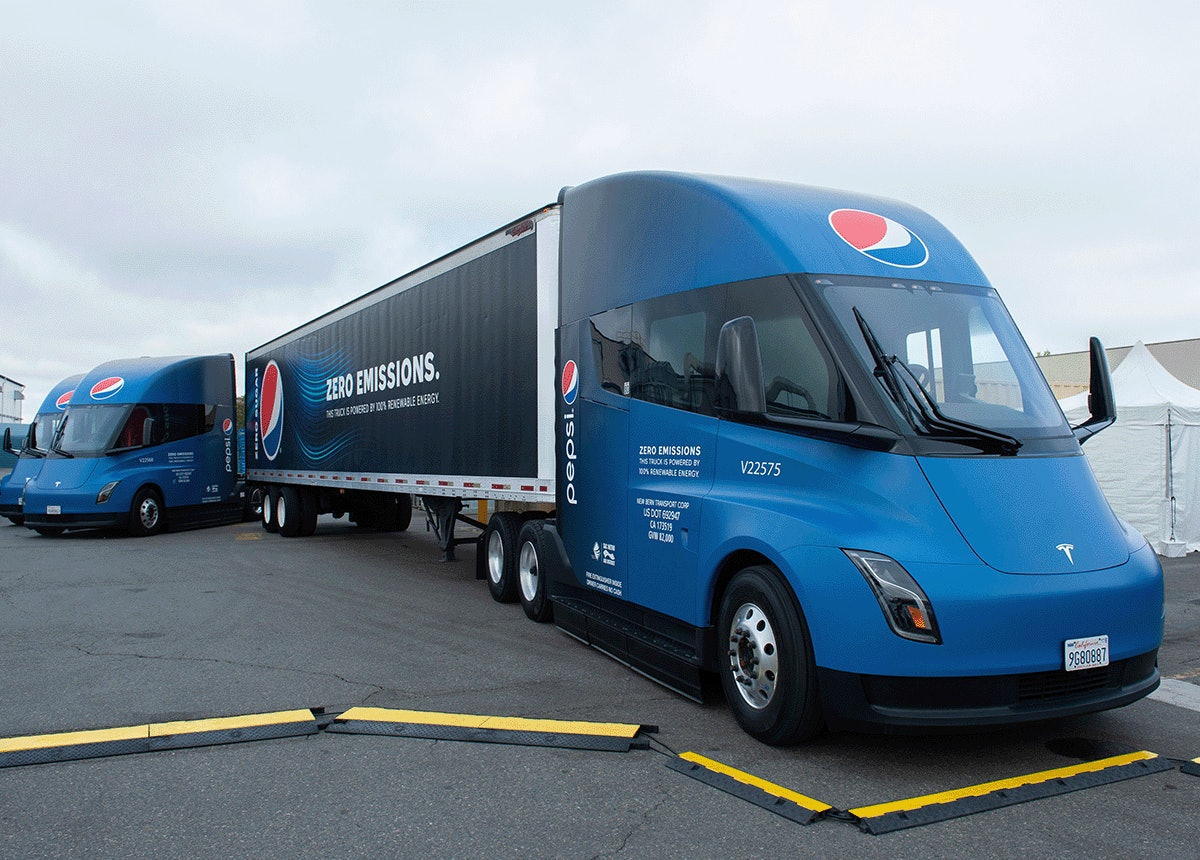
The West’s most instructive electric truck deployment isn’t European. Since 2023, PepsiCo has operated Tesla Semis out of its Sacramento-area facilities in daily beverage logistics — short and medium distribution loops, some longer runs, all documented with unusual candour in trade-press interviews and industry conferences. Three years in, the case offers what European fleets keep asking for: real fleet data, warts included, from an operator with nothing to gain from inflating the results.
The deployment anatomy. PepsiCo’s Semis work regional loops from the Sacramento depot, including demanding runs over the Sierra Nevada to Reno — a grade-and-altitude profile that tests range honestly. The company’s reported experience, as covered extensively by Commercial Carrier Journal and conference presentations: the trucks deliver their promised range in real operation (drivers reportedly prefer them for power, quiet and regenerative braking on grades), energy consumption beats the diesel baseline decisively on the cost line, and depot megawatt-class charging supports the utilisation the routes demand. PepsiCo has been equally public about the frictions: infrastructure took longer and cost more than the trucks, driver assignment needed rethinking (the centre-seat cab and the trucks’ desirability created assignment politics), and scale-up pace has trailed early headlines.
Why this case is the anti-Windrose. The value of PepsiCo’s deployment is precisely its boring credibility: a named company, named routes, named fleet managers giving quotable answers, over years. It demonstrates the evidentiary standard that makes fleet electrification bankable — the same standard our scorecard’s track-record dimension encodes, and the standard that separates Tesla’s US operation (real miles, named customers) from its European one (no approval, no service, no case). Compare the information content: PepsiCo’s fleet manager discussing Reno grades in a trade journal versus a startup’s 200-order claim with 20 deliveries. Evidence or nothing.
The charging lesson. PepsiCo’s infrastructure experience mirrors Europe’s: the depot is the project. Permitting, utility coordination, megawatt-class installation — the company’s public comments consistently identify energy infrastructure as the critical path, with timelines exceeding vehicle procurement by a wide margin. Notably, swap plays no role in the US case either: the American market answered the downtime question with depot megawatt charging on scheduled routes, validating the same duty-cycle logic (predictable loops + engineered dwell) that Europe’s depot-first pattern runs on.
What transfers to Europe. Three things. First, driver acceptance is real and valuable — recruitment and retention arguments belong in the business case, and the Semi case supplies them. Second, the centre-seat/specific-cab lesson: involve drivers and unions early in vehicle selection, because acceptance friction is manageable only when it’s anticipated. Third, the infrastructure sequencing lesson, once again: energy first, trucks second — a drumbeat from Ordos to Sacramento that European fleets ignore at their schedule’s peril. And a fourth, quieter one: the Semi remains a US-only product — a reminder that even the strongest truck is irrelevant to a fleet until approval, service and price exist in its market, which is exactly how our scorecard treats Tesla’s European line.
- Commercial Carrier Journal — PepsiCo on Tesla Semi real-world performance
- Industry conference presentations by PepsiCo fleet leadership, compiled
- WattTonne analysis
Case compiled from cited public sources; estimates are marked. Corrections: hello@wattonne.com.