


The policy maze, mapped and dated
Grants open and close, tolls change every July, and the rules differ at every border. We track what a fleet can actually claim — every entry carries its value, its deadline and its verification date. Last full verification: 2026-08-08.
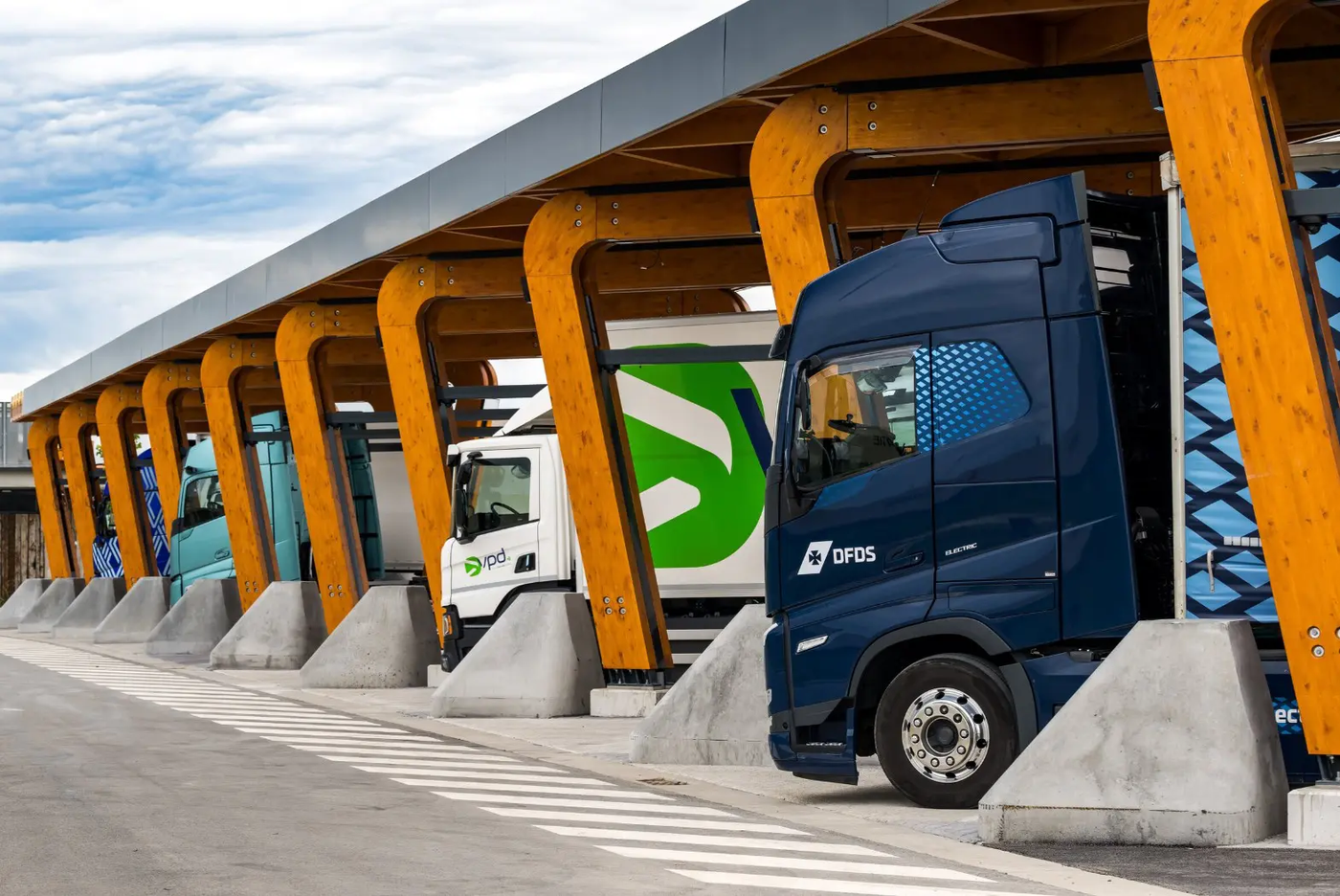
The EU frame — what sits above national schemes
| Instrument | What it does | Status (verified 2026-08) |
|---|---|---|
| CO₂ standards, Regulation (EU) 2019/1242 as amended | Fleet-average targets for truck makers: −15% frozen through 2029 (“staircase” amendment), −45% from 2030, −65% (2035), −90% (2040) | Council adopted 2026-03-30 |
| AFIR (Regulation (EU) 2023/1804) | Binding HDV charging coverage on TEN-T corridors — roughly every 100 km on the core network, phased to 2030 | In force; national implementation uneven |
| Eurovignette framework | Encourages CO₂-differentiated truck tolls; caps zero-emission toll exemptions (Germany uses the maximum period) | EP rejected blocking motion 2025-10 |
The headline numbers — what the levers are worth per truck
| Country | Purchase lever | Operating lever (per year, corridor mileage) | Deadline / horizon |
|---|---|---|---|
| Netherlands | AanZET up to €115,200/truck | Toll gap ≈ €0.166/km → ~€25,000/yr @150,000 km | 2nd window 2026-09-29; round to 2027-05-07 |
| Germany | Programme waves (variable budgets) | Full toll exemption → €30,000–50,000/yr saved vs diesel | Exemption to 2031-06-30 |
| UK | Plug-in Truck Grant up to £81,000 (>26t); depot charging 70% to £1M/site | No national CO₂ toll; ZEHID demonstrator base | Per-customer cap 100 trucks/yr from FY2026/27 |
| Belgium (Flanders) | No national purchase grant | CO₂-graded km-charge ≈ €0.038 vs €0.204/km → ~€25,000/yr | Live since 2026-07-01 |
| Norway | Enova project grants (to ~60% of extra cost in business schemes) | Toll exemption for ZE trucks | Exemption to 2030 |
| Austria | — | GO-Maut graded by CO₂ class; ZE profound reduction (transit included) | Permanent structure |
| Denmark | — | Distance-based CO₂-differentiated toll; strong depot economics | Permanent structure |
| France | Suramortissement (enhanced depreciation); ADEME calls | No national CO₂ toll — the missing lever; ZFE city zones push urban duty | Watch annual finance bills |
| Sweden | — | CO₂ differentiation on paper only (no distance-based system) — negligible today | Watch toll reform debate |
| Switzerland | — | LSVA heavy-vehicle fee structurally relieves emission-free trucks on all roads | Verify current exemption horizon |
| Czechia | — | BEVs exempt from highway toll; PHEV 75% off | Permanent structure |
| Poland | NaszEauto — cars only (PLN 40,000); trucks excluded | BEV registration-tax & excise exemption to 2029; benefit realised on western kilometres | Watch KPO heavy-vehicle pipeline |
Deep dive: launch markets
Netherlands. The AanZET machine: up to €115,200 by weight class, first-come processing, applications for the current round to 2027-05-07 or budget exhaustion. Requirements: Dutch-registered buyer, RVO-listed vehicle, binding purchase agreement at application. The 29 September second window is the nearest hard date in European fleet electrification — files must be complete by mid-September. Full Netherlands guide →
Germany. The Fourth Toll Amendment Act (in force December 2025) extended the zero-emission toll exemption to 30 June 2031 — the Eurovignette maximum. Toll Collect auto-extends existing ZE registrations to end-2027, after which re-registration is required; the exemption does not follow the truck abroad. THG quota income (12% obligation in 2026) adds a revenue line for charging operators. Full Germany guide →
Belgium. Flanders’ CO₂-graded kilometre charge (live 2026-07-01) mirrors the Dutch one; cross-border diesel rates reach ≈ €0.40/km against €0.076 for electric. Wallonia and Brussels run distinct regimes — multi-region fleets should model per-region exposure. No purchase grant at Dutch scale: Belgium is the cleanest test of pure operating economics. Full Belgium guide →
France. The outlier: no comparable national CO₂ toll, so the business case rests on energy savings, suramortissement tax treatment and ZFE city mandates. French electrification therefore concentrates in urban/regional duty and scope-3-driven contracts. Any move toward CO₂-differentiated HGV charging in a finance bill would re-rate the whole French case — we flag it the week it happens. Full France guide →
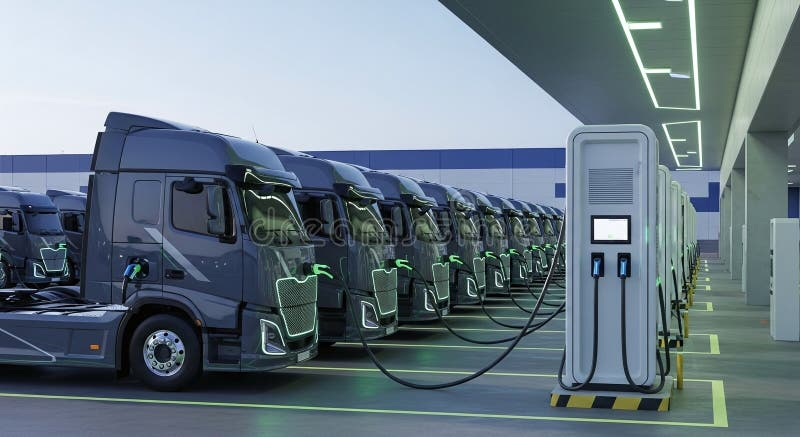
How to use this page
Policy moves your TCO more than any vehicle spec — a €0.166/km toll gap is worth more than a 10% efficiency difference. Three disciplines: (1) pull your per-country kilometres and price them at these rates in our TCO Calculator; (2) treat unconfirmed grants as upside, never as plan; (3) re-run the numbers every July and after every budget round — this page updates within a week of any change, and the newsletter flags it the same day.
Entries verified 2026-08-08 against official and primary-press sources. “Verify” flags mark schemes in revision. Corrections: hello@wattonne.com.