


CATL Qiji profile: the battery giant building the swap standard — whether truck makers like it or not
CATL Qiji profile: the battery giant building the swap standard — whether truck makers like it or not
1,325 swap stations built in one year, 900 Qiji stations targeted by end-2026, a 50:50 UK venture with Octopus — CATL is doing to truck energy what it did to batteries: owning the layer everyone else must use.
2026-08-08 · WattTonne review desk
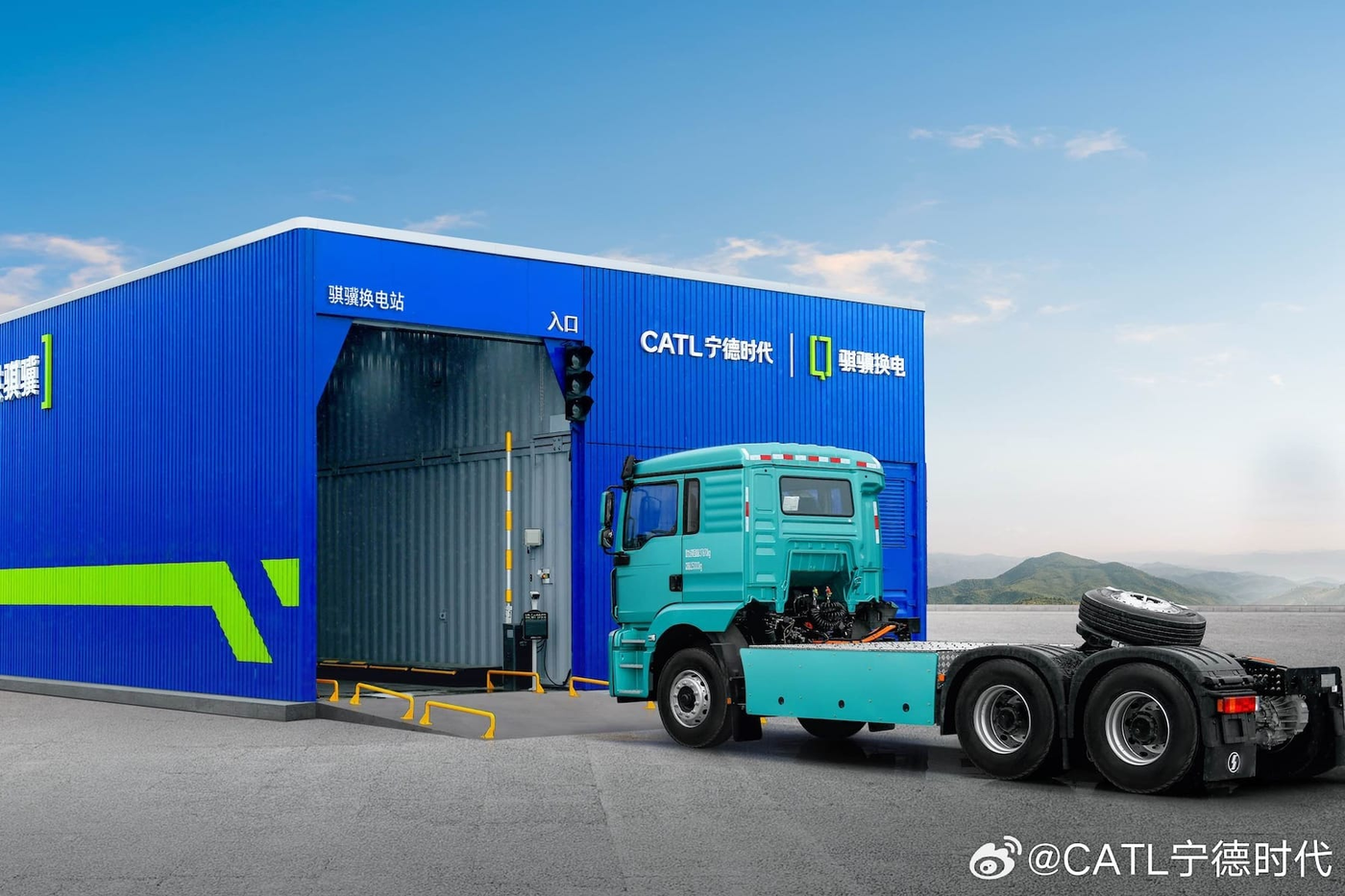
To understand European electric trucking’s infrastructure fight, follow the batteries — and they lead to one address in Ningde. CATL supplies cells to much of the global EV industry; with Qiji (骐骥), it now wants to own the standard by which trucks consume them.
The build-out. CATL constructed 1,325 battery-swap stations in a single year (2025) and targets 900 Qiji-branded stations by end-2026, concentrated on China’s industrial corridors. The Qiji system standardises the battery block, the swap mechanism (three to five minutes) and the service model (battery-as-a-service: buy the truck, rent the energy). The economics at Chinese utilisation levels are proven; the model’s European transferability is the open question our swap explainer addresses.
The Western move. June 2026’s Swaptopus venture — 50:50 with Octopus Energy — is CATL’s bridge into Europe: Qiji hardware plus Octopus’s Kraken energy-trading platform, first UK super-hubs from 2027, 30+ stations by 2035. The design insight is that European station economics need a second revenue leg: Kraken trades the stations’ battery inventory into grid flexibility markets, so the asset earns before truck volumes arrive. It is the most credible answer yet to swap’s utilisation chicken-and-egg.
The opposition. European OEMs and the Milence alliance oppose the CATL swap standard openly — on standard control, IP and openness grounds (their position, quoted in Nikkei reporting, is that a single supplier’s proprietary standard cannot be the backbone of European freight). This is not a technical dispute but a structural one: whoever owns the energy interface owns a slice of every kilometre. European manufacturers are answering with megawatt charging (MCS) precisely to keep that interface open and standardised.
WattTonne’s read. We take neither camp. Fleets should evaluate Qiji/Swaptopus the way they’d evaluate any utility: committed volumes, per-kilometre pricing, degradation guarantees, exit terms — and measure the answer against the Milence/MCS alternative on their actual routes. The standard war will be won by whoever serves fleet TCO better; everything else is positioning.
- chargedEVs on CATL build-out (2026-01-15)
- CnEVPost on Swaptopus (2026-06-22)
- Nikkei on the Milence position
- WattTonne swap research
Evidence dated as shown. Corrections and manufacturer evidence: hello@wattonne.com. WattTonne assessments are never for sale; affiliations disclosed on the About page.