


Case: Ordos, Inner Mongolia — coal corridors, extreme cold, and the harshest test of electric trucking
← All case studies · Charging vs Swap framework
Case: Ordos, Inner Mongolia — coal corridors, extreme cold, and the harshest test of electric trucking
Sub-zero winters, heavy loads, mine-to-railhead loops: the Ordos coal region is where electric heavy trucks face their toughest operating environment in China — and where swap’s cold-weather advantage becomes visible.
2026-08-08 · WattTonne case desk
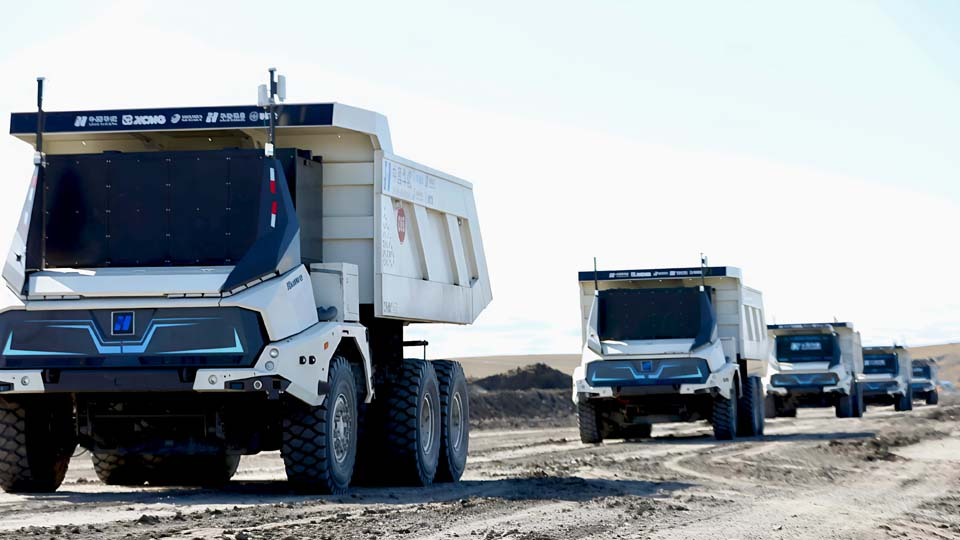
If Tangshan is where electric trucking is densest, Ordos is where it is hardest. The Inner Mongolian coal capital operates in a climate that punishes batteries (sustained minus 20°C winters), on duty cycles that punish drivetrains (heavy gross weights on mine-to-railhead and mine-to-power-plant loops), in an industry that punishes downtime (coal logistics runs around the clock). It is, in other words, the stress test every European fleet planner should want data from — because if the economics survive Ordos, they survive anywhere.
The duty-cycle anatomy. Coal logistics out of the Ordos mines follows captive, short-to-medium loops: mine to railhead, mine to power plant, mine to washery — typically tens of kilometres per leg, heavily laden outbound, empty return, around the clock. This is the ideal swap profile: fixed routes, extreme utilisation, payloads where every tonne matters and turnaround minutes directly cost coal moved. Swap operators (SPIC-backed Qiyuan Xindongli was the early mover in mining scenarios, with Qiji and others expanding) built stations at mine gates and railheads, and mine owners — like Tangshan’s steel mills, subject to environmental performance pressure — contracted fleets to match. Industry reporting describes Ordos-region deployments growing from pilot fleets to clusters in the hundreds of vehicles (audited public totals do not exist; treat specific counts as estimates).
The cold problem, answered two ways. Chinese operating experience in the north adds a data point European winter planners should note: charging a cold-soaked battery is slow — a pack at minus 20°C accepts charge at a fraction of its rated rate — while a swapped battery arrives warm from the station’s conditioning system. Swap therefore has a cold-weather operational advantage beyond its speed advantage, one that doesn’t show up in summer brochures. The countervailing evidence is equally real: battery heating loads cut winter range materially (our winter explainer’s 20–30% planning figure applies here with interest), and early fleets learned to oversize packs or shorten loops accordingly.
The autonomy layer. Ordos is also where China’s autonomous mining truck programmes run at scale — electric, driverless haulers operating in convoy inside mine concessions (the Huaneng deployments with Huawei’s autonomous stack are the public showcase). Strictly these are off-highway vehicles, not road trucks, but the technology transfer matters: the same electric drivetrains, the same battery systems, the same fleet-management software — and a proving ground where reliability data accumulates fast because the environment forgives nothing.
What transfers to Europe. Three lessons. First, extreme-duty electrification is solvable when the loop is engineered end-to-end (vehicle, energy, site) rather than bought piecemeal. Second, winter is an engineering parameter, not a deal-breaker — preconditioning, warm-swap logistics and honest range margins handle it, and Nordic fleets should read Ordos experience as evidence rather than exception. Third, the captive-volume principle again: Ordos stations work because mines are anchor tenants with guaranteed throughput, the same utilisation engineering as Yantian and Hurong — Europe’s equivalent opportunities are its own captive industrial loops (ports, quarries, waste, construction materials), where a single shipper can underwrite infrastructure the same way.
- Huawei case material on autonomous mining trucks
- Chinese industry press on Ordos coal-logistics electrification, compiled
- WattTonne winter-operations research
Case compiled from cited public sources; estimates are marked. Corrections: hello@wattonne.com.