


Case: Tangshan, Hebei — the steel city that became China’s electric truck capital
← All case studies · Charging vs Swap framework
Case: Tangshan, Hebei — the steel city that became China’s electric truck capital
Thousands of electric heavy trucks hauling ore, coal and steel in and out of the world’s largest steel cluster: Tangshan shows what happens when industrial policy, air-quality enforcement and fleet economics align.
2026-08-08 · WattTonne case desk
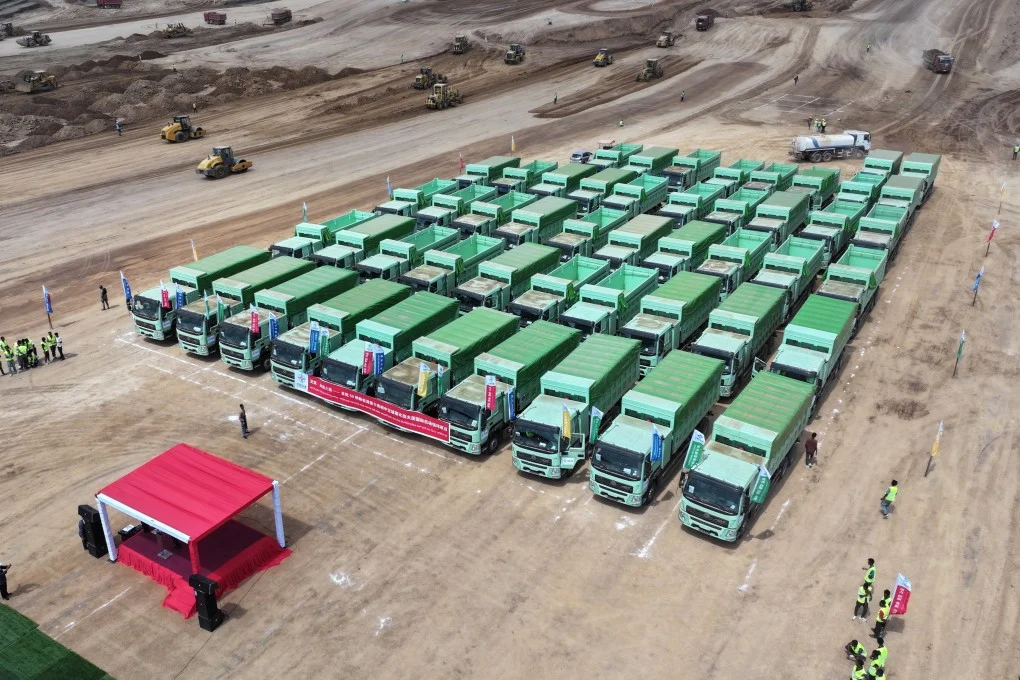
Ask Chinese industry people where to see electric heavy trucks at their densest, and one answer recurs: Tangshan, the Hebei steel city two hours east of Beijing. The logic is structural. Tangshan produces more steel than most countries; every tonne of it means ore and coal inbound, steel outbound, on short-to-medium fixed routes between mines, ports, plants and rail heads — the exact duty-cycle profile where electric trucks win first. Add chronic air-quality pressure on the Beijing-Tianjin-Hebei region, which made diesel truck emissions from steel logistics a regulatory target years before most of China cared, and you get the world’s largest natural experiment in industrial truck electrification.
The anatomy of the transition. Tangshan’s shift was pushed by enforcement before it was pulled by economics. Steel mills facing ultra-low-emission requirements were scored partly on their logistics chains: plants that moved raw materials and product in clean trucks earned environmental ratings that protected their production quotas — a mechanism that made a mill’s truck fleet a matter of its licence to operate, not merely its cost line. Mills responded the way rational actors do: they contracted or purchased large fleets of electric tractors, dump trucks and mixers for their inbound and outbound loops, and the supporting industry (charging and later swap stations along the ore corridors) followed the captive volume. Local reports describe deployments in the hundreds of vehicles per enterprise cluster; city-level totals run into the thousands (figures here are industry-reported estimates — Tangshan does not publish a single audited registry, and we flag this accordingly).
Charging and swap side by side. Tangshan is unusually instructive because both technologies coexist and the market sorts them by duty cycle. Plant-gate and short-loop work charges at depot or yard chargers — cheap, simple, sufficient. Longer ore and coal corridors with double-shift utilisation increasingly take swap trucks, serviced by stations from multiple operators (Qiji, SPIC-backed Qiyuan, Aulton and others all list Tangshan-area deployments). The sorting happened without central planning: operators ran the utilisation arithmetic our framework describes and allocated technologies accordingly. When European readers ask whether charging and swap can coexist, Tangshan’s answer is that they already do — under one condition: enough volume for both to reach their respective breakevens.
The caveats a European analyst must attach. First, the policy driver doesn’t transfer: Europe has no equivalent of tying a steel mill’s production quota to its logistics emissions, and won’t. Second, the economics are China-priced — cheap grid power, cheap vehicles, cheap construction — so published payback periods (often quoted under three years) are not portable. Third, reliability data is anecdotal: high reported fleet utilisation coexists with operator complaints about battery degradation in harsh winters and dusty conditions, which is exactly what one would expect and exactly what European warranty terms should be written against.
The transferable lesson. Tangshan proves industrial ecosystems can electrify their trucking at city scale within a few years when the customer (the steel mill) is made to internalise the emissions of its logistics. The European equivalent of that mechanism isn’t regulation of mills — it’s scope-3 accounting, which puts the same emissions on the shipper’s report and is already moving European retail and industrial procurement the same direction. Watch where scope-3 bites hardest (port cities, steel and chemical clusters) and you have the map of where European Tangshans will form. Our scope-3 explainer develops the analogy.
- SCMP on China electric truck rollout (2024)
- Chinese industry press on Tangshan steel logistics electrification, compiled
- WattTonne China research — estimates flagged
Case compiled from cited public sources; estimates are marked. Corrections: hello@wattonne.com.