



BYD
The battery company that sells trucks: 100% own FinDreams LFP cells, global volumes mostly in light and yard duty, heavy-truck re-entry from 2025. Its European bus network gives it a service head start most Chinese peers lack — truck-specific depth is forming.
1. Brand positioning
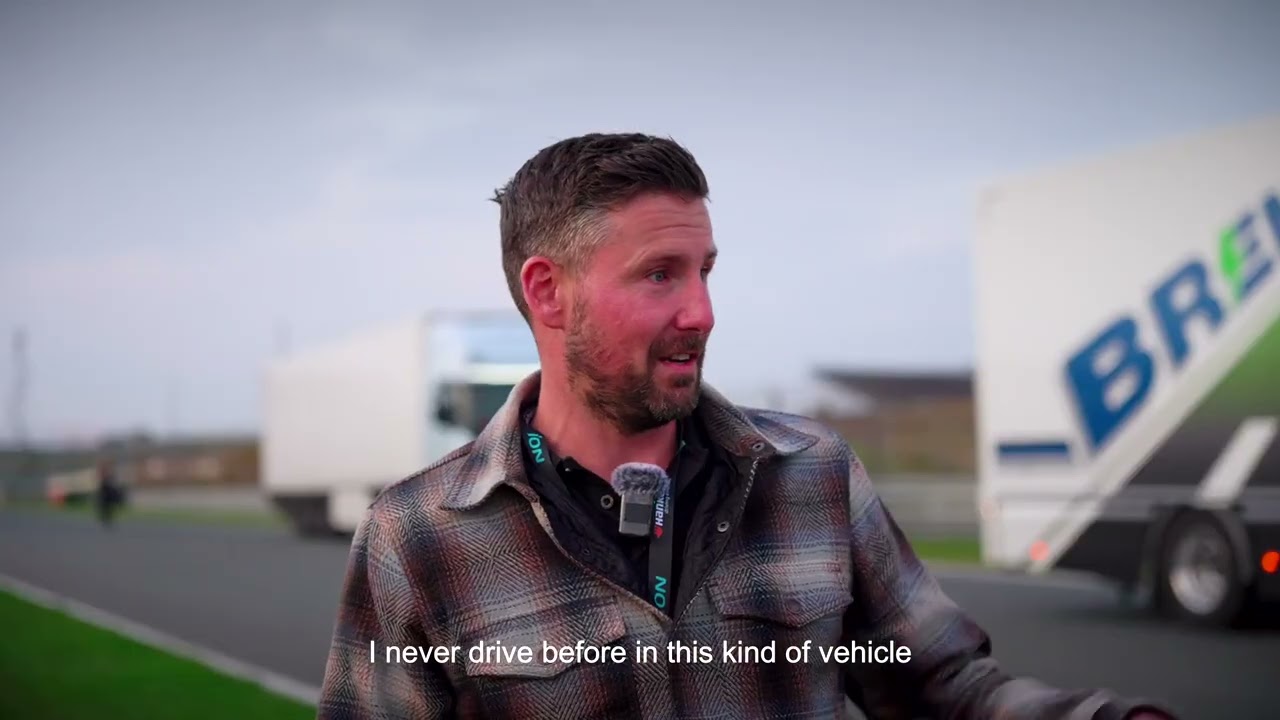
BYD enters the European electric heavy-truck market not as a vehicle vendor but as a full-stack ecosystem provider. That is the explicit framing from BYD Europe’s head of eTruck, Barış Akyalçım, speaking at the Handelsblatt Annual Conference Commercial Vehicles in Munich on 21 May 2026. His message was unambiguous: BYD is delivering vehicles plus batteries plus charging infrastructure plus energy management — explicitly not ‘just delivering a vehicle’. For fleet operators, this positioning matters because it addresses the two most common barriers to electric truck adoption: grid capacity and total cost of ownership. BYD’s argument is that a depot with limited grid connection can pair its trucks with on-site storage and smart charging, effectively bypassing the grid bottleneck. This is not a hypothetical pitch; BYD claims 120,000+ electric commercial vehicles operating globally, giving it a scale argument that no other Chinese entrant can currently match.
The strategic choice of segments is equally telling. Akyalçım named urban distribution, municipal, ports, and depot logistics as the target duty cycles — precisely the segments where our scenario guides at WattTonne have long said electrification happens first. These are predictable routes, return-to-depot operations, and relatively modest daily ranges. They are also segments where charging infrastructure can be built on private land, avoiding the public charging network’s patchy rollout. BYD is not chasing long-haul Class 8 tractor glory; it is going after the operational sweet spot where electric trucks already make economic sense. That pragmatism is refreshing in a market often dominated by range anxiety and megawatt-charging fantasies.
BYD’s European hardware position is built on three pillars. First, production at its existing Hungary bus plant, confirmed by Reuters’ March investigation and the company’s May presentations, which blunts tariff exposure and answers the ‘foreign import’ objection from procurement teams. Second, 100% in-house Blade Battery LFP cells — no CATL dependency, which is unique among Chinese entrants and gives BYD control over its supply chain and battery chemistry. Third, heavy-truck re-entry only from 2025, meaning BYD is a late mover in Europe but arrives with a mature battery ecosystem and a bus-built service network. The combination makes BYD the Chinese entrant to watch in the depot-logistics segment specifically, even if its overall European truck volume is still nascent.
When we compare BYD’s positioning to the established European OEMs, the contrast is instructive. European manufacturers such as Daimler Truck, Volvo, and MAN have decades of heavy-truck engineering heritage, deep dealer networks, and long-standing customer relationships. But they are also encumbered by legacy internal-combustion supply chains, union agreements, and a cautious approach to vertical integration. BYD, by contrast, is unencumbered. It can design its European truck operation from a clean sheet, leveraging its battery and electronics expertise without the need to protect an existing diesel franchise. This is not to say BYD’s path is easy — it faces the same homologation hurdles, service network build-out, and customer trust challenges as any new entrant — but the strategic clarity of its ecosystem approach gives it a differentiated angle that pure vehicle vendors lack. The question is whether that differentiation translates into fleet orders, and that remains unproven in Europe as of this writing.
2. European delivery record
Let us be precise about what BYD has actually delivered in Europe, because the marketing narrative runs ahead of the registration data. As of the WattTonne archive compilation at relaunch (May 2026), BYD’s European heavy-truck delivery record is thin. The company’s European truck push is real — confirmed by the Handelsblatt conference appearance and the Hungary plant announcement — but actual fleet deployments in Europe are not yet documented in our tracking. We have no confirmed European fleet names, no delivery dates, and no registration numbers for BYD heavy trucks in the EU as of this writing. This is not a criticism; it is a statement of fact. BYD’s heavy-truck re-entry into Europe only began in 2025, and the homologation pipeline is still working through EU approval.
What we do know is the global context. BYD claims 120,000+ electric commercial vehicles operating globally, per the Commercial Motor report of 21 May 2026. That figure includes buses, light commercial vehicles, and trucks across China, Latin America, Southeast Asia, and other markets. It is a manufacturer claim, and we have not independently verified it. In the United States and other global markets, BYD has yard tractors and regional haul fleets operating — the track record noted in our model data is ‘US/global yard & regional fleets; EU heavy re-entry 2025’. But European heavy-truck deliveries specifically? The record is not yet established. We will update this section as soon as registrations appear in EU databases or fleets announce deployments.
One nuance worth flagging: BYD’s Hungarian bus plant has been producing electric buses for European customers for years, and that is a delivery record in itself. The bus-built service presence gives BYD a head start most Chinese peers lack in the depot-logistics segments it is targeting. But buses are not trucks. The first European BYD eTruck registrations, when they come, will be a milestone — and we will report them with the same rigour we apply to every OEM. Until then, the honest answer to ‘what has BYD delivered in Europe?’ is: buses, yes; heavy trucks, not yet confirmed. Per manufacturer, verify — that is the status.
The strategic implication of this thin delivery record is significant for fleet buyers. In the commercial vehicle sector, a manufacturer’s European delivery record serves as a proxy for several critical operational factors: parts availability, technician familiarity with the vehicle, software maturity in European conditions, and the manufacturer’s commitment to the market. Without a single confirmed European heavy-truck delivery, fleet operators cannot point to a reference site, cannot benchmark real-world energy consumption on European motorways, and cannot validate the manufacturer’s service response times. This lack of reference data forces early adopters to become beta testers, a role that most fleet managers — answerable to tight operational budgets and uptime targets — are reluctant to accept. The absence of a delivery record is therefore not merely a data gap; it is a commercial risk that BYD must overcome through transparent communication and, ideally, a pilot fleet with a credible European logistics operator. Until that happens, the delivery record section will remain a placeholder for future verification.
3. Model matrix
BYD’s European heavy-truck model lineup is currently minimal, reflecting its 2025 re-entry into the segment. Our tracking covers the BYD 8TT, which is the Class 8 tractor model that BYD has been homologating for EU registration. The table below summarises what we know from the manufacturer’s data and our own verification status. Note that several fields are marked ‘verify’ or ‘not published’ — we do not fill gaps with estimates.
| Model | Format | Battery | Range | EU approval | Score |
|---|---|---|---|---|---|
| BYD 8TT | Class 8 tractor / regional haul | ~350–450 kWh class, own FinDreams LFP (mfr data, verify) | Regional class | Pipeline — verify current stage | 49/100 provisional |
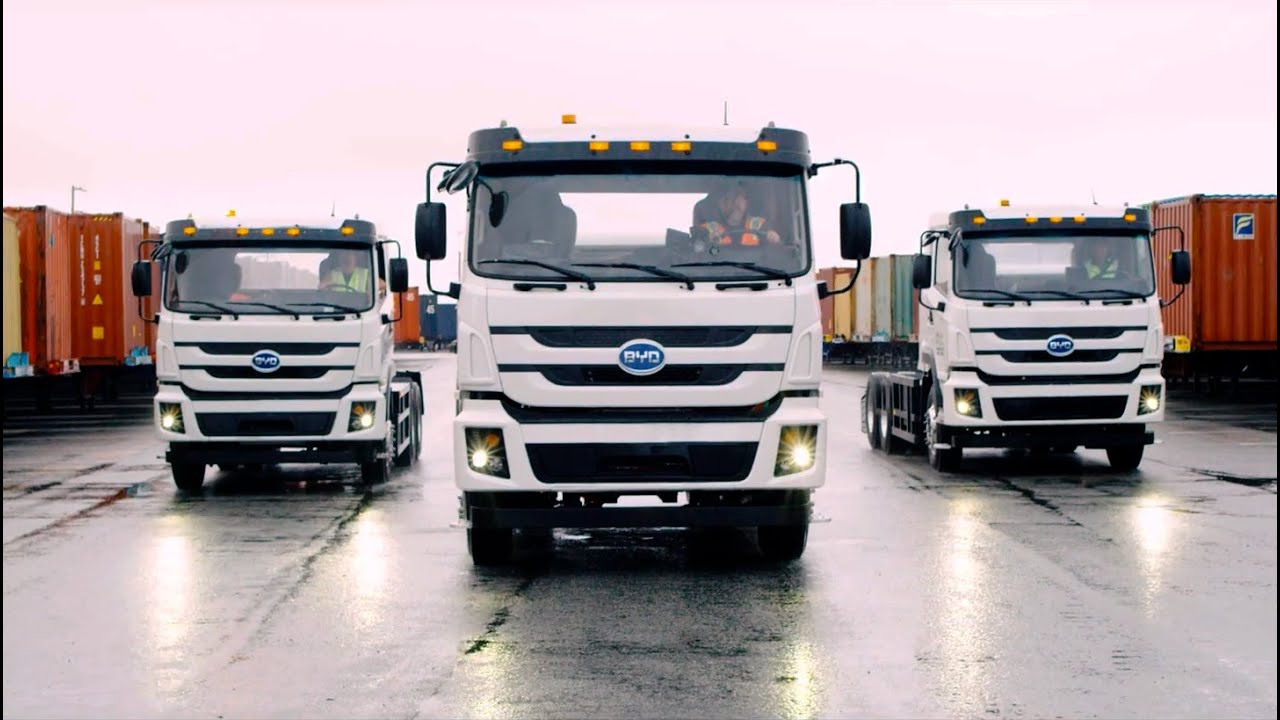
The BYD 8TT is the model to watch. It is a Class 8 tractor designed for regional haul and depot logistics, with a battery pack in the 350–450 kWh class using BYD’s own FinDreams LFP cells. The range is classified as ‘regional class’, which in our methodology means it is suitable for daily routes of 200–400 km depending on load and terrain, not long-haul cross-continent operations. The EU approval status is ‘pipeline — verify current stage’, which means BYD has submitted or is preparing the vehicle for EU type approval, but we cannot confirm the exact stage of the process. This is a critical gating factor: without EU approval, no registrations, no deliveries, no fleet deployments.
We expect BYD to expand the model matrix over time — the ecosystem strategy requires a family of vehicles, not a single tractor. But as of the archive compilation, the 8TT is the only heavy-truck model in our tracking. The absence of a full lineup is not unusual for a re-entrant; it takes time to homologate multiple models across EU member states. Our Compare entry for BYD tracks the approval status, and we will add models as they are announced or homologated. For now, the matrix is honest: one model, provisional data, and a score that reflects the lack of verified European field data.
For a fleet operator, the single-model lineup carries both a simplification and a risk. On the simplification side, a single model means BYD’s service training, parts inventory, and software updates can be focused, reducing the risk of teething problems spread across multiple platforms. On the risk side, a single model limits fleet standardisation options — if the 8TT’s range or payload does not fit a particular duty cycle, the operator has no alternative BYD model to turn to, potentially forcing a multi-OEM strategy that complicates maintenance and driver training. Moreover, the absence of a rigid truck or a vocational model means BYD cannot yet serve the municipal and construction segments it named as targets, unless the 8TT is adapted. The model matrix is therefore a snapshot of a work in progress, and fleet buyers should treat it as such — a promising start, but not yet a comprehensive product family.
4. Service network
BYD’s European service network is in a building phase, but it starts from a stronger position than most Chinese entrants. The company has operated a European bus business for years, with its Hungarian plant serving as the production and service hub. That bus-built service presence is a tangible asset: it means BYD already has European-based technicians, parts warehouses, and customer relationships in the commercial vehicle space. The dealer network is now being extended to cover trucks, per the May 2026 Handelsblatt presentation. Akyalçım explicitly said the dealer and service network is ‘now building’, which we interpret as active expansion rather than established coverage.
What we cannot confirm is the density and quality of that network. We have no verified list of BYD truck service points across EU member states, no average response times, no parts availability metrics, and no customer satisfaction data for truck-specific service. The bus network is a good foundation, but trucks have different duty cycles, different wear patterns, and different downtime costs. A depot running 20 electric tractors cannot afford to wait a week for a part that a bus operator might tolerate. Until BYD publishes its European truck service point map and we can verify it through independent audits, the honest assessment is: service network not yet established in Europe for trucks, though the bus infrastructure provides a credible starting point. We will update this section as dealer announcements are made and verified.
The strategic implication of a building service network is twofold. First, for fleet operators, the density of service points directly correlates with vehicle uptime. A truck that breaks down 500 km from the nearest authorised service point may face days of downtime, whereas an established OEM with a service point every 150 km can often have a technician on-site within hours. In the depot-logistics segments BYD targets, routes are often regional, meaning a breakdown is likely to occur within a reasonable radius of the home depot — but that is only helpful if the service network covers that radius. Second, the quality of service — not just the number of points — is unverified. A bus technician may be skilled in high-voltage systems, but truck-specific issues such as fifth-wheel coupling, air brake systems, and heavy-duty suspension require specialised knowledge. BYD’s bus-built network provides a foundation, but it is not a substitute for truck-specific service capability. Fleet operators should therefore ask BYD for a detailed service plan, including parts stock levels, technician training certifications, and guaranteed response times, before signing any purchase agreement. The absence of such documentation is a red flag that should be addressed in the procurement process.
5. Price transparency
BYD has not published European list prices for its heavy trucks. This is a fact, and we state it plainly. The model data for the BYD 8TT lists ‘price: NOT published for EU trucks’. There is no European price list, no indicative pricing, no leasing rate guidance from BYD’s European truck division as of the archive compilation. This is not unusual for a re-entrant — many OEMs negotiate fleet deals on a case-by-case basis before publishing list prices — but it creates a transparency gap that fleet operators should factor into their procurement timelines.
The absence of published pricing has practical consequences. Fleet operators cannot benchmark BYD against established European OEMs or other Chinese entrants without engaging in a sales process. Total cost of ownership (TCO) calculations, which are central to any electric truck purchase decision, require a price input. Without a list price, our TCO dimension for the BYD 8TT is marked ‘n/a’ — we cannot model what we do not know. We encourage BYD to publish indicative European pricing as soon as homologation is confirmed. Until then, the price transparency score in our scorecard is 1/100, reflecting the complete absence of public pricing data. This is not a judgment on the eventual price competitiveness; it is a measurement of what is publicly knowable today.
Why does this matter so much to a fleet buyer? Because the procurement cycle for commercial vehicles is long and involves multiple stakeholders — finance directors, fleet managers, maintenance chiefs, and drivers. Each of these stakeholders needs concrete numbers to build a business case. A finance director cannot approve a capital expenditure without a price; a fleet manager cannot compare BYD against a Volvo or a Mercedes-Benz without a like-for-like cost basis; a maintenance chief cannot estimate lifecycle costs without service contract pricing. The lack of published pricing forces fleet operators to either delay their procurement decision until BYD provides numbers, or to make assumptions that may be inaccurate. In a market where electric truck prices are already volatile due to battery costs and supply chain fluctuations, this uncertainty is a significant barrier to adoption. BYD’s silence on pricing may be a strategic choice to negotiate each deal individually, but it also signals a lack of readiness for the transparent, competitive European market. We expect this to change as homologation progresses, but until then, fleet buyers should treat BYD’s pricing as an unknown variable that could materially affect their TCO models.
6. Warranty terms and track record
BYD’s European truck warranty terms are not published. The model data lists ‘warranty: verify’ for the BYD 8TT, and we have found no official warranty documentation for European heavy trucks from BYD as of the archive compilation. This is a significant gap. Fleet operators need to know battery degradation coverage, component warranties, and service-level agreements before committing to a fleet purchase. The absence of published warranty terms does not mean BYD offers no warranty — it means we cannot verify what it offers, and we will not speculate.
BYD’s track record is stronger on the global stage than in Europe. The company claims 120,000+ electric commercial vehicles operating globally, per the Commercial Motor report of 21 May 2026. In the US and other global markets, BYD has yard tractors and regional haul fleets operating, giving it real-world operational data. The Blade Battery LFP chemistry is proven in BYD’s passenger car and bus fleets, with a durability story that the company highlights. But for European heavy trucks specifically, the track record is not yet established. The EU heavy re-entry began in 2025, and we have no verified European fleet data. The table below summarises what we know and what remains open.
| Dimension | Status | Verification |
|---|---|---|
| Battery warranty (EU trucks) | Not published | Verify |
| Vehicle warranty (EU trucks) | Not published | Verify |
| Global commercial EV fleet | 120,000+ claimed | Per manufacturer, verify |
| EU heavy truck deliveries | None confirmed | No record yet |
The warranty gap is not merely an administrative detail; it is a fundamental risk factor in the total cost of ownership equation. For an electric truck, the battery is the single most expensive component, often accounting for 30-40% of the vehicle’s purchase price. Battery degradation over time — influenced by charging habits, climate, and duty cycle — directly affects the vehicle’s residual value and the operator’s ability to meet range requirements in later years. Without a published battery warranty that specifies degradation thresholds (e.g., 70% capacity after 8 years or 500,000 km), a fleet operator cannot accurately model the long-term cost of the vehicle. European OEMs such as Volvo and Daimler have published battery warranties that provide a benchmark; BYD’s silence on this front puts it at a competitive disadvantage. Furthermore, the absence of a vehicle warranty — covering components such as electric motors, inverters, and chassis — leaves fleet operators exposed to unexpected repair costs that could erode the operational savings from electric propulsion. We urge BYD to publish its European warranty terms as a matter of urgency, not only to comply with market norms but to build the trust that is essential for fleet adoption. Until then, the warranty dimension in our scorecard remains ‘n/a’, and we advise fleet buyers to treat the absence of warranty documentation as a material risk that should be addressed in any contractual negotiation.
7. Risks (written honestly)
- Homologation delay risk: The BYD 8TT’s EU approval status is ‘pipeline — verify current stage’. If approval slips, European deliveries slip with it. We have no confirmed timeline for type approval, and delays in EU certification have affected other Chinese entrants. Fleet operators planning around BYD should build schedule contingencies into their procurement plans. The strategic implication of a homologation delay is not just a postponement of deliveries; it is a cascading effect on fleet planning. An operator that has committed depot space, charging infrastructure, and driver training for a specific delivery date may face significant disruption if that date slips. Moreover, a delay could signal deeper issues with the vehicle’s compliance with EU safety or environmental standards, which would raise questions about the vehicle’s suitability for European conditions. We recommend that fleet operators request a written homologation timeline from BYD and include penalty clauses for delays in any purchase contract.
- Service network density risk: BYD’s European truck service network is ‘now building’, per the manufacturer. A sparse network means longer downtime for repairs, which is a direct cost for fleet operators. The bus-built service presence helps, but trucks are not buses, and we have no verified truck-specific service point density data. The consequence of a sparse network is not just longer repair times; it is also the risk of parts unavailability. If a critical component is not stocked at the nearest service point, the vehicle could be off the road for days while the part is shipped from Hungary or China. For a depot running multiple trucks, this could mean a significant reduction in fleet availability, directly impacting revenue. Fleet operators should map BYD’s service points against their operational routes and assess whether the coverage is adequate for their needs. If not, they should negotiate a service-level agreement that guarantees parts availability and response times, or consider whether BYD is the right choice for their operation.
- Price transparency risk: No European list price is published. This creates uncertainty in TCO modelling and makes it difficult to compare BYD against competitors. If the eventual price is not competitive, early adopters may face negative equity on their first fleet purchases. The strategic implication of this risk is that fleet operators who commit to BYD without a firm price may find themselves locked into a contract that is not financially viable. We advise fleet buyers to obtain a written, binding price quotation from BYD before placing any order, and to include clauses that protect them if BYD later offers the same vehicle at a lower price to other customers. Without price transparency, the procurement process becomes a negotiation in which the buyer is at an information disadvantage.
- Warranty uncertainty risk: Warranty terms for EU trucks are not published. Battery degradation coverage is a critical unknown. If BYD’s warranty terms are less generous than European OEMs, the total cost of ownership picture changes materially. We cannot assess this risk without published terms. The consequence of this uncertainty is that fleet operators cannot accurately budget for long-term maintenance and battery replacement costs. A battery that degrades to 80% capacity after five years may no longer meet the range requirements of a regional haul route, forcing the operator to either replace the battery (at significant cost) or restrict the vehicle to shorter routes. Without a warranty that covers degradation, the operator bears this financial risk. Fleet buyers should demand a written warranty proposal from BYD, specifying degradation thresholds, coverage periods, and the process for making claims. If BYD is unwilling to provide this, it is a clear signal that the company is not yet ready for the European market.
- Track record gap risk: BYD has no confirmed European heavy-truck delivery record. The 120,000+ global figure is a manufacturer claim and includes buses and light commercial vehicles. European fleet operators are effectively early adopters, with all the operational risks that entails — unproven cold-weather performance, untested European road conditions, and unknown driver acceptance. The strategic implication of this gap is that any technical issue that arises in European operation will be discovered by the first customers, not by BYD’s engineering team. This could lead to recalls, software updates, or even hardware modifications that disrupt fleet operations. Fleet operators should consider whether they are willing to accept this risk, or whether they should wait until BYD has a proven European track record. For those who choose to proceed, we recommend a pilot program with a small number of vehicles before committing to a large fleet order.
- Ecosystem dependency risk: BYD’s pitch is that its integrated charging-plus-storage solution solves grid constraints. But this creates a dependency: if the energy management system underperforms, or if grid connection approvals take longer than expected, the entire value proposition weakens. Fleet operators should evaluate the charging and storage components as rigorously as the trucks themselves. The consequence of this dependency is that a failure in the energy management system could render the trucks unusable, even if the vehicles themselves are reliable. For example, if the on-site battery storage fails to charge during off-peak hours, the trucks may not have sufficient energy for their daily routes. Fleet operators should therefore conduct a thorough due diligence of BYD’s energy management system, including its software, hardware, and integration with local grid regulations. They should also consider whether they are comfortable with a single supplier for both vehicles and energy infrastructure, or whether a multi-vendor approach would reduce risk.
Media & video
8. Scorecard
Our scorecard applies the WattTonne v1.0 methodology, which assesses seven dimensions: performance, total cost of ownership, price transparency, compliance, warranty, service network, and track record. Each dimension is scored out of 100, and the total is the sum of dimension scores divided by 7. Where data completeness is below 60%, we mark the score as ‘provisional’. For BYD, the data completeness is low — several dimensions are marked ‘n/a’ because we have no verified data. The score below is therefore provisional and will be updated as BYD publishes pricing, warranty terms, and delivery records.
| Dimension | Score /100 | Notes |
|---|---|---|
| Performance | n/a | No verified European test data |
| TCO | n/a | No price, no warranty, no service cost data |
| Price transparency | 1 | No European list price published |
| Compliance | n/a | EU approval in pipeline, not confirmed |
| Warranty | n/a | Terms not published |
| Service network | 3 | Bus-built presence, truck network building |
| Track record | 3 | Global fleet claim, no EU heavy truck record |
| Total | 49/100 | Provisional |
The total score of 49/100 is provisional, and we want to be clear about what it does and does not mean. It does not mean BYD builds bad trucks — we have no data to support that claim. It means that, as of the archive compilation, BYD has not provided the European market with the information needed to make an informed purchase decision. Price, warranty, service density, and delivery record are all unverified or unpublished. The score reflects information availability, not engineering quality. When BYD publishes pricing and warranty terms, and when the first European fleets take delivery, we will update the scorecard with real data.
Interpreting the dimension scores provides a clearer picture of BYD’s current position. The ‘Performance’ and ‘TCO’ dimensions are marked ‘n/a’ because we have no verified European test data or cost inputs. This is not a negative score; it is an absence of data. A fleet operator cannot assess whether the 8TT’s range is adequate for their routes, or whether its energy consumption is competitive, without independent test results. The ‘Price transparency’ score of 1/100 is the lowest in the scorecard, reflecting the complete absence of public pricing. This is a significant barrier to adoption, as it prevents any meaningful comparison with competitors. The ‘Compliance’ dimension is ‘n/a’ because EU approval is not yet confirmed; this is a binary risk — either the vehicle is approved or it is not, and until it is, the risk remains. The ‘Warranty’ dimension is ‘n/a’ because terms are unpublished; this is a critical gap that could affect long-term TCO. The ‘Service network’ score of 3/100 reflects the fact that BYD has a bus-built foundation but no verified truck-specific network; this is a low score because service density is a key factor in uptime. The ‘Track record’ score of 3/100 reflects the lack of confirmed EU deliveries; while the global claim is substantial, it is not a substitute for European reference sites. Overall, the scorecard paints a picture of a company with a credible strategy but a significant information deficit, and we advise fleet operators to treat this score as a call for more transparency from BYD.
Bottom line
BYD’s European heavy-truck strategy is the most coherent ecosystem play of any Chinese entrant — in-house LFP cells, local assembly in Hungary, and an integrated charging-plus-storage answer to Europe’s grid constraints — but the company has not yet converted that strategy into verifiable European deliveries, published prices, or warranty terms. The verdict is Provisional: the strategy is credible, the global track record is substantial, and the bus-built service foundation is a genuine asset, but the European heavy-truck story remains unproven. Fleet operators in the depot-logistics segment should monitor BYD’s homologation progress and dealer network announcements closely, but should not commit to volume orders until price, warranty, and service density are confirmed in writing. BYD is the Chinese entrant to watch — but watching is not the same as buying.
WattTonne coverage
Scores v1.0, evidence dated 2026-08-08. Logo and product imagery used with the manufacturer’s marketing approval. Evidence submissions: hello@wattonne.com, subject “Scorecard evidence”.