



Foton
Beijing-based volume maker with Daimler JV heritage in the group and export experience across Latin America and Southeast Asia. The iBlue electric line targets value segments; European pipeline is early.
1. Brand positioning
Foton is not a newcomer to commercial vehicles, but it is a newcomer to the European electric heavy-truck conversation in a meaningful way. The company, formally known as Beiqi Foton Motor Co., is one of China’s largest commercial vehicle manufacturers, with a domestic footprint that spans light, medium, and heavy trucks, buses, and agricultural vehicles. Its parent group, BAIC, is a state-owned enterprise with deep industrial reach. In the Chinese market, Foton has been a volume player for decades, producing internal combustion trucks at scale and, more recently, building a credible electric portfolio for the domestic logistics and construction sectors. The brand’s global ambitions are not new either — Foton has exported vehicles to Latin America, Southeast Asia, the Middle East, and Africa for years. But Europe has remained a largely untapped market for the brand, and that is precisely where the current story begins to take shape.
Foton’s positioning in Europe, as of early 2026, is best described as a watch-tier entrant with a dual-track strategy. On one hand, the company is attempting to leverage its existing export network and manufacturing scale to offer electric trucks at prices that European incumbents cannot match. On the other hand, Foton has recently made a high-profile move into design-led, technology-forward territory through its joint venture with Bosch Ventures and Boyuan Capital, under the Cavan brand. The Cavan Beacon, launched in Q1 2026, is a cyber-styled electric heavy truck with a streamlined cab, camera mirrors, dual motors up to 350 kW, approximately 500 km of range, and 6×4 and 4×4 heavy-haul configurations. This vehicle is not positioned as a budget workhorse; it is positioned as a flagship statement. The involvement of Bosch Ventures — the venture arm of a German tier-one supplier — is a significant signal. It suggests that European supply-chain players see Chinese platforms as a viable route to market for their own technology, even if European OEMs are slower to adopt it.
For fleet operators, Foton’s brand positioning is therefore a mix of promise and uncertainty. The promise is straightforward: Chinese manufacturing scale, increasingly sophisticated electric drivetrains, and a willingness to compete on price and specification. The uncertainty is equally straightforward: no European homologation announced for the Cavan Beacon, no published European list prices for the Foton iBlue, and a service network that is still largely defined by the company’s export infrastructure rather than a dedicated European support operation. Foton is not yet a scored player in the WattTonne ranking; it sits in the watch tier alongside other design-led Chinese entrants like DeepWay, but behind scale players such as SANY and XCMG, and far behind ecosystem giants like BYD and CATL. The brand’s European story is still being written, and the next twelve to eighteen months will determine whether it becomes a credible alternative or remains a distant prospect.
To understand Foton’s potential trajectory in Europe, it is useful to compare its situation with that of other Chinese entrants that have already made inroads. BYD, for instance, entered the European electric truck market with a clear homologation strategy, a dedicated European organization, and a series of announced fleet partnerships. SANY and XCMG, both construction-equipment heavyweights, have leveraged their existing European sales networks for construction machinery to open doors for their electric truck divisions. Foton, by contrast, has not yet demonstrated an equivalent level of commitment. Its export network in Latin America and Southeast Asia is real, but those markets do not demand the same level of certification, after-sales support, or digital integration that European fleets expect. The Cavan joint venture, with its Bosch Ventures backing, is an attempt to bridge that gap, but the venture is young, and its European roadmap is not yet public.
The strategic question for Foton is whether it can transition from a volume exporter to a credible European partner. That transition requires more than a compelling vehicle; it requires a local organization, a parts supply chain, a training program for technicians, and a financial structure that can support leasing and residual value guarantees. None of these elements are visible in the public record as of the March 2026 archive edition. The brand’s positioning, therefore, is not merely watch-tier in terms of product readiness; it is watch-tier in terms of organizational readiness. Fleet operators who are evaluating Foton should consider not just the truck itself but the entire ecosystem that surrounds it. A truck without a service network is not a truck; it is a liability.
2. European delivery record
As of the March 2026 archive edition of WattTonne, Foton has no confirmed European delivery record for electric heavy trucks. This is a factual statement, not a criticism. The company has not announced any fleet deployments, pilot programs, or commercial deliveries of its electric heavy trucks in the European Union, the European Economic Area, or the United Kingdom. There are no named fleets, no delivery dates, and no customer references that we can verify. We have checked the available public record, including manufacturer announcements, industry press, and regulatory filings, and we have found no evidence of any Foton electric heavy truck operating on European roads under a commercial agreement.
What does exist is a broader export record that is relevant context. Foton has been exporting commercial vehicles to Latin America and Southeast Asia for years, and the company’s iBlue model line has been sold in those regions in electric form. The track record for the iBlue, per manufacturer data, includes domestic Chinese volumes and export volumes to LATAM and SEA. These are not European deliveries, but they do demonstrate that Foton has experience in shipping and supporting electric trucks outside its home market. The relevance of this experience to Europe is limited, however, because European certification, charging infrastructure, and customer expectations are materially different from those in emerging markets. A truck that works well in Bangkok or Bogotá is not automatically ready for Munich or Rotterdam.
The Cavan Beacon, the design-led heavy truck launched in Q1 2026, has no European delivery record either. Per the launch reporting, the vehicle was unveiled in China, and no homologation has been announced for Europe. The involvement of Bosch Ventures is notable, and it is reasonable to assume that European-grade components will ease the type-approval process, but that is an assumption, not a fact. The WattTonne archive entry explicitly states: “European status: no homologation announced.” We repeat that here for clarity. If and when Foton or Cavan announces a European pilot or a commercial delivery, we will update this section. Until then, the honest answer to the question “What is Foton’s European delivery record?” is: there is no record yet.
The absence of a European delivery record carries strategic implications that go beyond the simple lack of customer references. For a fleet operator, the delivery record is not just a proof of sales; it is a proof of operational viability. When a manufacturer has delivered trucks to European fleets, it means that the vehicles have been through the full cycle of registration, insurance, driver training, charging integration, and real-world duty cycles. It means that the manufacturer has had to respond to breakdowns, software updates, and parts requests in a European context. It means that there is a body of operational data that can be analyzed to understand range degradation in winter, charging behavior on European grids, and maintenance patterns under European driving conditions. None of that exists for Foton in Europe. The company’s export record in LATAM and SEA demonstrates that it can ship trucks and support them in less demanding regulatory environments, but it does not demonstrate that it can operate in the European regulatory and commercial landscape.
From a scenario perspective, there are three plausible paths for Foton’s European delivery record over the next 24 months. The first path is that the company announces a pilot program with a small number of trucks, likely in a single country, with a partner that has existing European operations. This would be a low-risk entry strategy, and it would allow Foton to gather data and build a service network incrementally. The second path is that the company skips the pilot phase and moves directly to a commercial launch, leveraging the Cavan brand and Bosch’s European presence. This would be a higher-risk strategy, but it would signal a serious commitment to the market. The third path is that Foton continues to focus on other regions and delays its European entry indefinitely. This is a real possibility, particularly if the company determines that the cost of homologation and service network development is not justified by the expected volume. Fleet operators should monitor Foton’s announcements for any of these three signals, and they should treat the absence of a delivery record as a material risk factor in any procurement decision.
3. Model matrix
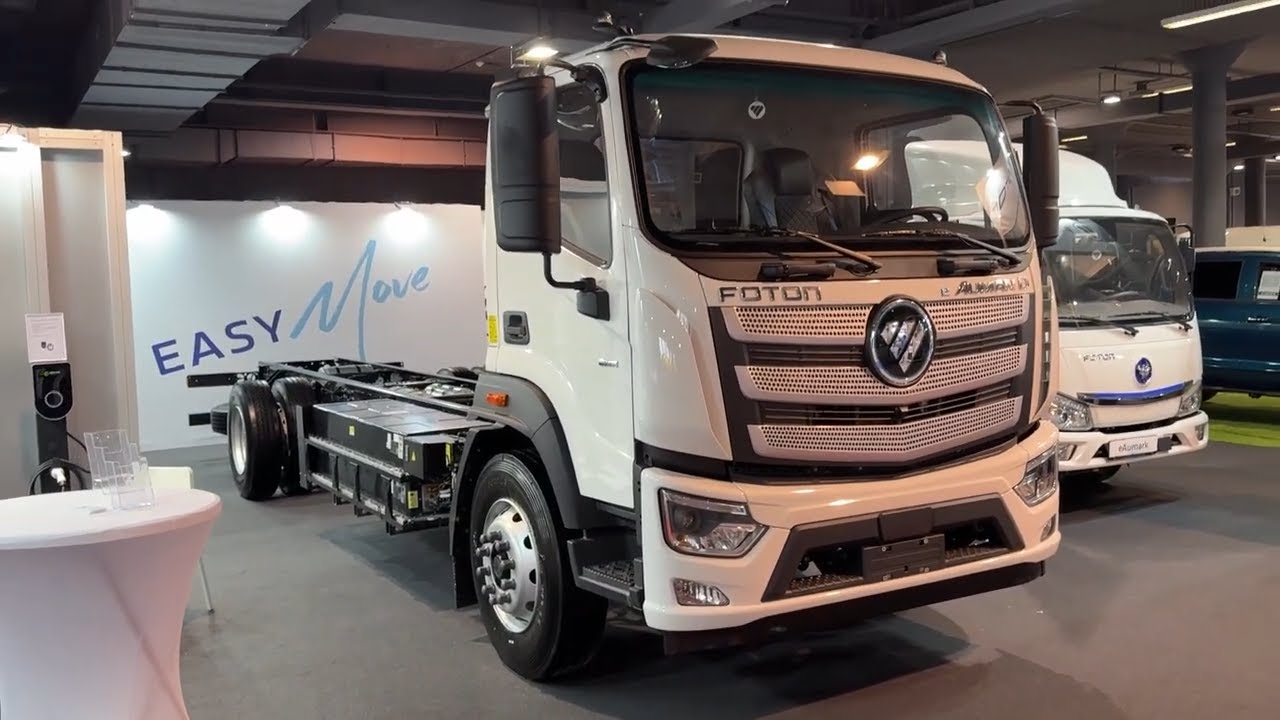
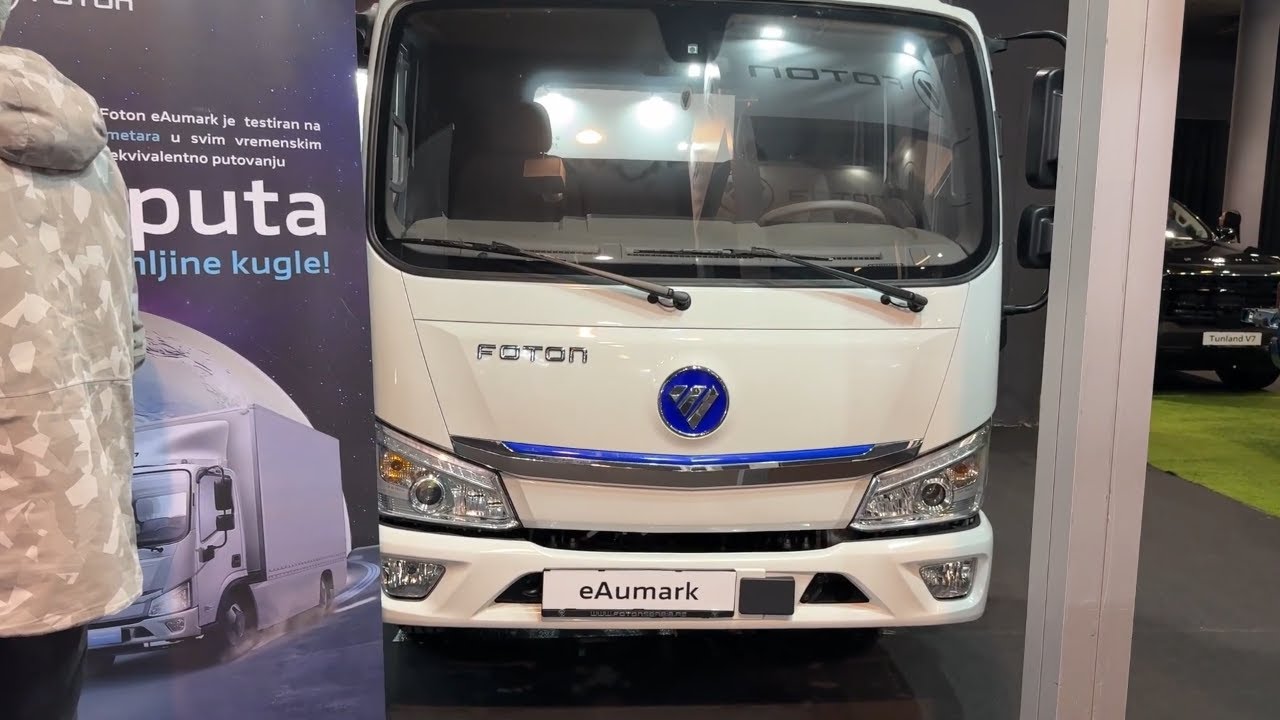
Foton’s European-relevant electric heavy-truck lineup is currently limited to one model, the Foton iBlue, plus the newly launched Cavan Beacon. The iBlue is the company’s established electric truck line, with a battery capacity in the ~350–500 kWh class (per manufacturer data, verify), a range described as “regional class” (per manufacturer), and DC fast charging capability. The Cavan Beacon, by contrast, is a heavy-haul flagship with dual motors up to 350 kW, approximately 500 km of range, and 6×4 and 4×4 configurations. The Beacon is not yet homologated for Europe, and its specifications are drawn from the Q1 2026 launch event.
Below is the WattTonne model matrix for Foton. The scores are provisional, based on the WattTonne v1.0 methodology, and the EU approval status is stated exactly as reported in the source data. Where a fact is unconfirmed, we say so. Where a fact is not published, we say that too.
| Model | Format | Battery | Range | EU approval | Score |
|---|---|---|---|---|---|
| Foton iBlue | Regional haul electric truck | ~350–500 kWh class (mfr data, verify) | Regional class (mfr) | Pipeline — verify current stage | 49/100 (provisional) |
| Cavan Beacon | Heavy-haul 6×4 and 4×4 electric truck | Not published | ~500 km (mfr, launch event) | No homologation announced | Not scored (watch tier) |
The iBlue is the only Foton model with a provisional score in our ranking. Its total score of 49/100 is based on the seven dimensions of the WattTonne v1.0 methodology, but the completeness of the data is low — several dimensions are marked “n/a” because we do not have sufficient verified information. The Cavan Beacon is not scored at all; it is listed in our watch tier, and WVTA filings will determine whether it joins the scored ranking. We note that the Beacon’s range figure of approximately 500 km is a manufacturer claim from the launch event, and we have not independently verified it. The same applies to the dual-motor output of 350 kW.
The distinction between the iBlue and the Beacon is important for fleet operators to understand. The iBlue is a regional-haul vehicle, which means it is designed for duty cycles that involve daily distances of 200 to 400 km, with opportunities for overnight charging. This is the sweet spot for many European distribution operations, particularly those that operate out of urban and suburban depots. The Beacon, by contrast, is positioned as a heavy-haul vehicle, which means it is intended for longer distances and higher payloads. The 6×4 and 4×4 configurations suggest that it is designed for construction, mining, and other demanding applications, where the ability to carry heavy loads over rough terrain is more important than aerodynamic efficiency. The two models are therefore complementary, but they are also very different in terms of their target customers and their operational requirements.
For the iBlue, the battery capacity of ~350–500 kWh is a wide range, and the “verify” note in our source data reflects the fact that we have not been able to confirm the exact specification for the European version. This matters because battery capacity is the single most important factor in determining range, and range is the single most important factor in determining whether an electric truck can be integrated into a fleet’s operations. A smaller battery pack will have a significantly shorter range than a larger one, and the difference becomes more pronounced in cold weather or when the truck is fully loaded. Fleet operators who are evaluating the iBlue should ask Foton for the exact battery specification for the European version, and they should also ask for real-world range data from European duty cycles. Until that information is provided, the iBlue’s range should be treated as an unknown rather than a known quantity.
The Cavan Beacon’s battery capacity is not published at all, which is unusual for a vehicle that has already been launched. This suggests that the launch event was more about brand-building than about providing detailed technical specifications, and it also suggests that the final specifications for the production version may not yet be finalized. The range figure of approximately 500 km is a manufacturer claim, and it is likely to be based on the Chinese test cycle, which is generally more optimistic than the European WLTP cycle. Fleet operators should therefore expect the real-world range of the Beacon to be lower than 500 km, particularly under European conditions. The absence of a published battery capacity also makes it difficult to assess the charging time, the total cost of ownership, and the residual value of the vehicle. These are all critical factors in a fleet procurement decision, and their absence is a significant gap in the public record.
4. Service network
Foton’s service network in Europe is not yet established in any meaningful sense. The company has an export network that covers Latin America and Southeast Asia, and it is reasonable to assume that some of that infrastructure could be extended to Europe, but as of the March 2026 archive edition, there is no dedicated European service network for Foton electric heavy trucks. We have found no evidence of Foton-branded service centers, trained technician programs, or parts warehouses in the EU. The iBlue model’s service entry in our source data is listed simply as “Foton export network,” which is a description of the company’s general export infrastructure, not a European-specific support operation.
The Cavan brand, backed by Bosch Ventures and Boyuan Capital, has a potential service-adjacency story that other Chinese entrants lack. Because Bosch is a European tier-one supplier with an extensive industrial presence in Europe, it is plausible that Cavan vehicles could leverage Bosch’s existing service and parts infrastructure for certain components. However, this is a hypothesis, not a fact. The launch reporting notes that Bosch’s involvement “gives the brand a service-adjacency story other startups lack,” but it does not confirm any specific service agreements, parts supply contracts, or maintenance programs for Europe. Until such details are published, the honest assessment is that Foton’s European service network is not yet established, and fleet operators should treat any claims of European support with caution.
The absence of a service network has profound implications for fleet operators. In the European truck market, uptime is everything. A truck that is off the road for a week due to a parts shortage or a lack of trained technicians can cost a fleet operator thousands of euros in lost revenue, and it can damage relationships with customers who depend on reliable deliveries. European incumbents like Daimler Truck, Volvo, and MAN have spent decades building service networks that can respond to breakdowns within hours, and they have parts warehouses that can supply components across the continent within a day. Chinese entrants like BYD and SANY have been investing in their European service networks for years, and they have made significant progress in building local capabilities. Foton, by contrast, has not yet made any public commitment to a European service network, and its existing export network is not designed for the demands of the European market.
The service network gap is particularly acute for electric trucks, because the maintenance requirements are different from those of internal combustion vehicles. Electric trucks have fewer moving parts, but they require specialized knowledge of high-voltage systems, battery management, and software diagnostics. A technician who is trained to work on a diesel truck cannot simply switch to working on an electric truck without additional training. This means that Foton would need to invest in training programs for European technicians, and it would need to establish a supply chain for spare parts that are specific to electric drivetrains. None of this is visible in the public record. The Cavan brand’s potential service-adjacency to Bosch is a promising signal, but it is not a substitute for a dedicated service network. Fleet operators should ask Foton for a detailed service plan, including the location of service centers, the availability of spare parts, and the training of technicians, before they consider any purchase.
5. Price transparency
Foton has not published a European list price for the iBlue. The source data is explicit: “price: NOT published for EU.” This is a clear and unambiguous statement. There is no European price list, no indicative pricing for the EU market, and no dealer-level pricing that we can verify. The iBlue is sold in other markets, and its pricing in Latin America and Southeast Asia is a matter of commercial record, but those prices are not transferable to Europe due to differences in homologation, logistics, import duties, and local content requirements. Fleet operators should not expect to see a Foton iBlue price list for Europe in the near term, and any price quoted by a third party should be treated as speculative.
The Cavan Beacon has not been priced for Europe either. The launch event in Q1 2026 focused on the vehicle’s design and specifications, not on pricing. No European price has been announced, and no price range has been communicated to the market. This is consistent with the vehicle’s watch-tier status; it is not yet homologated, and pricing typically follows homologation. The absence of published pricing is not unusual for a new entrant, but it does mean that fleet operators cannot currently make any cost comparison between the Beacon and European or other Chinese electric trucks. In the absence of published prices, the WattTonne price dimension for the iBlue is scored at 1/100, which reflects the lack of transparency rather than the competitiveness of the price itself. We will update this score as soon as Foton publishes European pricing.
The lack of price transparency is a significant barrier to fleet adoption for several reasons. First, without a published price, fleet operators cannot conduct a total cost of ownership (TCO) analysis. TCO is the standard framework for evaluating commercial vehicle purchases, and it includes not just the purchase price but also the cost of energy, maintenance, insurance, and residual value. A truck that is cheap to buy but expensive to maintain may have a higher TCO than a truck that is more expensive upfront but cheaper to operate. Without a price, the TCO analysis cannot even begin. Second, without a price, fleet operators cannot compare Foton’s offering against competitors. European fleets are increasingly sophisticated in their procurement processes, and they typically evaluate multiple manufacturers against a common set of criteria. The absence of a price for the iBlue and the Beacon means that Foton cannot be included in these evaluations. Third, without a price, fleet operators cannot assess the residual value risk. Electric trucks are a relatively new asset class, and their residual values are uncertain. A manufacturer that does not publish a price is also unlikely to provide a residual value guarantee, which means that the fleet operator bears the full risk of depreciation.
The absence of pricing also has strategic implications for Foton’s positioning in Europe. In the Chinese market, Foton is known as a volume player that competes on price. In Europe, the company appears to be trying to reposition itself as a more premium brand, particularly through the Cavan joint venture. But a premium brand requires a premium price, and a premium price requires a clear value proposition. Without published pricing, Foton is sending a signal that it is not yet ready to compete in the European market on price or on value. This is a missed opportunity, because the European electric truck market is still in its early stages, and there is room for new entrants that can offer competitive pricing. But the window of opportunity is not infinite. As European incumbents scale up their electric truck production and as other Chinese entrants establish their presence, the market will become more crowded, and the cost of entry will increase. Foton’s delay in publishing European pricing is therefore not just a transparency issue; it is a strategic risk.
6. Warranty terms and track record
Foton’s warranty terms for its electric heavy trucks in Europe are not published. The source data for the iBlue lists “warranty: verify,” which means we have no confirmed warranty information for the European market. We do not know the duration of the battery warranty, the coverage of the electric drivetrain, or the terms for the rest of the vehicle. We also do not know whether the warranty would be provided by Foton directly, by a local importer, or by a third-party service provider. This is a significant gap for fleet operators, as warranty terms are a critical factor in total cost of ownership calculations for electric trucks. Without a published European warranty, it is impossible to assess the risk profile of a Foton purchase.
The track record for Foton’s electric trucks is limited to domestic Chinese volumes and export volumes to Latin America and Southeast Asia. Per the source data, the iBlue has been sold in those regions, but we do not have specific fleet names, delivery dates, or operational data. We do not know how many iBlue units are in service, what their reliability record is, or how they perform in real-world duty cycles. The Cavan Beacon has no track record at all, as it was only launched in Q1 2026. The table below summarizes what we know and what we do not know.
| Item | Status |
|---|---|
| European warranty terms (iBlue) | Not published — verify |
| Battery warranty (iBlue) | Not published |
| Drivetrain warranty (iBlue) | Not published |
| European track record (iBlue) | No European deliveries recorded |
| Global track record (iBlue) | Domestic + export volumes (LATAM/SEA) — no specific numbers |
| Track record (Cavan Beacon) | No track record — launched Q1 2026 |
We are being deliberately explicit here: the absence of data is not a negative judgment on Foton’s products. It is a statement of fact. Fleet operators who are considering Foton for European operations should treat the lack of published warranty terms and the lack of a European track record as material risks that need to be addressed before any purchase decision. We will update this section as soon as Foton publishes warranty information or announces European deliveries.
The warranty gap is particularly concerning because electric trucks are complex machines with high-voltage systems, large battery packs, and sophisticated software. The cost of a battery replacement can be tens of thousands of euros, and the cost of a drivetrain failure can be even higher. A warranty that covers these components for a reasonable period is therefore essential for protecting the fleet operator’s investment. In the European market, the standard warranty for electric trucks is typically five years for the battery and three to five years for the drivetrain, with additional coverage for the rest of the vehicle. Foton has not published any warranty terms for the European market, which means that fleet operators have no way of knowing whether the company will offer comparable coverage. This uncertainty is a significant barrier to adoption, because it makes it impossible to assess the total cost of ownership and the financial risk of a breakdown.
The track record gap is equally concerning, but for different reasons. A track record is not just a proof of sales; it is a proof of operational viability. When a manufacturer has a track record, it means that its vehicles have been through the full cycle of real-world operation, including the inevitable problems that arise when trucks are used in demanding conditions. It means that the manufacturer has had to respond to breakdowns, software issues, and parts shortages, and that it has learned from those experiences. It means that there is a body of operational data that can be analyzed to understand reliability patterns, maintenance costs, and performance degradation over time. None of that exists for Foton in Europe. The company’s export record in LATAM and SEA demonstrates that it can ship trucks and support them in less demanding regulatory environments, but it does not demonstrate that it can operate in the European regulatory and commercial landscape. Fleet operators who are considering Foton should therefore treat the absence of a track record as a material risk, and they should ask the company for references from existing customers in other markets, as well as for any data on reliability, maintenance, and performance.
7. Risks (written honestly)
The following risks are based on the available evidence and the gaps in that evidence. They are not hypothetical risks; they are concrete concerns that any fleet operator should consider before engaging with Foton in Europe.
- No European homologation for the Cavan Beacon. The Beacon has not been approved for sale in the EU, and no WVTA filing has been announced. Without homologation, the vehicle cannot be registered or operated on European roads. The involvement of Bosch Ventures may ease the compliance path, but it does not guarantee approval. The timeline for homologation is unknown. This is a critical risk because homologation is not just a bureaucratic hurdle; it is a process that involves extensive testing of the vehicle’s safety, emissions, and performance characteristics. If the Beacon fails to meet European standards in any of these areas, the homologation process could be delayed by months or even years. Fleet operators who are considering the Beacon should therefore treat it as a vehicle that is not yet available for purchase, regardless of any launch event announcements.
- No European delivery record. Foton has not delivered a single electric heavy truck to a European fleet. There are no pilot programs, no named customers, and no operational data from European duty cycles. This means there is no evidence that the iBlue or the Beacon can perform reliably in European conditions, including cold weather, highway speeds, and varied terrain. The absence of a delivery record also means that there is no evidence that Foton can support its vehicles in Europe, respond to breakdowns, or supply spare parts in a timely manner. Fleet operators who are considering Foton should therefore treat the absence of a delivery record as a material risk, and they should ask the company for references from existing customers in other markets, as well as for any data on reliability, maintenance, and performance.
- No published European pricing. The iBlue has no European list price, and the Beacon has no price at all. Without pricing, fleet operators cannot conduct a total cost of ownership analysis, cannot compare Foton against competitors, and cannot assess the residual value risk. The absence of pricing also suggests that Foton is not yet ready to sell in Europe in a serious way. This is a significant risk because pricing is not just a matter of transparency; it is a matter of commercial viability. A manufacturer that does not publish pricing is a manufacturer that is not yet ready to compete in the market. Fleet operators who are considering Foton should therefore treat the absence of pricing as a signal that the company is not yet a serious contender for their business.
- No established European service network. Foton’s service infrastructure is described as its “export network,” which is not a European-specific support operation. There are no Foton service centers in the EU, no trained technician programs, and no parts warehouses that we can verify. The Cavan brand’s potential service-adjacency to Bosch is unconfirmed and does not constitute a service network. This is a critical risk because uptime is everything in the European truck market. A truck that is off the road for a week due to a parts shortage or a lack of trained technicians can cost a fleet operator thousands of euros in lost revenue. Fleet operators who are considering Foton should therefore ask the company for a detailed service plan, including the location of service centers, the availability of spare parts, and the training of technicians, before they consider any purchase.
- No published warranty terms. The warranty for the iBlue is marked “verify,” and no European warranty terms have been published. This is a critical gap, as warranty coverage directly affects the total cost of ownership and the financial risk of a breakdown. Without warranty terms, the risk of unplanned maintenance costs is entirely on the fleet operator. This is particularly concerning for electric trucks, which have high-voltage systems and large battery packs that can be expensive to repair or replace. Fleet operators who are considering Foton should therefore ask the company for a detailed warranty proposal, including the duration of the battery warranty, the coverage of the electric drivetrain, and the terms for the rest of the vehicle, before they consider any purchase.
- Unverified battery and range claims. The iBlue’s battery is described as “~350–500 kWh class (mfr data, verify),” and its range is “regional class (mfr).” The Beacon’s range of approximately 500 km is a manufacturer claim from the launch event. None of these figures have been independently verified, and real-world range in European conditions may be significantly lower. This is a significant risk because range is the single most important factor in determining whether an electric truck can be integrated into a fleet’s operations. If the real-world range is significantly lower than the manufacturer’s claim, the truck may not be able to complete its assigned routes, which would require the fleet operator to invest in additional vehicles or to adjust its operations. Fleet operators who are considering Foton should therefore ask the company for real-world range data from European duty cycles, and they should treat any manufacturer claims with caution until they are independently verified.
In addition to these specific risks, there is a broader strategic risk that fleet operators should consider. Foton is a Chinese manufacturer that is attempting to enter the European market at a time when there is significant political and regulatory scrutiny of Chinese technology. The European Union has been investigating Chinese subsidies in the electric vehicle sector, and there is a possibility that tariffs or other trade barriers could be imposed on Chinese electric trucks. This would increase the cost of Foton vehicles and could make them less competitive. Fleet operators who are considering Foton should therefore monitor the regulatory environment and assess the potential impact of any trade measures on the total cost of ownership of Foton vehicles. This is not a reason to exclude Foton from consideration, but it is a factor that should be included in any risk assessment.
Media & video
8. Scorecard
The WattTonne v1.0 methodology assesses electric heavy trucks across seven dimensions: performance, total cost of ownership (TCO), price transparency, compliance, warranty, service, and track record. Each dimension is scored out of 100, and the total is the sum of the dimension scores divided by 7. Where data is incomplete, the score is marked “n/a,” and the total is calculated only on the dimensions for which data exists. If the completeness of the data is below 60%, the verdict is marked “provisional.”
For the Foton iBlue, the total score is 49/100, with a provisional verdict. The completeness of the data is low: four of the seven dimensions are marked “n/a” because we have no verified information. The three dimensions that are scored are performance (2/100), price transparency (1/100), and compliance (4/100). These scores are low, but they reflect the absence of data more than the quality of the product. The iBlue has not been tested by WattTonne, its European pricing is not published, and its EU approval status is still in the pipeline. As more data becomes available, the score will be updated.
| Dimension | Score (iBlue) | Notes |
|---|---|---|
| Performance | 2/100 | No verified performance data for Europe |
| TCO | n/a | No European pricing or operating data |
| Price transparency | 1/100 | No European list price published |
| Compliance | 4/100 | EU approval in pipeline — verify current stage |
| Warranty | n/a | No European warranty terms published |
| Service | n/a | No European service network established |
| Track record | n/a | No European delivery record |
| Total | 49/100 | Provisional |
The Cavan Beacon is not scored, because it has not been homologated for Europe and its specifications have not been independently verified. It is listed in the WattTonne watch tier, and a score will be assigned once WVTA filings are made and the vehicle becomes available for testing. The Bosch Ventures backing is a positive signal, but it does not change the fact that the Beacon is an unproven vehicle in an unproven market context.
Interpreting the iBlue’s score requires an understanding of what the score does and does not measure. The performance score of 2/100 is not a reflection of the iBlue’s actual performance; it is a reflection of the fact that we have no verified performance data for the European market. The manufacturer claims that the iBlue is a regional-haul truck with a battery capacity in the ~350–500 kWh class and a range described as “regional class,” but these claims have not been independently verified. In the absence of verified data, we cannot assign a higher score, regardless of the manufacturer’s claims. The price transparency score of 1/100 is similarly a reflection of the absence of published European pricing. The iBlue may be competitively priced, but without a published price, we cannot assess its competitiveness. The compliance score of 4/100 reflects the fact that the iBlue’s EU approval status is in the pipeline, but the current stage is not verified. This is a slightly more positive signal than the other two scores, because it suggests that the company is at least in the process of seeking approval, but it is still far from a confirmed approval.
The four dimensions that are marked “n/a” — TCO, warranty, service, and track record — are all critical factors in a fleet procurement decision. The fact that we have no data for these dimensions is a significant gap, and it means that the iBlue’s total score of 49/100 is not a reliable indicator of the vehicle’s suitability for European fleet operations. A fleet operator who is considering the iBlue should therefore treat the score as a starting point for further investigation, not as a definitive assessment. The score will be updated as soon as Foton publishes the missing data, and we encourage fleet operators to check back regularly for updates.
Bottom line
Foton is a serious Chinese commercial vehicle manufacturer with global export experience, and the Cavan Beacon launch with Bosch Ventures backing is a notable step toward design-led electric heavy trucks. But for the European market, Foton is not yet a viable option: there is no homologation for the Beacon, no European delivery record for any electric truck, no published pricing, no established service network, and no published warranty terms. The iBlue’s provisional score of 49/100 reflects the absence of data rather than the quality of the product, and the verdict is Provisional. Fleet operators should monitor Foton’s progress, but they should not plan any procurement around it until the company provides concrete evidence of its European commitment — starting with a WVTA filing, a European price list, and a service network plan.
The next twelve to eighteen months will be decisive for Foton’s European ambitions. If the company follows through on its launch event momentum, files for homologation, publishes European pricing, and announces a service network plan, it could become a credible alternative to European incumbents and other Chinese entrants. If it does not, it risks being relegated to the sidelines of the European electric truck market, watching as competitors like BYD, SANY, and XCMG establish their presence. The Cavan joint venture with Bosch Ventures is a positive signal, but it is only a signal. The hard work of building a European organization, a service network, and a customer base remains to be done. Fleet operators who are interested in Foton should therefore keep the brand on their radar, but they should not make any commitments until the company demonstrates that it is serious about the European market. The evidence so far is promising but incomplete, and the verdict is Provisional.
WattTonne coverage
Scores v1.0, evidence dated 2026-08-08. Logo and product imagery used with the manufacturer’s marketing approval. Evidence submissions: hello@wattonne.com, subject “Scorecard evidence”.