


FAW
The state-group giant: J6P EVs run in very large domestic numbers. No European approval or structure — domestic strength, European question mark.
1. Brand positioning
FAW Jiefang is not a startup, not a niche player, and not a newcomer to commercial vehicle manufacturing. It is, by any historical measure, the founding institution of China’s truck industry. Established in 1956 as the First Automobile Works, FAW built the first domestically produced truck in the People’s Republic of China — the Jiefang CA-10, a licence-built copy of the Soviet ZIS-150. That lineage matters. When we talk about FAW Jiefang in 2026, we are talking about a state-owned industrial group with nearly seven decades of continuous production, a domestic dealer network measured in the thousands, and a product line that has consistently ranked among China’s top three best-selling heavy truck brands. This is not a company trying to find its way into electrification; it is a company that has dominated the diesel era and is now, belatedly but with state-group resources, turning its attention to battery-electric powertrains.
In the context of the European electric-heavy-truck market, FAW Jiefang occupies a peculiar position. It is not a pioneer like Tesla with the Semi, nor a fast-following incumbent like Volvo or Daimler Truck, nor a Chinese disruptor with immediate European ambitions like SANY or XCMG. FAW Jiefang is, at the time of writing, a ‘watch tier’ entrant. The company has announced no EU homologation for any of its electric models. It has no European service network, no European pricing, no European deliveries, and no confirmed timeline for entering the EU market. What it does have is scale — enormous, state-backed, diesel-era scale — and a new-energy vehicle (NEV) growth curve that, while starting from a small base, is now compounding at a rate above 200% year-on-year through 2026, per company and industry reporting compiled by the WattTonne news desk.
That growth rate deserves careful interpretation. A 200% year-on-year increase in NEV sales sounds dramatic, but the base effect is critical. FAW Jiefang’s new-energy programme was, for years, a slow starter. The company’s diesel J6 and J7 lines are among China’s best-sellers, and its traditional dealer network and bulk procurement relationships with state-owned logistics and mining groups have historically been oriented toward internal combustion. The 2026 acceleration, reported by company statements and industry reporting, marks a strategic threshold: FAW Jiefang is now pointing its diesel-era distribution depth at electrification. For European buyers, the relevant question is not whether FAW Jiefang can build electric trucks — it clearly can, and is doing so at volume in China — but whether that capability will ever be translated into a viable European product, with homologation, service, warranty, and pricing that meet EU expectations. As of this deep brand page, the answer to that question is: not yet, and no official commitment has been made.
To understand FAW Jiefang’s position fully, one must also consider the structural differences between the Chinese and European heavy-truck markets. In China, the commercial vehicle market is characterised by intense price competition, high volume, and a fragmented customer base that includes both large state-owned fleets and hundreds of thousands of independent owner-operators. The competitive dynamics are fundamentally different from Europe, where a handful of established OEMs — Volvo, Daimler Truck, MAN, Scania, DAF, and Iveco — dominate a market that prizes total cost of ownership, uptime, and after-sales support as much as purchase price. FAW Jiefang’s domestic success has been built on mastering the Chinese market’s specific demands: robust vehicles that can handle harsh operating conditions, a vast parts and service network that reaches even remote regions, and pricing that undercuts international competitors. These strengths do not automatically translate to Europe, where regulatory compliance, digital services, and sustainability reporting are increasingly decisive factors in fleet procurement decisions. The company would need to invest significantly in understanding and adapting to these European expectations, a process that typically takes years even for well-resourced manufacturers.
Moreover, the strategic calculus for FAW Jiefang is complicated by the broader geopolitical and trade environment. Chinese commercial vehicle manufacturers face potential tariff barriers, regulatory scrutiny, and political resistance in some European markets. Unlike passenger cars, where Chinese brands like BYD and MG have made significant inroads, the heavy-truck segment is more sensitive given its role in critical supply chains and national infrastructure. European fleet operators, particularly those with public-sector contracts or sustainability reporting obligations, may face pressure to source from established European manufacturers. FAW Jiefang would need to navigate these political and commercial complexities while also competing on price and technology. The company’s state-owned status could be both an advantage — providing access to capital and diplomatic support — and a liability, as European customers may view state-backed entities with caution regarding data security, supply chain resilience, and long-term commitment to the market. These factors, while not quantifiable in the same way as homologation or pricing, are nonetheless real considerations that any serious evaluation of FAW Jiefang’s European prospects must take into account.
2. European delivery record
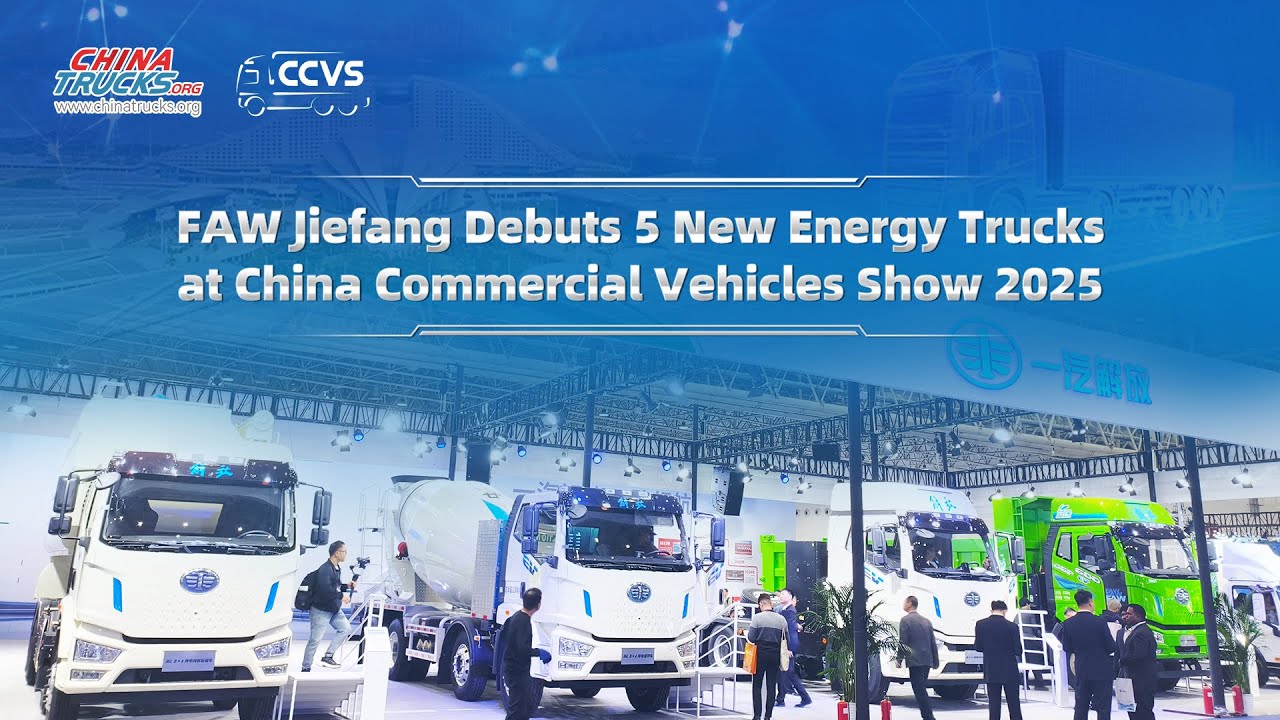
Let us be direct: FAW Jiefang has no European delivery record. There are no named fleets, no pilot programmes, no announced European customers, and no verified deliveries of any FAW Jiefang electric truck on European soil as of the 2026 archive edition compiled by WattTonne. This is not a case of unconfirmed facts awaiting verification; it is a case of a complete absence of activity. The company has not announced EU homologation for any model, has not established a European importer or distributor, and has not published any European sales or service infrastructure. Per manufacturer statements compiled in the WattTonne archive, FAW Jiefang’s NEV acceleration is entirely a domestic China phenomenon, driven by the J6P EV tractor, dump, and mixer variants, and delivered through Chinese fleet channels.
To be fair, the absence of a European record is not unusual for a Chinese truck maker at this stage of the electrification wave. SANY and XCMG, which are often cited as the aggressive Chinese entrants, have made public European moves — homologation announcements, pilot fleets, and service partnerships. FAW Jiefang has not. The company’s focus, as of the 2026 reporting, remains on its domestic market, where its NEV sales growth above 200% year-on-year is being driven by state-owned logistics and mining group procurement. There is no indication, in any company statement or industry reporting available to the WattTonne news desk, that FAW Jiefang has initiated the IVA (Individual Vehicle Approval) path or any other EU homologation route for its electric models. The model specification data for the FAW J6P explicitly states: ‘No EU approval — domestic China format (IVA path possible)’. That is the honest, complete record: no European deliveries, no European pilots, no European homologation, no European timeline.
For European fleet operators evaluating Chinese electric heavy trucks, this absence of a record is itself a data point. It means that any decision to procure FAW Jiefang trucks in Europe would be a decision to import unhomologated vehicles, likely through a grey-market channel, with no factory-backed service, no warranty enforcement, and no parts supply chain. That is not a viable procurement path for any serious fleet. The WattTonne position is clear: FAW Jiefang is a brand to watch, not a brand to buy — in Europe, at least, and at least as of the 2026 archive edition. If and when the company announces EU homologation, establishes a service network, and publishes European pricing, we will update this page accordingly. Until then, the European delivery record is: none.
The strategic implications of this absence are worth examining in depth. First, consider the competitive timeline. European electric heavy-truck sales are expected to grow significantly through the late 2020s, driven by tightening CO2 regulations, urban low-emission zones, and corporate sustainability commitments. The current market leaders — Volvo, Daimler Truck, and others — are already scaling production and building customer relationships. If FAW Jiefang were to enter the market in, say, 2027 or 2028, it would face established competitors with proven products, mature service networks, and loyal customer bases. The window for a new entrant to gain meaningful market share is narrowing, and every year of delay makes the task harder. Second, consider the regulatory environment. The EU is continuously updating its type-approval framework, safety standards, and cybersecurity requirements for vehicles. A manufacturer that has not begun the homologation process faces an increasingly complex and costly path to compliance. Third, consider the reputational dimension. In the absence of any official presence, the only FAW Jiefang trucks that might appear in Europe would be grey-market imports, which could damage the brand’s reputation before it even officially enters the market. These imports would likely lack proper certification, would not meet EU safety and environmental standards, and would provide a poor ownership experience — all of which would create negative associations that would be difficult to overcome later. For these reasons, the absence of a European delivery record is not merely a neutral fact; it is a strategic signal that FAW Jiefang has not yet made the investments necessary to compete in this market, and that any near-term entry would face significant headwinds.
3. Model matrix
The following table presents the FAW Jiefang electric model for which specification data is available in the WattTonne archive. Note that this is a single model — the J6P EV — and that FAW Jiefang’s broader NEV line includes dump and mixer variants of the same platform, per company reporting. The table is honest about what is known and what is not. Where the source says ‘verify’ or ‘not published’, we say exactly that.
| Model | Format | Battery | Range | EU approval | Score |
|---|---|---|---|---|---|
| FAW J6P EV | Tractor / dump / mixer variants (domestic China) | ~350–450 kWh class (mfr data, verify) | Regional/corridor class (mfr) | No EU approval — domestic China format (IVA path possible) | 34/100 (provisional) |
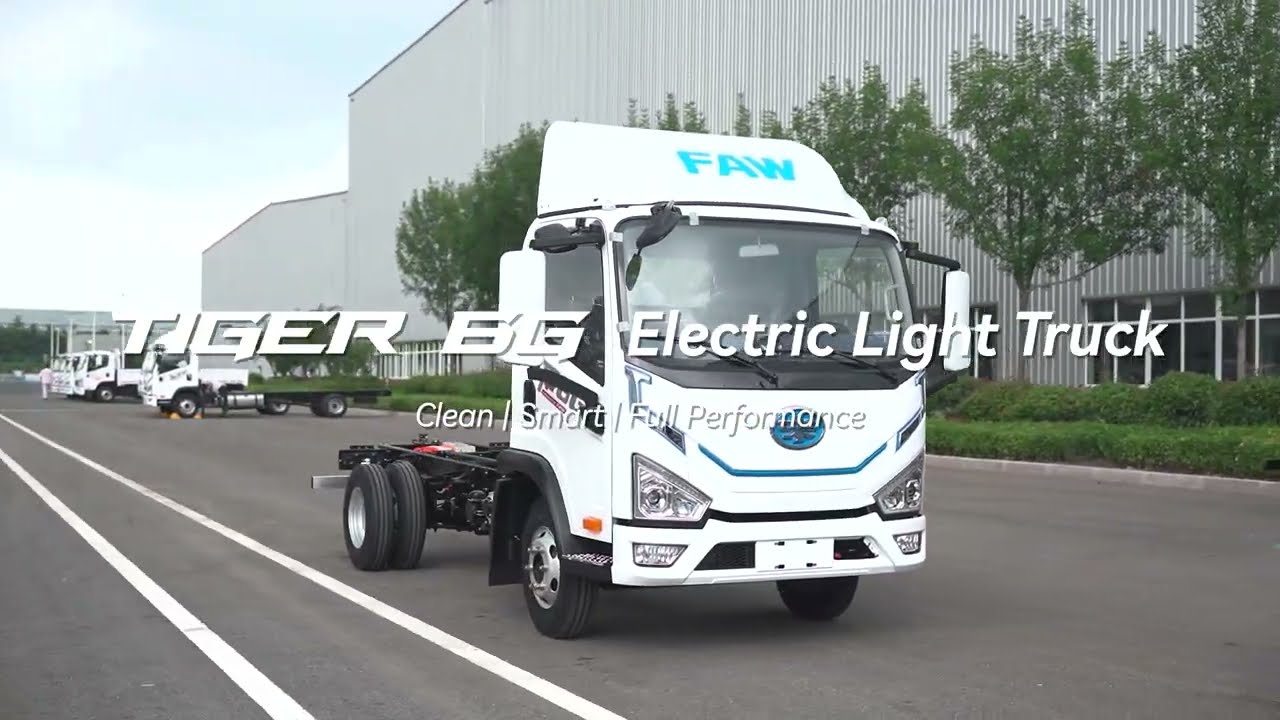
Let us expand on the single row in that table, because the J6P EV is the only FAW Jiefang electric model for which we have structured data. The battery is stated as being in the 350–450 kWh class, per manufacturer data, and we mark that as ‘verify’ because FAW Jiefang has not published detailed battery specifications in a format that European buyers can independently check. The range is described as ‘regional/corridor class’, again per manufacturer claims, which in practical terms suggests a working range of roughly 200–300 kilometres under realistic European conditions — but we do not have verified European test data, and we will not invent any. The charging specification is simply ‘DC fast charge’, which is the industry standard for this class and does not distinguish the J6P from any competitor. The EU approval status is the critical negative: no EU approval exists, and the only path forward would be the IVA route, which is a per-vehicle approval process, not a type approval, and is impractical for fleet-scale procurement.
The score of 34/100 is provisional, as noted in the table. It reflects the WattTonne v1.0 methodology, which we explain in detail in Section 8 below. For now, note that the score is low not because the truck is necessarily bad — we have no European test data to judge its performance — but because the brand scores zero or near-zero on price transparency for Europe, compliance with EU regulations, service network availability, and track record in Europe. The only dimension where FAW Jiefang scores reasonably is raw domestic track record, where the company’s large volumes in China are a genuine indicator of manufacturing capability and reliability at scale. But that domestic track record does not translate automatically to European fitness, and the score reflects that gap.
The narrowness of the model matrix itself is a significant finding. Unlike established European manufacturers that offer multiple electric models across different weight classes, applications, and range configurations, FAW Jiefang’s European-relevant electric offering is effectively a single platform. The J6P EV, while versatile in its domestic variants, has not been adapted for European market requirements — no right-hand-drive version for UK or Irish markets, no specific configurations for European semi-trailer standards, no adaptations for the EU’s Gross Combination Mass regulations, and no software localisation for European fleet management systems. This lack of market-specific adaptation is typical of a manufacturer that has not committed to a market, but it also means that even if FAW Jiefang were to announce European entry tomorrow, the product development work required to make the J6P EV suitable for European operations would take considerable time. European fleet operators should not expect a plug-and-play solution; the J6P EV, as currently specified, is a Chinese-market product that would require substantial re-engineering for European conditions, including cold-weather performance testing, European charging standard compatibility (CCS2 versus GB/T), and compliance with EU safety and environmental directives. The model matrix, in short, tells a story of a manufacturer that is still very much in the early stages of considering Europe as a market.
4. Service network
FAW Jiefang has no service network in Europe. This is not a matter of incomplete information; it is a documented absence. The model specification data for the J6P EV states, under ‘service’, simply: ‘China network; EU none’. The company’s dealer network depth, which is one of its key competitive advantages in China, is entirely domestic. FAW Jiefang’s relationship with state-owned logistics and mining groups, its bulk procurement channels, and its after-sales infrastructure are all oriented toward the Chinese market. There is no European subsidiary, no European parts warehouse, no European service partner, and no European training programme for technicians. For a European fleet operator, this means that purchasing a FAW Jiefang electric truck would leave you with no factory-backed support within thousands of kilometres.
To be precise about the implications: a European operator who somehow acquired a FAW Jiefang J6P EV would need to arrange for parts to be shipped from China, would need to find a third-party workshop willing to work on an unfamiliar vehicle, and would have no recourse to a local warranty administrator. The company has not announced any plans to establish a European service network, and the WattTonne archive contains no statement from FAW Jiefang indicating a timeline for such a network. This is in stark contrast to other Chinese entrants: SANY has announced European service partnerships, and XCMG has established a European presence. FAW Jiefang, as of the 2026 archive edition, has not. The honest summary is: not yet established in Europe, and no public commitment to establish one.
The service network gap is not merely an operational inconvenience; it has profound financial implications for any fleet operator considering the brand. In the European heavy-truck market, uptime is paramount. A truck that is off the road for repairs represents not only the cost of the repair itself but also the lost revenue from the loads it cannot carry, the potential penalties for missed delivery deadlines, and the administrative burden of arranging replacement vehicles. European manufacturers understand this and have built extensive service networks precisely to minimise downtime. Volvo, for example, offers 24/7 roadside assistance across Europe, with mobile service vehicles and a parts delivery network that can reach most locations within hours. Daimler Truck has a similar network for its Mercedes-Benz brand. FAW Jiefang, by contrast, would be starting from zero. The company would need to establish a network of service points, stock parts at strategic locations, train technicians on high-voltage systems, and integrate with European telematics and diagnostic standards. This is a multi-year, multi-million-euro investment that cannot be rushed. Even if FAW Jiefang were to announce a European service network tomorrow, it would take years to build the necessary infrastructure to a standard that European fleet operators would find acceptable. In the meantime, any FAW Jiefang truck operating in Europe would be a liability, not an asset, in terms of operational reliability.
Furthermore, the absence of a service network creates a chicken-and-egg problem for the brand. Without a service network, fleet operators will not buy the trucks. Without trucks on the road, there is no revenue to justify the investment in a service network. This is a classic market-entry barrier that has historically deterred many potential entrants to the European commercial vehicle market. Some manufacturers have attempted to overcome this by partnering with existing service providers — for example, using independent workshops or collaborating with established dealers from other brands. However, such partnerships require careful negotiation, quality control, and training, and they are not a substitute for a dedicated network. The fact that FAW Jiefang has not even announced exploratory talks with potential European service partners suggests that the company is still very much in the evaluation phase regarding Europe, rather than in the execution phase. For fleet operators, this means that any consideration of FAW Jiefang must be accompanied by a realistic assessment of the service risk: the brand cannot currently support a European fleet, and there is no evidence that it will be able to do so in the near term.
5. Price transparency
FAW Jiefang has not published any European list price for its electric trucks. The model specification data for the J6P EV states, under ‘price’: ‘NOT published for EU’. That is the complete and honest answer. There is no European price list, no indicative pricing, no leasing or financing programme, and no total cost of ownership (TCO) calculator offered by the company for European customers. This is not a minor omission; it is a fundamental barrier to any serious procurement consideration. A fleet operator cannot budget for a vehicle that has no price, cannot compare it against the Volvo FH Electric or the Mercedes-Benz eActros, and cannot even begin a TCO analysis without a purchase price and a service contract cost.
The absence of European pricing is consistent with the absence of European homologation and European service. FAW Jiefang has not yet made the strategic decision to enter the European market, and without that decision, there is no pricing. We note that the company’s domestic Chinese pricing for the J6P EV is likely competitive — Chinese electric heavy trucks generally undercut their European counterparts on purchase price — but we do not have verified domestic pricing data in the WattTonne archive, and we will not speculate. The only honest statement is this: no European list price is published, and no European TCO data is available. Any fleet operator who sees a FAW Jiefang electric truck advertised in Europe should treat the price with extreme caution, as it is likely to be an import price from a third-party trader, with no factory warranty and no service support. The WattTonne recommendation is to wait until the manufacturer itself publishes European pricing, or to exclude FAW Jiefang from the procurement shortlist entirely.
The lack of price transparency has deeper strategic implications that go beyond the immediate inability to budget. In the European commercial vehicle market, pricing is not merely a number; it is a signal of market positioning and commitment. When a manufacturer publishes a European list price, it is making a public statement that it intends to compete in this market, that it has done the necessary cost analysis to understand its competitive position, and that it is willing to be held accountable for that price. The absence of a price suggests that FAW Jiefang has not yet done this analysis, or has not yet made the internal decision to allocate resources to Europe. This is particularly telling given that the company has been building electric trucks since at least the early 2020s and has had ample time to assess the European market. The lack of pricing also creates a significant information asymmetry problem for any potential buyer. In a normal procurement process, a fleet operator would compare prices across multiple manufacturers, negotiate discounts, and structure financing. Without a published price, the operator has no baseline, no negotiating leverage, and no way to assess whether a grey-market quote is fair or exploitative. This information asymmetry is a classic barrier to market entry, and its persistence suggests that FAW Jiefang is either not serious about Europe or is still in the very early stages of market assessment. For fleet operators, the practical advice is simple: do not engage with grey-market importers, do not accept verbal price indications, and wait for an official announcement from the manufacturer. Until then, FAW Jiefang cannot be considered a viable option in any formal procurement process.
6. Warranty terms and track record
Warranty terms for FAW Jiefang electric trucks in Europe are, to put it simply, unknown. The model specification data for the J6P EV states, under ‘warranty’: ‘verify’. This is not a case of a warranty that exists but is poorly documented; it is a case of no warranty being offered for European customers because no European sales channel exists. In China, FAW Jiefang likely offers warranty terms that are standard for the domestic market — typically covering the battery for a certain number of years or kilometres, and the vehicle for a shorter period — but we do not have verified details of those terms in the WattTonne archive, and we will not invent them. For a European buyer, the warranty question is moot: you cannot buy the truck through official channels, and any grey-market import would come with no factory warranty at all.
The track record dimension is more nuanced. FAW Jiefang’s domestic track record is substantial. The company has been building trucks since 1956, and its J6 and J7 diesel lines are among China’s best-sellers. The NEV programme, while slow to start, is now growing at more than 200% year-on-year through 2026, per company and industry reporting, and the J6P EV tractor, dump, and mixer variants are in volume production and fleet channels. This is a genuine indicator of manufacturing capability, quality control at scale, and the ability to support a large fleet population. However, this domestic track record does not translate to a European track record. There are no European deliveries, no European fleet references, no European uptime data, and no European customer testimonials. The track record score in our methodology reflects this split: high on domestic volume, zero on European presence. The table below summarises what we know and what we do not.
| Dimension | Status | Notes |
|---|---|---|
| Domestic warranty (China) | Verify | Terms not published in European-facing sources |
| European warranty | None | No European sales channel, no warranty offered |
| Domestic track record | Large volumes | J6/J7 diesel best-sellers; J6P EV in volume production |
| European track record | None | No deliveries, no pilots, no fleet references |
The warranty question is particularly critical for electric trucks because of the battery’s central role in the vehicle’s value and lifecycle. In a diesel truck, the engine and drivetrain are the most expensive components, and they are typically warrantied for a defined period, often with extended coverage options. In an electric truck, the battery pack can represent 30-40% of the vehicle’s total cost, and its degradation over time directly affects the vehicle’s range, performance, and residual value. European manufacturers have responded to this by offering battery warranties that guarantee a certain level of capacity retention over a defined period — for example, 70% capacity after 8 years or 1 million kilometres. These warranties are a critical component of the TCO calculation, as they provide certainty about the battery’s long-term performance and reduce the risk of unexpected replacement costs. Without a European warranty, a fleet operator considering a FAW Jiefang truck would have no such certainty. The battery’s degradation curve is unknown, the replacement cost is unknown, and the residual value is therefore highly uncertain. This uncertainty alone would likely disqualify the brand from any serious procurement consideration, regardless of the purchase price. The absence of warranty data is not a minor gap; it is a fundamental obstacle to any rational TCO analysis.
The domestic track record, while substantial, also requires careful interpretation when assessing European relevance. FAW Jiefang’s success in China is built on a specific set of market conditions: a vast domestic market with high demand for heavy trucks, a state-supported industrial policy that favours domestic manufacturers, and a cost structure that allows for aggressive pricing. The company’s trucks are designed for Chinese operating conditions, which can differ significantly from European conditions in terms of road quality, climate extremes, load cycles, and regulatory requirements. A truck that performs well on Chinese highways and mining sites may not perform equally well on European motorways and urban delivery routes. Furthermore, the company’s quality control and reliability record in China, while generally positive, has not been independently verified to European standards. European fleet operators demand a level of documentation, testing, and certification that goes beyond what is typical in the Chinese market. The absence of European test data, European customer references, and European regulatory approvals means that the domestic track record, while reassuring in a general sense, does not provide the specific evidence that European buyers require. This is not to say that FAW Jiefang’s domestic success is irrelevant — it demonstrates that the company has the manufacturing capability and scale to produce reliable vehicles — but it is not a substitute for European-specific evidence.
7. Risks (written honestly)
The following risks are concrete, evidence-based, and specific to FAW Jiefang as a potential European electric heavy truck supplier. They are not hypothetical concerns; they are documented gaps between the company’s domestic position and what would be required for European viability.
- No EU homologation: The J6P EV has no EU type approval, and the only path forward is the IVA route, which is per-vehicle and impractical for fleet-scale procurement. Without homologation, the truck cannot be legally registered for use on European roads in most EU member states. This is the single most fundamental barrier.
- No European service network: The company has no European subsidiary, no parts warehouse, no service partners, and no technician training programme. A breakdown in Europe would mean days or weeks of downtime while parts are shipped from China. This is not a minor inconvenience; it is a fleet-killing operational risk.
- No European pricing: Without a published European list price, no TCO analysis is possible. The absence of pricing suggests the company has not made a strategic commitment to the European market, and any grey-market import would carry significant price and warranty risk.
- No European warranty: Even if a truck were imported, there is no factory-backed warranty for European customers. Battery warranty terms, which are critical for electric trucks given the battery’s share of vehicle cost, are unverified even for the domestic market.
- Base-effect growth distortion: The 200%+ NEV sales growth through 2026, while real, is from a small base. The company’s NEV programme was a slow starter, and the growth rate does not yet indicate the scale of, say, SANY or XCMG in the electric segment. European watchers should not over-interpret this datapoint.
- State-group dependency: FAW Jiefang’s domestic NEV sales are heavily dependent on state-owned logistics and mining group procurement. This is a strength in China, but it does not translate to European market competitiveness, where private fleet operators demand different value propositions — uptime, service, TCO — that FAW Jiefang has not yet demonstrated it can deliver.
The strategic implications of these risks are substantial and warrant deeper analysis. Consider the homologation risk first. The EU’s type-approval framework is one of the most rigorous in the world, encompassing safety, environmental, and cybersecurity requirements. The process typically takes 12-24 months from initial application to final approval, assuming no major technical issues are identified. For a manufacturer like FAW Jiefang, which has no experience with EU regulations, the process could take longer, as the company would need to adapt its vehicles to meet European standards that may differ significantly from Chinese requirements. The IVA route, which is the only current path, is even more problematic: it requires individual approval for each vehicle, which is time-consuming, expensive, and impractical for fleet-scale procurement. A fleet operator considering FAW Jiefang would face the risk that the vehicles cannot be legally registered, which would render them useless for commercial operations. This is not a risk that can be mitigated through contractual provisions; it is a fundamental regulatory barrier that must be resolved before any purchase can be contemplated.
The service network risk is equally severe. In the European heavy-truck market, the average vehicle is expected to operate for 1 million kilometres or more over its lifetime, with regular maintenance intervals and occasional repairs. A manufacturer without a service network cannot support this operational profile. The risk is not merely the cost of repairs but the cost of downtime. For a fleet operator, a truck that is off the road for a week due to a parts shortage represents not only the repair cost but also the lost revenue from the loads it cannot carry. In a competitive logistics market, this downtime can quickly erode any purchase price advantage. The risk is compounded by the fact that electric trucks require specialised high-voltage training for technicians, specialised diagnostic equipment, and a supply chain for battery components that is not yet established in Europe. Even if FAW Jiefang were to announce a service network tomorrow, it would take years to build the necessary infrastructure. In the interim, any fleet operator who purchased the trucks would be taking a significant operational risk that could jeopardise their entire fleet’s reliability.
The pricing and warranty risks are closely related. Without a published European price, a fleet operator cannot conduct a proper TCO analysis, which is the foundation of any commercial vehicle procurement decision. The absence of a warranty creates additional uncertainty, particularly regarding the battery, which is the most expensive component of an electric truck. The combination of these two risks means that a fleet operator considering FAW Jiefang would be making a decision based on incomplete information, with no way to assess the true cost of ownership or the risk of unexpected expenses. This is not a prudent basis for a procurement decision, particularly for a vehicle that is expected to operate for a decade or more. The base-effect growth distortion and state-group dependency risks are less immediately operational but are important for understanding the company’s long-term trajectory. The 200% growth rate, while impressive, is from a small base and does not yet indicate the scale of FAW Jiefang’s electric truck programme relative to its diesel business. The state-group dependency suggests that the company’s NEV sales are not yet driven by market forces but by policy directives, which could change. For European fleet operators, these risks mean that FAW Jiefang’s electric truck programme is not yet proven on a commercial basis, and the company’s ability to sustain its growth trajectory outside of China is unverified.
Media & video
8. Scorecard
The WattTonne v1.0 methodology assesses electric heavy truck brands across seven dimensions: performance, TCO, price, compliance, warranty, service, and track record. Each dimension is scored out of 100, and the total is a weighted average. The methodology is designed to be transparent and evidence-based: a dimension scores zero if there is no evidence, and scores are marked ‘provisional’ where completeness is below 60%. For FAW Jiefang, the completeness of available data is low, and the overall score should be treated as provisional — a snapshot of a brand that has not yet made its European move.
The scores below are drawn directly from the WattTonne archive data for the FAW J6P EV. Note that two dimensions — TCO and warranty — are marked ‘n/a’ because no data is available at all. The performance score of 2 out of 100 reflects the absence of any European test data; the truck may perform well, but we have no evidence. The price score of 1 reflects the absence of European pricing. The compliance score of 1 reflects the absence of EU homologation. The service score of 1 reflects the absence of a European service network. The track record score of 4 reflects the split between substantial domestic volumes and zero European presence. The total of 34 out of 100 is, frankly, a low score, but it is an honest one: FAW Jiefang is not a viable European electric truck supplier today, and the score reflects that reality.
| Dimension | Score (/100) | Notes |
|---|---|---|
| Performance | 2 | No European test data; manufacturer range claims unverified |
| TCO | n/a | No European pricing, no service costs, no TCO model |
| Price | 1 | No European list price published |
| Compliance | 1 | No EU homologation; IVA path possible but impractical |
| Warranty | n/a | No European warranty; domestic terms unverified |
| Service | 1 | No European service network |
| Track record | 4 | Large domestic volumes; zero European deliveries |
| Total | 34/100 | Provisional — completeness below 60% |
Interpreting the performance score of 2/100 requires context. This is not a judgment that the J6P EV is a poor-performing truck; rather, it reflects the complete absence of verifiable European test data. In the WattTonne methodology, a score of 2 indicates that there is some manufacturer-provided information (range claims, battery size) but no independent verification. For comparison, a European manufacturer with published test results, customer references, and independent reviews would score significantly higher. The low score is a function of data availability, not necessarily product quality. However, from a fleet operator’s perspective, the distinction is academic: without verifiable performance data, the truck cannot be properly evaluated, and the risk of unexpected performance issues is high. The TCO and warranty dimensions are marked ‘n/a’ because no data exists at all. This is a critical finding, as TCO and warranty are two of the most important factors in any commercial vehicle procurement decision. A manufacturer that cannot provide TCO data or warranty terms is not ready for the European market, regardless of the quality of its product.
The price score of 1/100 reflects the absence of any European list price. This is a fundamental barrier to procurement, as no fleet operator can budget for a vehicle without a price. The compliance score of 1/100 reflects the absence of EU homologation, which is a legal requirement for operating in Europe. The service score of 1/100 reflects the absence of a European service network, which is an operational necessity. The track record score of 4/100 reflects the split between substantial domestic volumes and zero European presence. This score acknowledges that FAW Jiefang has demonstrated manufacturing capability and reliability at scale in China, but has not provided any evidence of its ability to operate in Europe. The total score of 34/100 is a weighted average that reflects these individual dimension scores. It is a low score, but it is an honest one: FAW Jiefang is not a viable European electric truck supplier today, and the score reflects that reality. The provisional designation is important, as it signals that the score could change if FAW Jiefang were to provide additional data or make concrete steps toward European market entry. However, until such steps are taken, the score stands as a clear warning to any fleet operator considering the brand.
Bottom line
FAW Jiefang is a historically significant, domestically dominant Chinese truck maker whose new-energy acceleration is real but whose European presence is, as of the 2026 archive edition, non-existent. The verdict is Formal: the brand has no EU homologation, no European service network, no European pricing, no European warranty, and no European delivery record. The 34/100 score is provisional, reflecting the low completeness of available data, but the direction is clear — FAW Jiefang is a brand to watch for the future, not a brand to buy today. If the company follows the path of SANY and XCMG and announces EU homologation, establishes a service network, and publishes European pricing, we will revisit this page and update the score. Until then, European fleet operators should treat FAW Jiefang as a potential future entrant, not a current supplier. The verdict is Formal, and the recommendation is to wait.
WattTonne coverage
Scores v1.0, evidence dated 2026-08-08. Logo and product imagery used with the manufacturer’s marketing approval. Evidence submissions: hello@wattonne.com, subject “Scorecard evidence”.