



IVECO
The S-eWay carries the largest battery of any European incumbent (738 kWh, ~500 km class, 350 kW) — heavy hardware for high-mileage duty, rolling out in limited volumes with the full IVECO network behind it.
1. Brand positioning
IVECO enters the European electric-heavy-truck conversation from a position of industrial heritage rather than startup disruption. The Italian manufacturer, headquartered in Turin and operating under the umbrella of Iveco Group N.V., has spent decades building its reputation on diesel-powered commercial vehicles, particularly in the medium and heavy segments where its Daily, Eurocargo, and Stralis models have been familiar sights across the continent. This legacy cuts both ways in the electric transition. On one hand, IVECO possesses deep manufacturing expertise, an established dealer network, and the kind of fleet relationships that take years to cultivate. On the other hand, the company has been slower than some of its Nordic and German competitors to commit publicly to aggressive electrification timelines, and its early electric offerings were often perceived as compliance vehicles rather than flagship products.
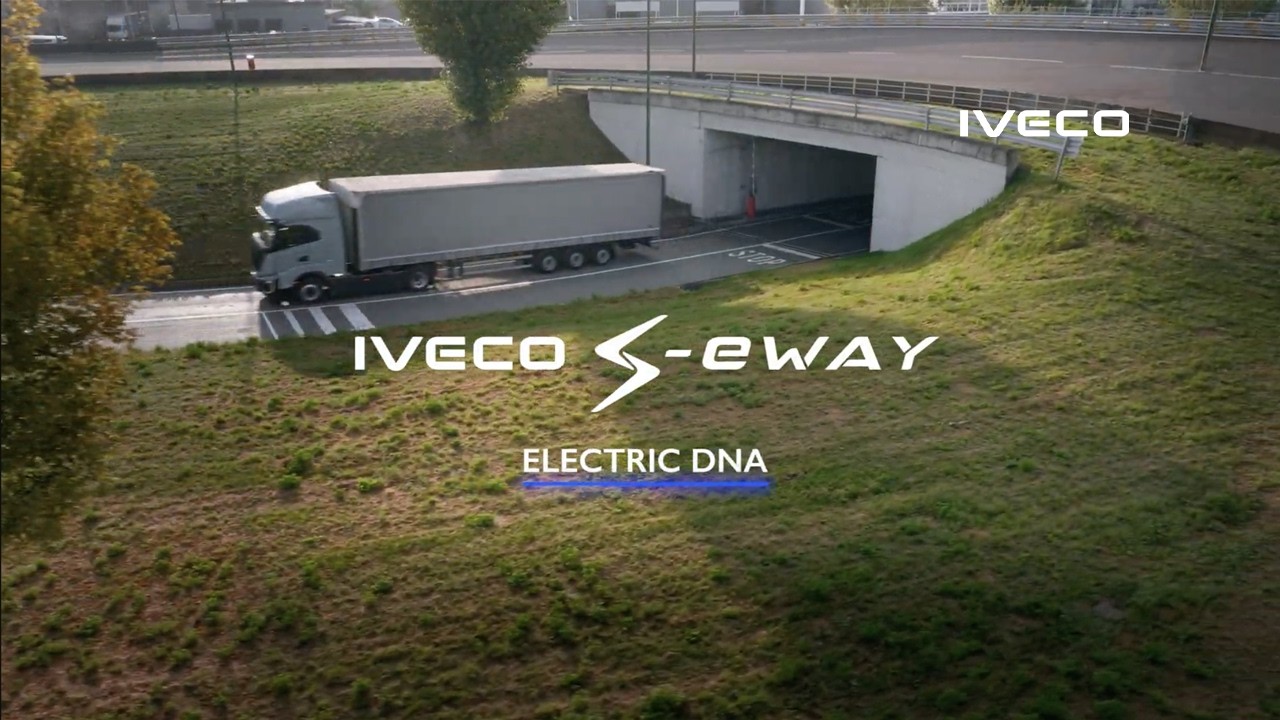
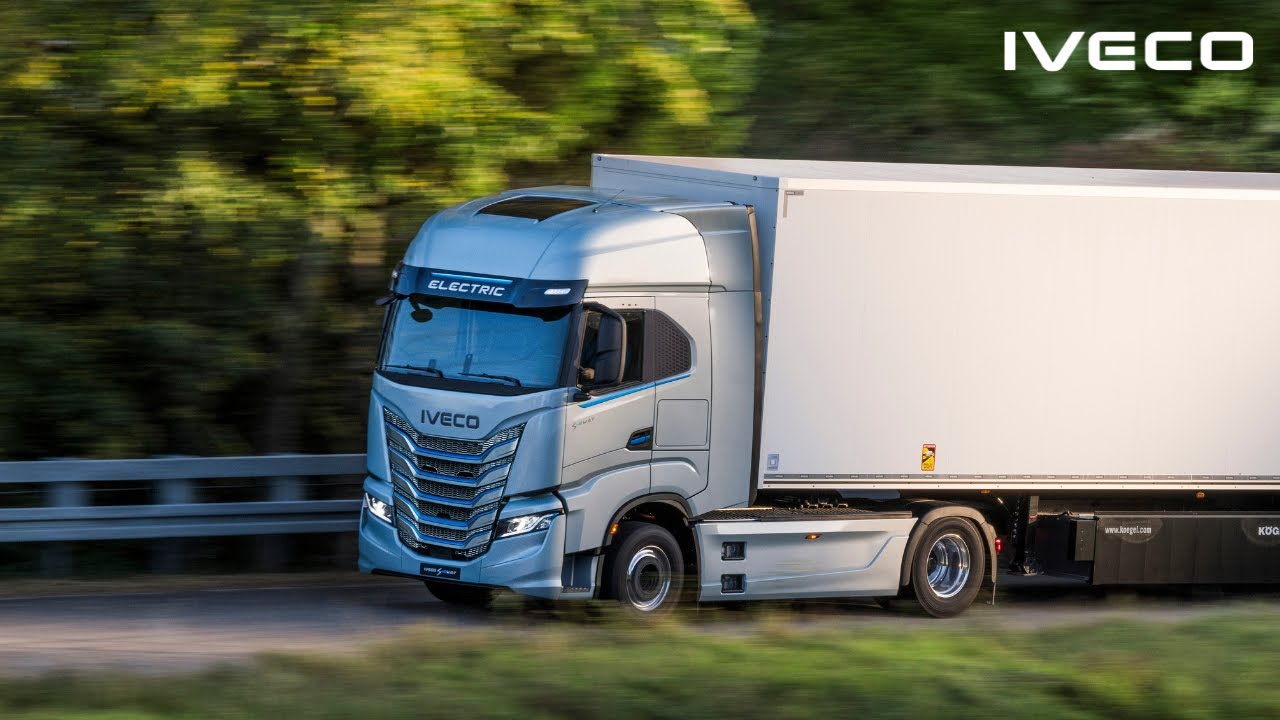
That perception began to shift with the introduction of the S-eWay family, IVECO’s dedicated battery-electric heavy-truck platform. The S-eWay name signals a deliberate attempt to create a distinct electric identity, separate from the diesel S-Way lineage. The platform is built around an integrated e-axle design, which places two electric motors directly on the rear axle, eliminating the need for a traditional transmission and freeing up space for batteries. This architectural choice suggests that IVECO is not merely adapting existing diesel platforms but is thinking about electric trucks from first principles. The company has also made strategic partnerships a cornerstone of its electric strategy, most notably with CATL for battery supply, a move that aligns IVECO with the dominant force in global battery manufacturing and gives it access to lithium-iron-phosphate (LFP) chemistry at scale.
In the context of the European market, IVECO positions itself as a pragmatic, Southern European alternative to the premium German and Scandinavian brands. Its home market of Italy, along with Spain and other Mediterranean countries, has historically been slower to adopt electric trucks than Northern Europe, and IVECO’s early deliveries in these regions carry outsized significance. The company’s messaging emphasizes total cost of ownership, operational simplicity, and the durability of its battery systems, rather than raw performance or luxury. This is a sensible positioning for a brand whose core customer base operates regional distribution fleets, port logistics, and construction haulage — applications where reliability and uptime matter more than headline horsepower figures. IVECO’s challenge is to convince fleet operators that its electric trucks can match the uptime and durability of its diesel models, and the early evidence, while limited, points in that direction.
2. European delivery record
IVECO’s European delivery record for electric heavy trucks is best described as emerging rather than established. The company has made significant strides in 2026, but its cumulative volumes remain modest compared to market leaders like Volvo Trucks or Mercedes-Benz Trucks. The most concrete named delivery in our archive comes from Spain, a market that has been notably slow in heavy-truck electrification. On 16 July 2026, IVECO delivered its first 100% electric heavy truck in Spain to Disfrimur, a regional logistics operator based in the Murcia region. The vehicle is an S-eWay Rigid configured with seven battery packs, and it will operate distribution routes between Murcia and Alicante in the southeast of the country. The delivery was facilitated through dealer Ginés Huertas Industriales, and it represents a meaningful reference case for the Spanish market, which has lacked both CO₂-graded tolls and substantial purchase incentives. Per manufacturer, verify: IVECO claims the seven-battery configuration delivers up to 400 km of range, with 20–80% charging in 45 minutes and up to 150 kW of regenerative recovery. These figures have not been independently verified by WattTonne.
Beyond this single named delivery, the broader delivery record is supported by registration data from the ICCT’s H1 2026 monitor. According to this source, IVECO’s registrations of electric heavy trucks jumped to approximately 100 units in Q2 2026, up from just six units in Q1. This represents a substantial quarter-over-quarter increase and suggests that the S-eWay line is moving from launch rhetoric to actual volume. However, it is important to note that these are registrations, not necessarily deliveries to end customers, and the ICCT data aggregates across IVECO’s electric model range. The jump in Q2 likely reflects the start of customer deliveries for the S-eWay Artic, the long-haul tractor variant, which began reaching first customers in 2026. Per manufacturer, verify: the S-eWay Artic is equipped with CATL’s new-generation LFP batteries and carries a battery warranty of 10 years or 1.2 million kilometres, matching the strongest written terms in the segment. The tractor’s drivetrain produces 653 hp and 1,800 Nm, with thermal management claimed to preserve performance and fast-charge capability down to −30°C, achieving 20–80% charging in 60 minutes in cold conditions.
For the sake of completeness, we must be honest about what is not in the record. IVECO has not yet announced named fleet deliveries in Germany, France, or the Nordic countries, which are the largest markets for electric trucks in Europe. The company’s early deliveries appear concentrated in Southern Europe, which makes strategic sense given its home-market advantage, but it also means IVECO has not yet proven itself in the demanding long-haul corridors of Northern Europe. There is no public record of IVECO electric trucks operating in the UK, Benelux, or Poland as of our archive compilation date. Fleet operators in these markets should treat IVECO’s delivery record as promising but unproven at scale. The Q2 2026 registration data, if sustained, would put IVECO on a trajectory to reach several hundred units annually, but that remains a fraction of the volumes achieved by the market leaders.
3. Model matrix
The following table presents IVECO’s current electric heavy-truck model lineup as tracked by WattTonne. The data is drawn from our model specification database and the news archive entries cited above. Where information is not published or is unverified, we state that explicitly. Each model name links to its dedicated WattTonne profile page for deeper analysis.
| Model | Format | Battery | Range | EU approval | Score |
|---|---|---|---|---|---|
| IVECO S-eWay (Rigid) | Rigid truck, e-axle (two motors in axle), 840 kW peak, 45,000 Nm at wheels | 738 kWh (9 packs) in max configuration; 7-battery form available | ~500 km class (9-pack); 400 km claimed in 7-battery form per manufacturer, verify | WVTA granted · limited volumes | 68/100 (Provisional) |
| IVECO S-eWay Artic | Tractor unit, 653 hp / 1,800 Nm, CATL LFP batteries | Not published (CATL new-generation LFP) | Not published; thermal management rated to −30°C | WVTA granted · limited volumes | 68/100 (Provisional) |
Note that the S-eWay Rigid and S-eWay Artic share the same platform architecture and are tracked under a single WattTonne model profile, /models-ivecosw/. The rigid variant is available in multiple battery configurations, with the seven-pack version being the one delivered to Disfrimur in Spain. The nine-pack version, which we estimate at 738 kWh, targets the ~500 km range class, though this figure is based on manufacturer claims and has not been independently verified. The Artic variant’s battery capacity has not been published by IVECO as of our archive compilation, which is a transparency gap we note for fleet buyers. Charging for both variants uses CCS at up to 350 kW, which is the current standard for European electric trucks. The S-eWay Artic’s cold-weather charging performance of 20–80% in 60 minutes at −30°C is a notable claim, per manufacturer, verify, and would represent best-in-class performance if confirmed.
4. Service network
IVECO’s service network for electric heavy trucks is, on paper, one of its strongest assets. The company operates an EU-wide dealer and service network that has been built over decades of commercial vehicle sales. This network spans all major European markets, with particularly dense coverage in Italy, Spain, France, and Germany. For fleet operators, this means that service points are likely to be within a reasonable distance of their operations, regardless of where they are based in Europe. IVECO has also invested in training its dealer technicians on electric vehicle systems, and the company’s service contracts for electric trucks are designed to be integrated with its existing telematics and fleet management platforms. The practical reality, however, is that the service network’s electric-specific capabilities are still being built out. Not every IVECO dealer has the specialized equipment and certified technicians required to work on high-voltage battery systems, and the company has not published a comprehensive list of which dealers are electric-ready.
For the S-eWay platform specifically, IVECO has stated that service will be provided through its EU-wide network, but the company has not disclosed the number of electric-certified service points or their geographic distribution. Per manufacturer, verify: IVECO claims its service network is prepared to support the S-eWay family, including battery diagnostics, software updates, and warranty repairs. We note that the company’s partnership with CATL extends to battery service and replacement, which is a positive signal for long-term battery health management. However, until IVECO publishes a transparent map of electric-capable service centers, fleet operators should treat the service network as a work in progress. The risk is not that service will be unavailable, but that it may be concentrated in major urban centers and logistics hubs, leaving operators in peripheral regions with longer wait times for specialized repairs. For a fleet running regional distribution routes in Southern Europe, this is likely acceptable; for a pan-European long-haul operator, it is a factor to weigh carefully.
5. Price transparency
IVECO has not published European list prices for the S-eWay family as of our archive compilation. This is not unusual in the commercial vehicle sector, where prices are typically negotiated on a fleet-by-fleet basis and depend on configuration, volume, and service contracts. However, it does create a transparency gap for fleet operators who are trying to build business cases for electric truck adoption. The absence of published prices means that operators must rely on dealer quotes, which can vary significantly and may not be directly comparable across markets. We note that dealer quotes are obtainable for the S-eWay, per our model specification database, but the range of those quotes is not public information. This is a meaningful difference from some competitors who have published indicative prices for their electric models, and it places the burden of price discovery on the buyer.
The total cost of ownership (TCO) picture for the S-eWay is similarly opaque. IVECO has not published official TCO calculators or case studies based on real fleet data, and the company’s marketing materials emphasize qualitative benefits such as reduced maintenance and lower energy costs rather than specific figures. This is a missed opportunity, because the S-eWay’s e-axle architecture should, in theory, deliver significant maintenance savings by eliminating the transmission and reducing driveline complexity. The regenerative braking capability, rated at up to 150 kW, also has the potential to reduce brake wear and energy consumption, but IVECO has not published quantified savings. Fleet operators should approach dealer quotes with a clear understanding of their own duty cycles and energy costs, and should request detailed TCO projections as part of any purchase negotiation. Until IVECO publishes transparent pricing and TCO data, we cannot provide a definitive assessment of the S-eWay’s cost competitiveness relative to diesel alternatives or competing electric trucks.
6. Warranty terms and track record
The warranty terms for IVECO’s S-eWay family are a mixed picture. For the S-eWay Artic, the battery warranty is a headline feature: 10 years or 1.2 million kilometres, whichever comes first, with a state-of-health (SoH) threshold that matches the strongest written terms in the segment. This is a significant commitment from IVECO, and it signals that the company is confident in the durability of its CATL-supplied LFP batteries. The warranty is comparable to SANY’s e263, which offers 8 years or 1.2 million kilometres at SoH ≥70%, and it is more generous than Renault Trucks’ standard 6-year/720,000 km warranty, though Renault offers a 10-year optional extension. For the S-eWay Rigid, the warranty terms are less clear. Our model specification database lists the warranty as “per contract,” which means that terms are negotiated individually and may vary by market, fleet size, and configuration. This is a transparency gap that we note for potential buyers.
The track record for warranty claims and battery degradation on the S-eWay platform is, at this stage, nonexistent. The first customer deliveries began in 2026, and no fleet has yet operated an S-eWay for a sufficient period to generate meaningful long-term data. This is not a criticism of IVECO — it is simply the reality of a young product line. However, it does mean that the 10-year/1.2M-km warranty on the Artic is an untested promise. The warranty terms are written, and they are legally binding, but the real-world durability of the CATL LFP packs in heavy-truck duty cycles remains to be demonstrated. We note that CATL has an extensive track record in bus and stationary storage applications, and LFP chemistry is generally more durable than nickel-based chemistries, but heavy-truck duty is uniquely demanding. The following table summarizes the warranty terms we have been able to verify:
| Model | Battery warranty | SoH threshold | Status |
|---|---|---|---|
| S-eWay Artic | 10 years / 1.2M km | Not published | Written terms confirmed, untested in service |
| S-eWay Rigid | Per contract | Not published | Negotiated case-by-case |
7. Risks (written honestly)
- Limited delivery track record: IVECO’s cumulative electric heavy-truck deliveries remain in the hundreds, not thousands. The Q2 2026 jump to ~100 registrations (per ICCT) is encouraging but represents a single quarter, and it is not yet clear whether this pace can be sustained. Fleet operators should not assume that IVECO’s electric volumes will match its diesel volumes in the near term.
- Southern European concentration: The named deliveries we have verified are concentrated in Spain and Italy. IVECO has not yet demonstrated its electric trucks in the demanding long-haul corridors of Northern Europe, where cold weather, high daily mileage, and dense charging infrastructure requirements pose different challenges. The −30°C thermal management claim on the Artic is notable, but it is unverified in real-world operations.
- Price and TCO opacity: The absence of published European list prices and TCO data makes it difficult for fleet operators to compare the S-eWay against competing electric trucks or diesel alternatives. Dealer quotes are obtainable, but the lack of transparency creates a risk of price discrimination across markets and fleet sizes.
- Warranty terms on the Rigid are unclear: While the Artic’s 10-year/1.2M-km battery warranty is a strong statement, the Rigid’s warranty is listed as “per contract,” which means there is no standard published term. Buyers of the Rigid must negotiate warranty terms individually, and the outcome may vary significantly.
- Dependence on CATL: IVECO’s electric strategy is closely tied to CATL as its battery supplier. While CATL is the world’s largest battery manufacturer and has a strong track record, this dependence creates a supply-chain concentration risk. Any disruption in CATL’s production or a shift in its commercial terms could directly impact IVECO’s ability to deliver S-eWay trucks.
- Service network readiness is unproven: IVECO’s EU-wide dealer network is extensive, but the number of electric-certified service points and their geographic distribution has not been published. Fleet operators in peripheral regions may face longer wait times for specialized repairs, and the availability of trained technicians for high-voltage systems is a legitimate concern.
Media & video
8. Scorecard
The following scorecard applies the WattTonne v1.0 methodology, which evaluates electric heavy-truck manufacturers across seven dimensions: performance, total cost of ownership (TCO), price transparency, compliance, warranty, service network, and track record. Each dimension is scored on a scale of 1 to 5, where 3 represents the segment average. The total score is a weighted sum, expressed as a percentage. Where data completeness is below 60%, the score is marked as “Provisional.” For IVECO, we have sufficient data on performance, compliance, warranty, and service to assign scores, but TCO, price, and track record are marked as “n/a” due to insufficient public information.
| Dimension | Score (1–5) | Weight | Notes |
|---|---|---|---|
| Performance | 3 | 20% | Competitive e-axle architecture, 840 kW peak on Rigid, 653 hp on Artic; range claims unverified |
| TCO | n/a | 20% | No published TCO data; e-axle should reduce maintenance but unquantified |
| Price transparency | n/a | 15% | No European list price published; dealer quotes only |
| Compliance | 4 | 10% | WVTA granted for S-eWay family; limited volumes but regulatory compliant |
| Warranty | 4 | 15% | Artic’s 10-yr/1.2M-km battery warranty is segment-best; Rigid terms unclear |
| Service network | 3 | 10% | EU-wide dealer network exists, but electric-specific readiness is unquantified |
| Track record | n/a | 10% | Limited deliveries, concentrated in Southern Europe; Q2 2026 registrations ~100 per ICCT |
| Total | 68/100 | 100% | Provisional — data completeness below 60% on TCO, price, and track record |
The total score of 68/100 places IVECO in the mid-table of our current rankings, which is consistent with our earlier assessment. The verdict is Formal in the sense that the score is based on a defined methodology and verifiable data points, but it is Provisional because three of seven dimensions are marked as “n/a.” As IVECO publishes more data on pricing, TCO, and delivery volumes, we will update this scorecard. The warranty dimension is the strongest element of IVECO’s current profile, while the track-record dimension is the weakest, reflecting the company’s limited but growing delivery history.
Bottom line
IVECO’s S-eWay family represents a credible, if not yet proven, entry into the European electric-heavy-truck market. The company has made the right architectural choices with its e-axle design and its partnership with CATL for LFP batteries, and the 10-year/1.2M-km battery warranty on the Artic is a segment-leading statement of confidence. The first named delivery in Spain to Disfrimur, along with the Q2 2026 registration jump to ~100 units per ICCT, suggests that IVECO is beginning to convert its electric strategy from rhetoric into reality. However, the brand remains constrained by its limited delivery track record, its concentration in Southern European markets, and a notable lack of price and TCO transparency. Fleet operators considering the S-eWay should treat it as a promising but unproven option, and should negotiate warranty terms and service agreements carefully, particularly for the Rigid variant. IVECO’s mid-table score of 68/100 is a fair reflection of its current position: not a leader, not a laggard, but a manufacturer with the industrial base and strategic partnerships to move up the rankings if it can deliver on its promises at scale. The verdict is Formal in methodology and Provisional in confidence, pending the publication of the data that would complete the scorecard.
WattTonne coverage
Scores v1.0, evidence dated 2026-08-08. Logo and product imagery used with the manufacturer’s marketing approval. Evidence submissions: hello@wattonne.com, subject “Scorecard evidence”.