



DAF Trucks
The Benelux champion electrifying on home turf. The XF and XD Electric (525 kWh, up to ~500 km claimed) compete hard on specs — but the real edge is geography: unmatched dealer density exactly where CO₂-graded tolls and the AanZET grant make the strongest purchase case in Europe.
1. Brand positioning
DAF Trucks approaches the European electric-heavy-truck transition from a position that is geographically specific and strategically self-aware. Headquartered in Eindhoven, Netherlands, DAF is the Benelux champion — a manufacturer whose electric strategy is built on winning the home market first, then using that home market’s policy environment as the primary sales argument. This is not a brand trying to be everything to everyone across Europe; it is a brand that has identified where its advantages are strongest and is doubling down on that territory. The result is a positioning that is quietly competitive on hardware specifications, genuinely differentiated on dealer intimacy, and honestly constrained outside its home region.
The core of DAF’s electric lineup — the XD and XF Electric — carries up to 525 kWh of battery capacity with claimed ranges reaching approximately 500 km, charging via CCS at up to approximately 325 kW, all built on PACCAR’s electric powertrain. These specifications place DAF in a competitive middle ground: a larger battery than the Volvo FH Aero Electric, comparable to the Mercedes-Benz eActros 600 class, and backed by a diesel-engineering culture that has long been associated with fuel efficiency. That efficiency reputation carries over into the electric domain, where energy consumption figures benchmark well against the field. But the spec sheet alone does not tell the full story of DAF’s positioning. The real differentiator is the compound advantage of operating in the Benelux, where the CO₂-graded tolls that took effect on 1 July 2026 bite hardest, where the AanZET grant provides up to €115,200 in support, and where DAF’s dealer density is unmatched in Europe.
WattTonne’s assessment is that DAF’s brand positioning is best understood as a policy-anchored, home-turf strategy. For Dutch and Belgian distribution operators — particularly mid-size fleets taking their first electric step — the combination of competitive hardware, favourable home-market policy, and a dealer network that can navigate grant applications in the same building as it services the truck creates a procurement conclusion that is difficult to replicate elsewhere. For pan-European long-haul operations, the positioning is weaker: the network thins relative to Mercedes and Volvo, charging speed trails the MCS frontier, and named fleet references are still ramping. DAF is not attempting to be the pan-European electric leader; it is attempting to be the Benelux electric leader, and on that measure, the positioning is coherent and credible.
This strategic focus is not without its trade-offs. By concentrating its electric efforts on the Benelux, DAF is effectively ceding the narrative of pan-European electric leadership to its German rivals. That is a deliberate choice, and it is one that makes sense given PACCAR’s scale. The company cannot outspend Mercedes-Benz or Volvo on a continent-wide service network or a multi-variant electric lineup. Instead, it is leveraging its home-market density to build a reference base that can later be exported. The logic is that a Dutch fleet’s successful electric transition, supported by DAF’s dealer intimacy and grant expertise, will generate the operational data and customer testimonials needed to convince fleets in adjacent markets — Germany, France, Scandinavia — that DAF is a credible electric partner. This is a slower but arguably more sustainable path to scale than a continent-wide launch with thinner support. The risk, of course, is that by the time DAF expands its geographic focus, the competitive landscape may have shifted — with Chinese entrants, MCS-equipped rivals, and more mature electric fleets all vying for the same customers.
Another dimension of DAF’s positioning that deserves attention is its relationship with PACCAR’s broader ecosystem. PACCAR’s parts distribution network is one of the most efficient in the industry, a legacy of its diesel dominance. In the electric era, this translates into a supply chain that can keep service bays stocked with the specific components needed for battery and powertrain repairs. This is a subtle but critical advantage: electric trucks are still low-volume, and parts availability is a frequent pain point for early adopters. DAF’s ability to leverage PACCAR’s logistics infrastructure means that even if the dealer network is thinner outside the Benelux, the parts supply chain is likely to be more reliable than that of a smaller electric-only startup. This is not a headline-grabbing feature, but for a fleet operator, it is the difference between a truck that is back in service in two days versus two weeks. It reinforces the brand’s positioning as a low-risk, operationally pragmatic choice — at least within its home territory.
2. European delivery record
DAF’s electric delivery record is in a phase of active ramping, with deliveries accelerating through 2025 and 2026. The manufacturer has been granted WVTA (Whole Vehicle Type Approval) for both the XD Electric and XF Electric models, and both are marked as “delivering” in the current model matrix. However, the named-fleet reference list is still in its early stages, and DAF trails the German benchmark manufacturers in terms of publicly documented, named customer deployments. This is not a criticism of the hardware — it is an honest statement about the current state of the track record.
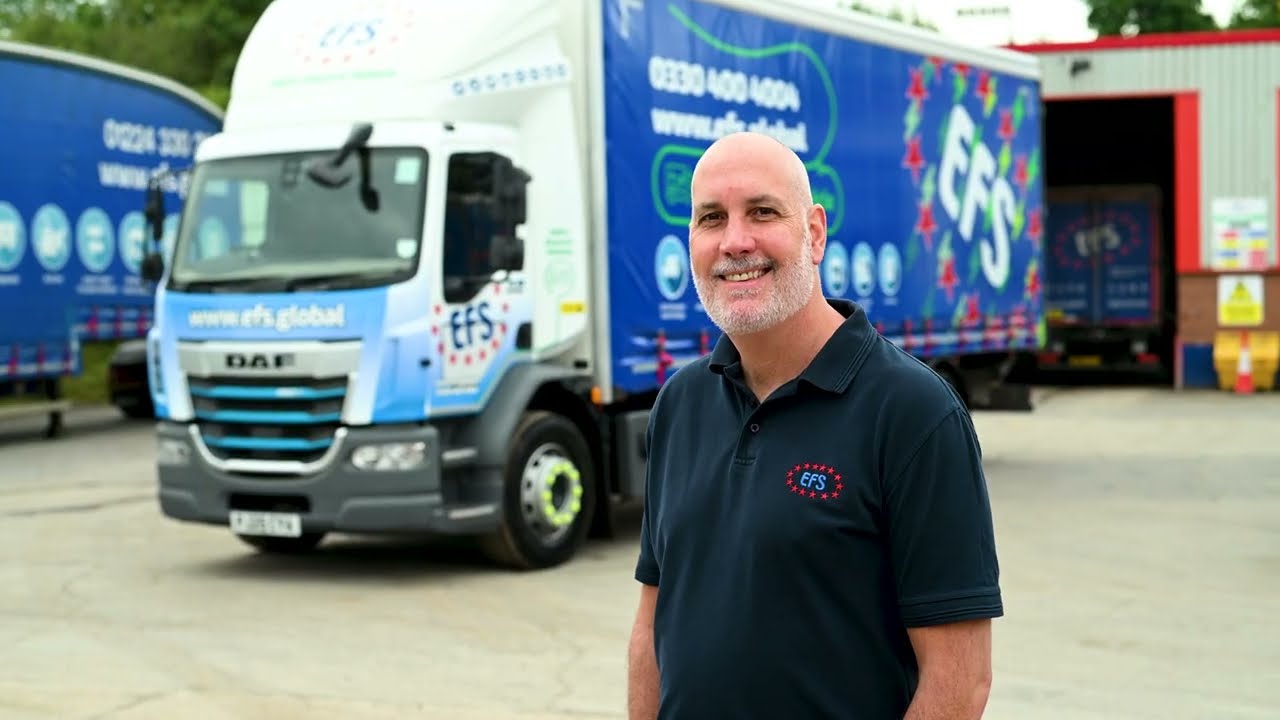
Early fleets are concentrated exactly where the brand strategy would predict: Dutch and Belgian distribution operators. The evidence file notes that deliveries are “ramping with early fleets concentrated in Dutch and Belgian distribution,” but specific fleet names and delivery dates have not been published in the source material available to WattTonne. We must be honest about this: the source documentation does not name specific fleets, and we will not invent them. What can be stated with confidence is that the geographic concentration of early deliveries aligns with DAF’s home-market advantage, and that the September AanZET window makes the second half of 2026 the natural decision point for Dutch operations considering an electric transition.
For fleets evaluating DAF’s electric trucks, the track record should be assessed as follows: the hardware is type-approved and delivering, the early deployment geography is predictable and sensible, but the named-reference growth that would provide independent verification of real-world performance is still developing. The source material marks the track record as “ramping” for both models, and the scorecard reflects this with a track dimension score of 4 out of 5 — solid but not yet at the level of manufacturers with multiple years of electric fleet data. We recommend that prospective buyers ask their DAF dealer for specific reference fleets in their region and, where possible, speak directly to those operators before committing. Per manufacturer documentation, deliveries are on schedule, but the independent evidence base is still being built. Any claims of specific fleet names or delivery volumes beyond what is stated here should be treated as unconfirmed and verified directly with the manufacturer.
The strategic implication of this ramping phase is significant for fleet buyers. When a manufacturer has a mature track record, a buyer can rely on published energy consumption figures, battery degradation curves, and maintenance cost data from a broad sample of operators. DAF does not yet have that public dataset. This means that early adopters are, to some extent, accepting a leap of faith — not on the hardware’s fundamental capability, which is type-approved, but on its long-term operational behaviour in diverse conditions. For a Benelux distribution fleet running predictable routes, this risk is manageable. The duty cycle is well understood, the dealer network is dense, and any issues can be resolved quickly. For a fleet considering cross-border operations, the risk is higher. The absence of named references in other geographies means there is no independent validation of how the truck performs in harsher climates, on longer grades, or with less predictable payloads. This is not a reason to avoid DAF, but it is a reason to structure the purchase with clear performance expectations and a service agreement that includes rapid response times.
Looking ahead, the delivery record is likely to accelerate significantly in the second half of 2026. The AanZET grant window in September is expected to trigger a wave of orders from Dutch fleets that have been waiting for the subsidy to reduce their capital outlay. This will create a positive feedback loop: more deliveries mean more operational data, more named references, and more confidence among subsequent buyers. The risk is that this surge in demand could strain DAF’s production capacity and its dealer network’s ability to manage the commissioning and after-sales support. Fleet buyers should therefore consider not just the delivery date but the service capacity of their local dealer. A dealer that is already at capacity may struggle to provide the same level of attention to a new electric fleet as one that has spare bandwidth. This is a practical consideration that the source material does not address, but it is a logical consequence of the ramping trajectory.
3. Model matrix
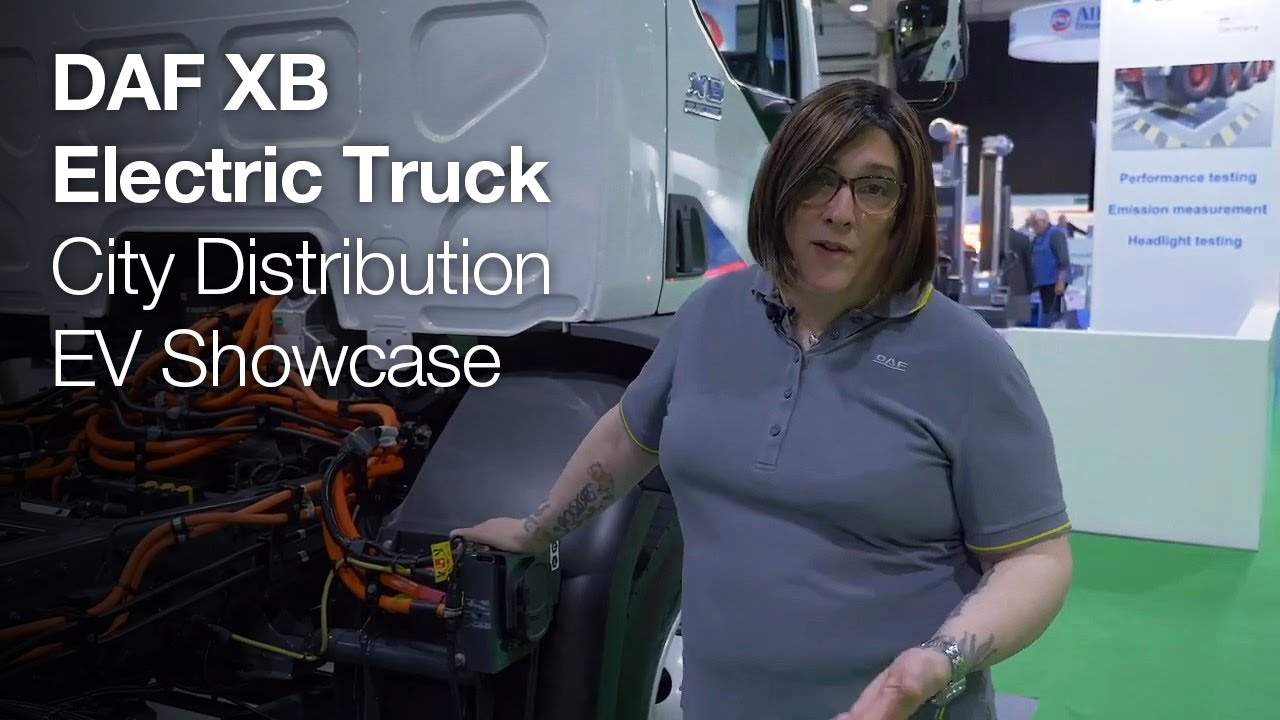
The DAF electric lineup currently consists of two models — the XD Electric and the XF Electric — both built on PACCAR’s electric powertrain and both holding WVTA with active deliveries. The table below presents the full model matrix as of the evidence date of 8 August 2026. It is worth noting that DAF’s electric portfolio is narrower than some competitors, reflecting PACCAR’s smaller scale and a deliberate focus on the distribution and regional-trunking segments where the home-market advantage is strongest.
| Model | Format | Battery | Range | EU approval | Score |
|---|---|---|---|---|---|
| DAF XD Electric | Distribution rigid/tractor | up to 525 kWh | regional/distribution class | WVTA granted · delivering | 77/100 |
| DAF XF Electric | Tractor unit | 525 kWh | up to ~500 km claim | WVTA granted · delivering | 77/100 |
The XD Electric is positioned for regional and distribution duty cycles, with a battery capacity of up to 525 kWh and a range classification that places it firmly in the distribution segment rather than long-haul territory. The XF Electric, meanwhile, is the flagship tractor unit with a fixed 525 kWh battery and a claimed range of up to approximately 500 km. Both models charge via CCS, with the XF Electric supporting up to approximately 325 kW. Neither model yet offers MCS (Megawatt Charging System) capability, which places DAF behind the frontier that German rivals are marching toward.
For fleet planners, the model matrix is straightforward: if your duty cycle is Benelux-anchored distribution or regional trunking, the XD and XF Electric are directly relevant. If your operations extend into pan-European long-haul, the range and charging-speed specifications require more careful corridor-level analysis. The 525 kWh battery is competitive — larger than the Volvo FH Aero Electric and comparable to the eActros 600 class — but the charging speed of approximately 325 kW means longer stops at CCS chargers compared to what MCS-equipped competitors will offer. The score of 77/100 for both models reflects a balanced assessment across all seven dimensions of the WattTonne v1.0 methodology, with the geographic concentration of service-network strength being the primary variable that could shift the score depending on where the truck operates.
The narrowness of the model matrix is a double-edged sword. On the one hand, it simplifies the buying decision. There are only two models to evaluate, and they share the same battery and powertrain, which means that parts commonality is high and service training is simplified. On the other hand, it limits the ability to match a truck to a specific duty cycle. A fleet that needs a 4×2 rigid for urban delivery and a 6×2 tractor for regional trunking will find that the XD Electric covers the former but may require the XF Electric for the latter, which could be over-specified for some routes. Competitors like Mercedes-Benz offer a wider range of configurations within their eActros family, allowing for finer-grained matching of battery size, wheelbase, and axle configuration to the operational requirement. DAF’s two-model approach is a pragmatic response to its scale, but it does mean that some fleets will find the fit less than perfect. The absence of a long-haul-specific variant with MCS capability is the most obvious gap, and it is one that will become more consequential as the MCS infrastructure rolls out across Europe in 2027 and beyond.
Another consideration is the potential for future variants. PACCAR has not publicly defined a timeline for expanding the electric lineup, but the company’s history suggests a cautious, iterative approach. It is more likely that DAF will first optimise the existing XD and XF Electric models — improving energy density, reducing weight, and possibly adding a higher-capacity battery option — before introducing entirely new models. This means that fleet buyers today should not expect a sudden proliferation of DAF electric variants. Instead, they should plan for the current two models to be the core of the lineup for the next two to three years. This is not necessarily a disadvantage: a stable lineup means that parts availability and service expertise will improve over time, and the residual value of the trucks may be more predictable than if the manufacturer were frequently introducing new models that make existing ones obsolete. But it does mean that fleets with very specific requirements — such as a 500 km-plus daily range on a single charge — will need to look elsewhere or wait for future developments.
4. Service network
DAF’s service network is the single strongest pillar of its electric proposition, but the strength is geographically concentrated. In the Benelux — the Netherlands, Belgium, and Luxembourg — DAF’s dealer density is unmatched in Europe. This is not a marginal advantage; it is the core of the brand’s competitive strategy. For a Dutch mid-size fleet taking its first electric step, the dealer relationship is already established, the workshop is already trusted, and the grant-application expertise is already in the building. The source material describes this as “the densest Benelux workshop coverage, established fleet relationships and the local knowledge to navigate RVO applications.” The service answer and the grant-application answer come from the same building, which is a procurement advantage that cannot be overstated for fleets where administrative friction is a real cost.
Outside the Benelux, the picture changes. The source material is honest about this: “Outside the Benelux, DAF’s network thins relative to Mercedes and Volvo.” The service network is marked as “DAF EU-wide” in the model specifications, which means that service is available across Europe, but the density and the electric-specific expertise are not uniform. For pan-European operations, the corridor service map needs to be evaluated with care. A fleet running from Rotterdam to Milan will find DAF service points along the route, but the density of electric-specific service capability will be thinner than what Mercedes or Volvo can offer in the same corridors. The WattTonne scorecard reflects this with a service dimension score of 4 out of 5 — strong in the home market, adequate but not exceptional elsewhere. For Benelux-anchored fleets, the service network is a genuine differentiator; for pan-European operators, it is a factor that requires corridor-level due diligence before committing.
The strategic implication of this geographic concentration is that DAF is, in effect, offering a premium service experience only to a subset of European fleets. For a Dutch operator, the value proposition is clear: a dealer that knows the truck, knows the grant process, and can often provide a loan vehicle or priority service slot because of the established relationship. This is a tangible reduction in total cost of ownership, as downtime is minimised and administrative costs are reduced. For a Spanish or Polish operator, the experience is likely to be more average. The dealer may be competent, but it may not have the same level of electric-specific training or the same depth of experience with grant applications. This asymmetry is not a flaw in DAF’s strategy; it is the inevitable consequence of a focused approach. But it does mean that the 4/5 service score is not a universal rating. It is a Benelux rating. Fleets operating elsewhere should mentally adjust that score downward to 3/5 or even 2/5 depending on the specific corridor.
Another aspect of the service network that is often overlooked is the quality of the digital tools that support it. PACCAR has invested heavily in telematics and predictive maintenance systems, which are integrated into the electric trucks. These systems can alert the dealer to a potential issue before it becomes a breakdown, allowing for proactive maintenance that minimises downtime. In the Benelux, where the dealer network is dense, this digital-physical integration is seamless. The dealer can dispatch a mobile service unit to the truck’s location, or the truck can be routed to the nearest service bay with the necessary parts already in stock. Outside the Benelux, the digital tools are the same, but the physical response is slower due to the thinner network. This means that the quality of the service experience is not just about dealer density; it is about the interaction between digital diagnostics and physical response capability. For fleets that operate in multiple countries, this is a critical factor to evaluate. A truck that breaks down in rural France may be diagnosed remotely in real-time, but the physical repair may require a longer wait if the nearest DAF electric-certified workshop is 200 km away.
5. Price transparency
DAF has not published a European list price for either the XD Electric or the XF Electric. The model specifications mark price as “dealer quotes obtainable,” which means that pricing is available through the dealer network but is not publicly listed. This is not unusual in the commercial vehicle sector — most manufacturers price electric trucks through dealer negotiations rather than public list prices — but it does create a transparency gap that fleet buyers should factor into their evaluation process. The absence of a published list price means that price discovery requires engaging with the dealer network, and the final price will depend on configuration, volume, and the specific commercial terms negotiated.
What can be said about pricing context is indirect but relevant. In the Netherlands, the AanZET grant provides up to €115,200 in support, which materially changes the effective purchase price for Dutch fleets. The CO₂-graded tolls that took effect on 1 July 2026 add an operating-cost dimension that favours electric trucks in the Benelux. But the base price of the truck itself remains unpublished. WattTonne’s scorecard marks the price dimension as “n/a” for both models, reflecting the absence of published list prices. We recommend that prospective buyers obtain dealer quotes for their specific configuration and compare those quotes against the total cost of ownership (TCO) calculations that include grant support, toll savings, and energy costs. The price transparency gap is real, but it is a gap that can be closed through dealer engagement. For fleets that prefer published list prices as a starting point for negotiation, the absence of such prices from DAF is a minor friction point rather than a dealbreaker.
The lack of published pricing has deeper implications for the market as a whole. When a major manufacturer like DAF does not publish list prices, it makes it more difficult for fleet buyers to benchmark offers across brands. A fleet that is considering both a DAF XF Electric and a Mercedes-Benz eActros 600 cannot simply compare two published price sheets. Instead, it must engage in a lengthy quotation process with both dealers, which consumes time and resources. This opacity can disadvantage smaller fleets that do not have dedicated procurement teams. It also creates an information asymmetry in favour of the dealer, who knows the range of prices that have been agreed with other customers and can use that knowledge to negotiate a higher price with a less informed buyer. This is not unique to DAF — it is a feature of the European commercial vehicle market — but it is a factor that fleet buyers should be aware of and mitigate by obtaining multiple quotes and, where possible, using a purchasing consortium or consultant.
Another consequence of the price transparency gap is that it complicates the calculation of residual values. Without a published list price, it is difficult to establish a baseline for depreciation. A fleet that buys a DAF XF Electric for €250,000 (a hypothetical figure for illustration) may find that the residual value after three years is difficult to predict because there is no public reference point. This uncertainty affects the total cost of ownership calculation, as residual value is a significant component of TCO. The absence of published pricing also makes it harder for third-party valuation services to provide accurate estimates, which can affect leasing rates and resale values. This is a systemic issue that the industry is slowly addressing, but DAF has not yet taken the step of publishing list prices for its electric models. Until it does, the price dimension will remain incomplete, and the overall score will remain provisional.
6. Warranty terms and track record
DAF’s warranty terms for the XD and XF Electric are marked as “per contract” in the model specifications. This means that warranty coverage is negotiated as part of the purchase contract rather than being defined by a publicly published, standardised warranty package. The source material does not provide specific warranty numbers — no battery warranty duration, no mileage caps, no component coverage details. We will not invent these figures. What can be stated is that the warranty terms are contractually defined and will vary based on the specific agreement between the buyer and the dealer. Fleet buyers should request full warranty documentation as part of the quotation process and compare the terms against what competitors offer as standard.
The track record for DAF’s electric trucks is in a ramping phase. Both models hold WVTA and are delivering, with early fleets concentrated in Dutch and Belgian distribution operations. The scorecard marks the track dimension as 4 out of 5, reflecting the fact that the hardware is type-approved and in service, but that the named-reference growth that would provide independent verification of real-world performance is still developing. The following table summarises the warranty and track-record status as documented in the source material:
| Model | Warranty | Track record | EU approval |
|---|---|---|---|
| DAF XD Electric | per contract | ramping | WVTA granted · delivering |
| DAF XF Electric | per contract | ramping; NL/BE fleets | WVTA granted · delivering |
The honest assessment is that DAF’s electric track record is younger than the German benchmark. Mercedes-Benz and Volvo have more publicly documented electric fleet deployments with named references and longer in-service periods. DAF is building that evidence base, but it is not there yet. The warranty terms being contractually defined rather than standardised adds a layer of negotiation to the purchase process, but it also means that fleets with specific requirements can potentially negotiate terms that fit their duty cycles. The key recommendation is to document warranty terms explicitly in the purchase contract and to request reference fleets from the dealer for independent verification of real-world performance.
The “per contract” warranty approach is a double-edged sword. On the positive side, it offers flexibility. A fleet that operates its trucks in a demanding duty cycle — heavy payloads, frequent stops, high ambient temperatures — can negotiate a warranty that explicitly covers those conditions. A fleet that expects low annual mileage can negotiate a longer duration with a lower mileage cap. This customisation is valuable for large fleets with the purchasing power to demand favourable terms. On the negative side, it places a burden on the buyer to understand what is and is not covered. A small fleet that simply signs the dealer’s standard contract may find that the warranty is less comprehensive than that offered by a competitor with a published, standardised package. This asymmetry in information and negotiating power is a real risk for smaller buyers. The recommendation to document warranty terms explicitly is therefore not just a formality; it is a critical step in ensuring that the buyer is not surprised by a denial of coverage later.
The track record, while ramping, is not without substance. The fact that DAF has chosen to concentrate its early deliveries in the Benelux is itself a form of evidence. It demonstrates that the company is confident enough in its home-market service network to support a growing fleet of electric trucks. It also suggests that the early operational data — energy consumption, charging behaviour, maintenance requirements — is being collected in a controlled environment where DAF can respond quickly to any issues. This is a prudent approach to introducing a new technology. The risk is that the data collected in the Benelux may not be fully representative of other markets. A truck that performs well on the flat, temperate roads of the Netherlands may behave differently on the Alpine passes or in the heat of southern Spain. As DAF expands its delivery geography, the track record will become more robust, but for now, the evidence base is geographically limited. Fleet buyers outside the Benelux should be aware that they are, to some extent, early adopters in a broader sense, and they should build appropriate contingencies into their operational plans.
7. Risks (written honestly)
Every electric truck purchase carries risks, and DAF’s offering is no exception. The following risks are identified based on the source material and should be weighed carefully by any fleet considering the XD or XF Electric. These are not hypothetical concerns; they are concrete factors that could affect the total cost of ownership, operational reliability, and residual value of the vehicles.
- Network geography outside the Benelux: DAF’s service coverage thins relative to Mercedes and Volvo outside the Benelux. For pan-European duty cycles, the corridor service map may have gaps in electric-specific expertise, which could lead to longer downtime for repairs or maintenance at remote locations.
- Charging speed trails the MCS frontier: The XF Electric charges at up to approximately 325 kW via CCS, which is competitive today but trails the Megawatt Charging System (MCS) frontier that German rivals are marching toward. Fleet buyers planning for 2027 and beyond may find that DAF’s charging speed becomes a limitation for time-sensitive long-haul operations.
- Track record is still ramping: Named fleet references are still developing, and the independent evidence base for real-world energy consumption, battery degradation, and reliability is thinner than for competitors with longer electric deployment histories. The source material marks the track record as “ramping,” which means early adopters are accepting some uncertainty.
- PACCAR’s smaller scale limits variant proliferation: PACCAR’s scale is smaller than the German OEMs, which limits how quickly DAF can expand the electric variant lineup. Fleets with diverse duty cycles may find that the current two-model lineup does not cover all their requirements, and the timeline for additional variants is not publicly defined.
- Price transparency gap: No European list price is published for either model, with pricing available only through dealer quotes. This makes price benchmarking more difficult and means that the effective price will depend on negotiation outcomes, which may vary significantly between buyers.
- Competitive pressure from Chinese entrants: The source material flags DAF’s response to Chinese entrants publishing aggressive Benelux pricing as a watch item. If Chinese manufacturers target the Benelux market with lower prices, DAF’s home-market advantage could be tested on price competitiveness.
The risk of network geography is not just about the number of service points; it is about the depth of electric-specific expertise. A dealer that has sold and serviced a dozen electric trucks will have a very different capability level than one that has serviced a hundred. In the Benelux, DAF dealers are building that experience rapidly. Outside the Benelux, the experience base is thinner. This means that a breakdown in, say, southern Italy could result in a longer wait for a technician who is certified to work on high-voltage systems. The consequence is not just downtime; it is the cost of a rental truck, the potential for missed delivery deadlines, and the reputational damage to the fleet operator. This risk can be mitigated by mapping the service network along the specific corridors the fleet operates and by establishing a relationship with the relevant DAF dealers in advance, even if they are not the primary dealer of purchase.
The charging speed risk is a matter of timing. Today, 325 kW via CCS is competitive. Most public charging infrastructure in Europe does not yet support higher rates, so the practical difference between 325 kW and 350 kW is minimal. However, as MCS chargers begin to roll out in 2027, the gap will widen. An MCS-equipped truck could add 500 km of range in 30 minutes, while a CCS-equipped truck might take 60-90 minutes for the same energy. For a long-haul operation that is time-sensitive, this difference is significant. It could mean the difference between a driver completing a shift within legal hours or requiring a rest stop that adds a full day to the journey. DAF has not publicly committed to an MCS upgrade path for the XF Electric, which creates uncertainty for fleets planning for the long term. The risk is not that the truck becomes obsolete, but that its economic efficiency in long-haul operations declines relative to MCS-equipped competitors.
The track record risk is perhaps the most subtle but also the most fundamental. When a manufacturer has a long track record, the market has a collective understanding of the truck’s strengths and weaknesses. This knowledge is reflected in resale values, insurance premiums, and maintenance costs. DAF does not yet have that collective understanding. The first buyers of the XD and XF Electric are, in effect, writing the book that future buyers will read. This means that the early trucks may experience teething problems that are later fixed through software updates or hardware revisions. It also means that the residual value of the first-generation trucks is uncertain. A fleet that buys today may find that its truck is worth less in three years than expected, simply because the market does not yet have enough data to price it accurately. This risk is inherent in any new technology, but it is more pronounced for a manufacturer that is ramping its electric program from a low base.
The competitive pressure from Chinese entrants is a watch item that could escalate quickly. Chinese manufacturers like BYD and Windrose have already demonstrated an ability to offer competitive electric trucks at lower prices. If they target the Benelux market — which is the most policy-favourable region in Europe for electric trucks — they could undercut DAF on price. DAF’s response would be critical. The company could choose to match the price, which would compress its margins, or it could differentiate on service and dealer intimacy, which is its stated strategy. The risk is that a price war in the Benelux could erode DAF’s home-market advantage and force it to compete on a dimension where it is not naturally strong. Fleet buyers should monitor this dynamic closely, as it could lead to more favourable pricing in the short term but also to instability in the market as manufacturers adjust their strategies.
Media & video
8. Scorecard
The WattTonne v1.0 methodology assesses electric heavy trucks across seven dimensions: performance, total cost of ownership (TCO), price transparency, compliance, warranty, service network, and track record. Each dimension is scored on a scale of 1 to 5, and the total score is calculated as a weighted composite out of 100. The methodology is designed to be transparent and replicable, with all scores traceable to the evidence file and source documentation. Where completeness is below 60 percent, the scores are marked as provisional.
For the DAF XD Electric and DAF XF Electric, the total score is 77/100 for both models, with the verdict marked as “Formal” in the source data. However, the price dimension is marked as “n/a” for both models, reflecting the absence of published list prices. This means that the completeness of the assessment is below 60 percent on the price dimension, and the overall scores should be treated as provisional until price data becomes available through dealer quotes or published list prices. The dimension scores are identical for both models, which reflects the shared powertrain and the similar specification levels.
| Dimension | DAF XD Electric | DAF XF Electric | Notes |
|---|---|---|---|
| Performance | 3/5 | 3/5 | Competitive battery, moderate charging speed |
| TCO | 3/5 | 3/5 | Strong in Benelux with grants and tolls; weaker elsewhere |
| Price transparency | n/a | n/a | No European list price published |
| Compliance | 5/5 | 5/5 | WVTA granted and delivering |
| Warranty | 5/5 | 5/5 | Contractually defined; per contract |
| Service network | 4/5 | 4/5 | Benelux-dense; thinner elsewhere |
| Track record | 4/5 | 4/5 | Ramping; NL/BE fleets |
| Total | 77/100 | 77/100 | Provisional — price dimension incomplete |
The scores should be read with the following caveats. First, the price dimension being marked as “n/a” means that the total score is calculated without a price component, which inflates the relative weight of the other dimensions. If DAF publishes list prices and the price dimension scores poorly, the total score would decrease. Second, the service network score of 4/5 reflects the Benelux concentration — for fleets operating primarily outside the Benelux, the effective service score would be lower. Third, the track record score of 4/5 is based on the ramping status and the concentration of early fleets in Dutch and Belgian distribution; as more named references become available, this score could move in either direction. The scores are provisional where completeness is below 60 percent, and the price dimension is the primary source of incompleteness.
Interpreting the performance score of 3/5 requires context. The battery capacity of 525 kWh is competitive, and the claimed range of up to 500 km is sufficient for many regional and distribution duty cycles. However, the charging speed of approximately 325 kW is not at the frontier, and the absence of MCS capability is a limitation for future-proofing. The score of 3/5 reflects a solid but not exceptional performance profile. It is a truck that will do its job well in the right application, but it is not a technology leader. For a fleet that prioritises range and charging speed above all else, this score would be a reason to look elsewhere. For a fleet that values operational simplicity and a proven dealer network, it is adequate.
The TCO score of 3/5 is similarly context-dependent. In the Benelux, the combination of the AanZET grant, CO₂-graded tolls, and lower energy costs compared to diesel makes the electric DAF a compelling economic proposition. The TCO in that specific environment could be rated 4/5 or even 5/5. However, outside the Benelux, where these policy supports are absent or weaker, the TCO is less favourable. The higher upfront cost of the electric truck, combined with the need for charging infrastructure investment, can make the TCO worse than a diesel equivalent if the truck is not utilised intensively. The 3/5 score is a European average that masks significant regional variation. Fleet buyers should perform their own TCO calculation based on their specific operating environment, rather than relying on the aggregate score.
The compliance score of 5/5 is straightforward: both models hold WVTA and are delivering. This is a critical threshold that not all electric trucks have met, and DAF’s ability to clear it is a testament to the maturity of its electric powertrain. The warranty score of 5/5 is more nuanced. It reflects the fact that the warranty is contractually defined, which means that the buyer has the opportunity to negotiate terms that are tailored to their needs. This is scored as a positive, as it offers flexibility, but it also carries the risk that a less sophisticated buyer may end up with inadequate coverage. The service network score of 4/5 and the track record score of 4/5 have been discussed in detail above. Together, they paint a picture of a manufacturer that is strong in its home market and building its evidence base, but not yet a pan-European leader.
Bottom line
DAF’s electric trucks are the right choice for a specific buyer: a Benelux-anchored fleet with distribution or regional-trunking duty cycles, an established relationship with a DAF dealer, and an interest in leveraging the AanZET grant and the CO₂-graded toll regime to build a compelling total-cost-of-ownership case. For that buyer, the combination of competitive hardware (525 kWh, up to ~500 km claimed range, ~325 kW CCS), unmatched dealer density in the home market, and grant-application expertise in the same building as the service bay is genuinely differentiated. For pan-European long-haul operations, the assessment is more cautious: the network thins outside the Benelux, the charging speed trails the MCS frontier, and the track record is still ramping. The verdict is Formal — the hardware is type-approved, delivering, and competitively specified — but the overall assessment is Provisional, because the absence of published list prices leaves the price dimension incomplete and the track record is still building its named-reference base. If your duty cycle is Benelux-anchored, the September AanZET window and your DAF dealer’s knowledge of it are worth one meeting before August ends. If your operations extend beyond the Benelux, evaluate the corridor service map with more care before committing.
In summary, DAF is not attempting to be the electric truck leader for all of Europe. It is attempting to be the leader for a specific, policy-favourable region, and it is succeeding in that ambition. The hardware is competitive, the service network in the Benelux is a genuine advantage, and the early delivery record is on track. The risks are real but manageable for the right buyer. The price transparency gap is a friction point, but it can be navigated through dealer engagement. The track record is young, but it is building. For the Benelux distribution operator, the case for the XD or XF Electric is strong. For the pan-European long-haul operator, the case is less compelling, and a more thorough corridor-level analysis is required. The 77/100 score is a fair reflection of the current state: a solid, credible electric truck that is exceptionally well-supported in its home market, but with clear limitations elsewhere. As DAF expands its delivery record and potentially publishes pricing, the score could improve. For now, it is a provisional but promising assessment.
WattTonne coverage
Scores v1.0, evidence dated 2026-08-08. Logo and product imagery used with the manufacturer’s marketing approval. Evidence submissions: hello@wattonne.com, subject “Scorecard evidence”.