



Scania
Big battery, fast charging, measured rollout. The 45 R/S pairs 624 kWh with 375 kW charging — arguably the most capable long-range hardware from a European incumbent — released market by market, with the Nordic network as its stronghold and Traton’s Milence behind it.
1. Brand positioning
Scania enters the European electric-heavy-truck conversation from a position of unusual strength and unusual caution. The Swedish manufacturer, owned by the Traton Group (which also controls MAN and, through Volkswagen, holds a strategic stake in the commercial vehicle landscape), has built its diesel-era reputation on a simple formula: premium engineering, a dense service network, and a willingness to charge accordingly. That formula carries over almost unchanged into the battery-electric era. The Scania 45 R/S — the company’s flagship long-haul electric model — is not the cheapest electric truck on the market, nor is it the most widely available. It is, however, arguably the most technically complete package from a European incumbent today, and it is being rolled out with a deliberateness that some fleet operators find frustrating and others find reassuring.
The positioning is best understood as a bet on operational maturity rather than raw volume. Scania’s leadership has repeatedly framed the transition to electric trucks not as a hardware swap but as a systems change — one that involves charging infrastructure, maintenance contracts, digital fleet management, and energy procurement. The Wibax order of June 2026, which we cover in detail below, is the clearest expression of this philosophy: Scania sold not 105 trucks but a five-year exclusive service package wrapped around those trucks. That is a fundamentally different commercial proposition from selling a vehicle at a discount to win market share. It is also, notably, the same full-stack pattern that Chinese entrants such as BYD and SANY have used to gain a foothold in Europe — a fact that European OEMs have been forced to acknowledge and, in Scania’s case, to imitate.
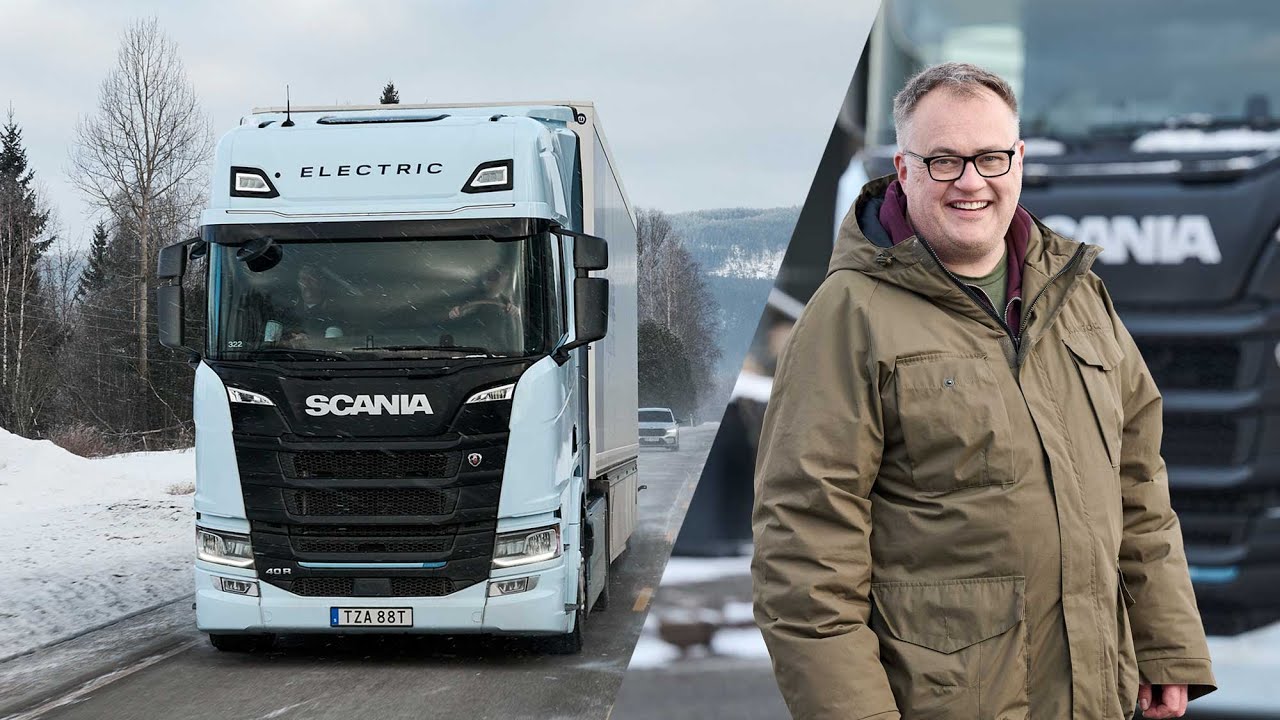
The brand’s Nordic home base is both a practical advantage and a marketing one. Scania’s trucks are engineered in Södertälje, Sweden, and tested in a climate that punishes weak thermal management systems. The company’s electric trucks have been through Scandinavian winters that would expose battery degradation, cold-start failures, and range shortfalls that milder European markets might miss. This gives Scania a credibility that is difficult to quantify but real: when the company claims a range figure, it has been validated in conditions that are harsher than most of Europe’s actual operating environments. The flip side is that Scania’s electric rollout has been heavily concentrated in the Nordics and North-West Europe — the regions where its service network is densest and where its home-market advantages are strongest. Fleets operating in Southern or Eastern Europe should read this positioning carefully: Scania’s electric brand is strong, but it is not yet uniformly present across the continent.
2. European delivery record
Scania’s electric delivery record is best described as a story of measured progress with a recent inflection point. The company has not pursued the volume-first strategy of some competitors; instead, it has focused on building a reference base in its home markets before expanding outward. This approach has produced a relatively small but high-quality set of fleet deployments, concentrated in the Nordics and North-West Europe, with the Wibax order of June 2026 representing the single largest commitment to date.
The Wibax deal, announced on 12 June 2026, is the standout data point. Wibax, a Swedish logistics and chemicals specialist, ordered 105 battery-electric Scanias to operate across more than 20 depots in Sweden, hauling liquid chemicals and bio-oils at up to 74 tonnes gross train weight. The order was described by WattTonne at the time as one of the EU’s largest single electric-truck orders in bulk transport — a segment that had previously been considered among the hardest to electrify due to the combination of heavy payloads, long distances, and the safety requirements of liquid cargo. The deal includes a five-year exclusive service package covering fleet optimisation, maintenance, charging infrastructure, and digital tools. Deliveries were scheduled to begin in the months following the announcement, and the count is expected to appear in ICCT’s quarterly monitors. This is a confirmed order, sourced from electrive (12 June 2026) and motorwatt (15 June 2026), and it feeds directly into Scania’s track-record dimension on our scorecard.
Beyond Wibax, the delivery record is thinner. Scania’s Q2 2026 interim report, published 27 July 2026, confirmed 265 battery-electric vehicle deliveries in the quarter and 321 new zero-emission orders — both figures up sharply from prior quarters. The same report showed net sales up 6% to SEK 53.1 billion, an adjusted operating margin of 11.6%, vehicle deliveries up 7% to 26,274, and incoming orders up 41% to 28,743. These numbers are confirmed from Scania’s interim report and were reported by kamyonum.com.tr on 27 July 2026. The context is important: 265 BEVs in a single quarter is still small against Mercedes-Benz’s eActros volumes — ICCT data puts Mercedes at approximately 40% of the zero-emission heavy-truck segment in H1 2026 — but the trajectory is clearly upward, and the Wibax deliveries will add to the count in subsequent quarters.
For the Nordic evidence base, Scania’s electric operations join ASKO, Norway’s grocery fleet, which has been operating electric trucks in and around Oslo since the early 2020s. ASKO is not a Scania-specific deployment — the fleet has used multiple OEMs — but it is part of the broader Nordic ecosystem that Scania’s electric trucks operate within. The combination of a clean grid, toll incentives, and OEM home-turf advantage has made the Nordics Europe’s most mature electric-truck operating environment, and Scania is the primary beneficiary of that regional tailwind. However, it is important to be honest about the limits of the record: Scania’s electric deliveries remain concentrated in a small number of markets, and the company has not yet published a comprehensive, market-by-market delivery breakdown. The phrase ‘limited volumes’ from our model specification file is accurate as of the evidence date. Fleets considering Scania electric trucks outside the Nordic-Benelux corridor should verify market availability and service coverage before shortlisting.
3. Model matrix
The following table presents the Scania 45 R/S — the company’s flagship long-haul electric model — as the primary reference point in the current lineup. The model is type-approved with deliveries in limited European markets, and its specifications are drawn from manufacturer documentation and the WattTonne Compare scorecard v0.1. The ‘EU approval’ column reflects the current status; the ‘Score’ column reflects the WattTonne v1.0 methodology, which is detailed in Section 8 of this page.
| Model | Format | Battery | Range | EU approval | Score |
|---|---|---|---|---|---|
| Scania 45 R/S | Long-haul tractor / rigid | 624 kWh installed | ~350–450 km class | WVTA granted · limited markets | 71/100 (v1.0, provisional) |
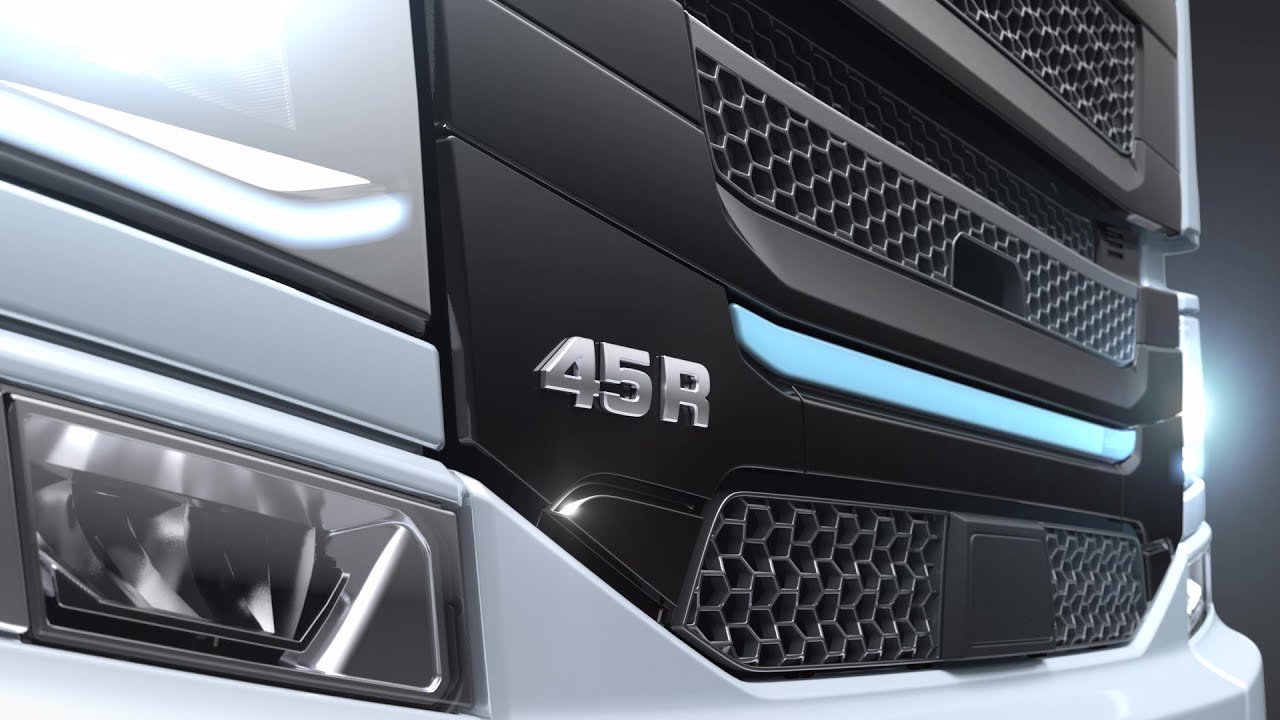
The Scania 45 R/S is the only model for which we currently hold sufficient verified data to publish a full scorecard. The ’45’ designation refers to the gross vehicle weight class in Scania’s nomenclature, and the R/S suffix indicates the cab format — R for the larger, more aerodynamic cab, S for the flat-floor variant that offers additional interior space. Both formats share the same battery and charging architecture, and the range difference between them is minimal, driven primarily by aerodynamics and weight. The 624 kWh installed battery is the largest in the Traton family as of the evidence date, and the 375 kW CCS charging capability is among the fastest currently available in any European production electric truck.
It is worth noting what this table does not include. Scania has announced plans for expanded long-haul battery options, and the Q2 2026 interim report references the introduction of its MCS (Megawatt Charging System) offering. However, as of the evidence date, no verified specifications for additional models or battery variants have been published in a form that meets our sourcing standards. We will update this matrix as new models are confirmed and as delivery data accumulates. Fleets should treat the 45 R/S as the current reference point and should verify availability of any other model directly with Scania before planning procurement.
4. Service network
Scania’s service network is one of the genuine strengths of the brand, and it is a strength that carries over from the diesel era into electric. The company operates one of the densest dealer and workshop networks in Europe, with particularly strong coverage in the Nordics, Germany, France, the Benelux countries, and the UK. For electric trucks specifically, the network has been trained and equipped to handle high-voltage systems, battery diagnostics, and charging infrastructure integration. This is not a trivial point: electric trucks have different failure modes than diesel trucks, and a service network that cannot diagnose a battery management system fault or replace a high-voltage component is of limited value regardless of its geographic density. Scania has invested in this capability, and the evidence suggests the investment is paying off in the Nordics and North-West Europe, where the electric service network is genuinely operational.
However, it would be dishonest to claim that Scania’s electric service coverage is uniform across Europe. The company’s own rollout strategy has been market-by-market, and the service network has followed the same pattern. In Southern Europe, Eastern Europe, and parts of the Iberian Peninsula, electric service capability is thinner — not necessarily absent, but not yet at the level that a fleet operating multiple electric trucks would expect. The Milence membership, which Scania holds through Traton, covers the charging corridor question at a strategic level, but charging infrastructure and service capability are two different things. A fleet operating in, say, Poland or Romania should verify local service capability before committing to Scania electric trucks. Our model specification file lists ‘Scania EU-wide’ as the service descriptor, which is accurate for the network as a whole, but the electric-specific capability is more concentrated. The honest summary is this: if your operation is in the Nordic-Benelux corridor or North-West Europe, Scania’s electric service network is a genuine asset. If your operation is further afield, verify first.
5. Price transparency
Scania does not publish a European list price for the 45 R/S. This is consistent with the company’s broader commercial strategy, which has always favoured dealer-negotiated pricing over published list prices, but it creates a transparency gap that fleet operators should be aware of. The model specification file describes the price situation as ‘dealer quotes obtainable’ — which is accurate but not particularly helpful for comparative shopping. A fleet operator in Sweden will likely receive a different quote than a fleet operator in Spain, and the difference will reflect not only local market conditions but also the volume of the order, the service package attached, and the competitive pressure in that specific market. This is normal in the commercial vehicle industry, but it makes independent price benchmarking difficult.
The absence of a published list price also affects our scorecard. On the WattTonne v1.0 methodology, the price dimension is scored as ‘n/a’ for the Scania 45 R/S because we cannot verify a reference price from any public source. This is not a criticism of Scania specifically — most European OEMs operate the same way — but it is a limitation that should be acknowledged. What we can say is that the Scania 45 R/S carries a premium positioning, consistent with the brand’s diesel-era strategy, and that the 624 kWh battery adds significant cost. The TCO (total cost of ownership) calculation therefore depends heavily on the duty cycle: high-mileage regional and medium trunk routes where the 375 kW charging capability converts breaks into meaningful range will close the business case; low-mileage urban or suburban duty will not. Our TCO score of 3/5 reflects this sensitivity. Fleets should obtain dealer quotes from at least two markets before making a procurement decision, and should treat any advertised ‘starting from’ price with caution unless it is verified in writing.
6. Warranty terms and track record
Scania’s warranty terms for the 45 R/S are described in our model specification file as ‘per contract’ — which is to say, there is no publicly standardised warranty package that we can verify. This is not unusual in the industry; commercial vehicle warranties are typically negotiated as part of the overall purchase agreement, and the terms vary based on the service package, the fleet’s maintenance history, and the duration of the commitment. The Wibax deal, which includes a five-year exclusive service package, is an example of how warranty and service are bundled in practice, but it is specific to that contract and should not be generalised. What we can say is that Scania’s diesel-era warranty track record has been solid, and there is no evidence to suggest that the electric models are treated differently. However, the absence of a published, standardised warranty means that fleets should negotiate warranty terms explicitly and in writing before signing.
The track record dimension is where Scania’s measured rollout strategy shows both its strengths and its limitations. On the positive side, the deliveries that have occurred — the Wibax order, the Q2 2026 numbers, and the earlier Nordic deployments — have not been accompanied by any publicised major failures or recalls. The hardware appears to be solid, and the winter-proving in Scania’s home market has been a genuine advantage. On the negative side, the volumes are still small. As of Q2 2026, Scania delivered 265 BEVs in the quarter, which is meaningful but still a fraction of what Mercedes-Benz has delivered in the same period. This means the reference base is thin: there are fewer fleets operating Scania electric trucks over extended periods, fewer data points on long-term battery degradation, and fewer independent assessments of real-world reliability. Our track record score of 3/5 reflects this. The table below summarises what we know and what we do not know.
| Dimension | Status | Evidence |
|---|---|---|
| Warranty terms | Per contract, not published | Model specification file; no public standardised terms |
| Delivery volumes | Limited but growing | Q2 2026: 265 BEVs delivered, 321 ZEV orders (Scania interim report) |
| Major fleet orders | Wibax: 105 units (June 2026) | electrive, motorwatt |
| Publicised failures | None identified | WattTonne review desk, as of evidence date |
| Long-term reliability data | Not yet available | Insufficient fleet-years of operation |
7. Risks (written honestly)
- Rollout pace into DE/FR markets: Scania’s electric rollout has been deliberately measured, and the pace of expansion into Germany and France — Europe’s two largest truck markets — remains a watch item. If Scania cannot accelerate deliveries into these markets, the brand risks being marginalised in the volume segments where Mercedes-Benz and Volvo are already active. The Q2 2026 numbers show improvement, but the trajectory needs to steepen.
- Volume-commitment signals from Traton: Traton’s strategic commitment to electric trucks is clear at the level of public statements, but the group has not yet made the kind of volume commitments that would signal a full-scale production shift. If Traton continues to prioritise diesel margins over electric scale, Scania’s electric models could remain a niche offering while competitors build volume and cost advantages.
- Pricing pressure from Chinese entrants: The spec-value frontier that the Scania 45 R/S currently holds is under direct attack from Chinese manufacturers such as BYD and SANY, who are offering comparable battery sizes and charging capabilities at significantly lower price points. If Scania cannot justify its premium through service quality and TCO advantages, the pricing gap will become a decisive factor for cost-sensitive fleets.
- TCO sensitivity to duty cycle: The 624 kWh battery is heavy, and the premium pricing means the business case only closes on high-mileage routes where the 375 kW charging capability is fully utilised. Fleets operating shorter routes or routes with limited charging opportunities may find the TCO unfavourable, and this is a structural risk that cannot be engineered away.
- Market availability staggered by country: The WVTA (Whole Vehicle Type Approval) is granted, but market availability remains staggered by country. A fleet operating across multiple European jurisdictions may find that the Scania 45 R/S is available in some markets but not others, complicating fleet standardisation and cross-border operations. This is a compliance risk as much as a commercial one.
- Limited reference fleet for long-term reliability: The measured rollout means fewer reference fleets than the brand’s reputation suggests. Long-term battery degradation, real-world energy consumption over extended periods, and the durability of electric drivetrain components are not yet well-documented across a large sample. This is a data gap, not a known failure, but it is a risk that fleets should price into their decision.
Media & video
8. Scorecard
The WattTonne v1.0 methodology assesses electric heavy trucks across seven dimensions: performance, TCO, price transparency, compliance, warranty, service network, and track record. Each dimension is scored on a 5-point scale, and the total is normalised to a /100 score. The methodology is designed to be transparent and replicable: every score must trace to a verified source, and where data is insufficient, the dimension is marked ‘n/a’ rather than estimated. The overall score is marked ‘provisional’ where the completeness of the data is below 60% — which is the case for the Scania 45 R/S, because the price and warranty dimensions are not publicly documented.
The table below presents the scorecard for the Scania 45 R/S. The total score of 71/100 is provisional, and the verdict is ‘Formal’ — meaning the score is based on verified evidence but subject to revision as more data becomes available. The dimensions are scored as follows: performance 3/5, TCO 3/5, price n/a, compliance 5/5, warranty n/a, service 4/5, track record 3/5. The compliance score of 5/5 reflects the WVTA status; the service score of 4/5 reflects the strength of the Nordic and North-West European network; the track record score of 3/5 reflects the limited volumes to date. The performance and TCO scores of 3/5 each reflect the hardware capability balanced against the premium pricing and heavy battery.
| Dimension | Score ( /5) | Notes |
|---|---|---|
| Performance | 3 | 624 kWh battery, 375 kW charging, ~350–450 km range; strong but heavy |
| TCO | 3 | Premium pricing requires high-mileage duty to close the business case |
| Price transparency | n/a | No European list price published; dealer quotes only |
| Compliance | 5 | WVTA granted; market availability staggered by country |
| Warranty | n/a | Per contract; no standardised public terms |
| Service network | 4 | Strong in Nordics and North-West Europe; thinner elsewhere |
| Track record | 3 | Limited volumes; Wibax order adds to base but reference fleet is thin |
| Total | 71/100 | Provisional — completeness below 60% |
Bottom line
The Scania 45 R/S is the most technically complete long-haul electric truck from a European incumbent today, with a battery and charging combination that sets the class benchmark and a service network that is genuinely strong in the regions where it matters most — but the measured rollout, the absence of published pricing and warranty terms, and the thin reference fleet mean that the score of 71/100 is provisional, and the verdict is Formal: this is a truck to shortlist if your operation sits within Scania’s strong zone and your duty cycle can absorb the premium, but verify market availability, negotiate warranty terms explicitly, and watch the rollout pace into DE/FR before making a final commitment.
WattTonne coverage
Scores v1.0, evidence dated 2026-08-08. Logo and product imagery used with the manufacturer’s marketing approval. Evidence submissions: hello@wattonne.com, subject “Scorecard evidence”.