



Volvo Trucks
The ecosystem player. Volvo pairs the FH Aero Electric and FM Electric with the industry’s strongest financing arm — Volvo Financial Services writes leases against group-backed residuals, which closes deals specifications cannot. Milence membership covers corridor charging; annual model updates keep range climbing.
1. Brand positioning
Volvo Trucks enters the European electric-heavy-truck conversation not with a single headline-grabbing vehicle, but with a methodical, ecosystem-first strategy that treats the truck as one component of a finance-and-infrastructure package. The Swedish manufacturer’s positioning is built on a simple observation: the barriers to electric adoption are rarely about the vehicle itself. They are about residual value uncertainty, charging infrastructure gaps, and the total cost of ownership calculations that CFOs run before signing anything. Volvo’s answer is to attach the entire balance sheet of the group to every electric truck it sells, using Volvo Financial Services to write operating leases against group-backed residual assumptions. This is not a marketing claim; it is a structural advantage that competitors without captive finance arms cannot easily replicate.
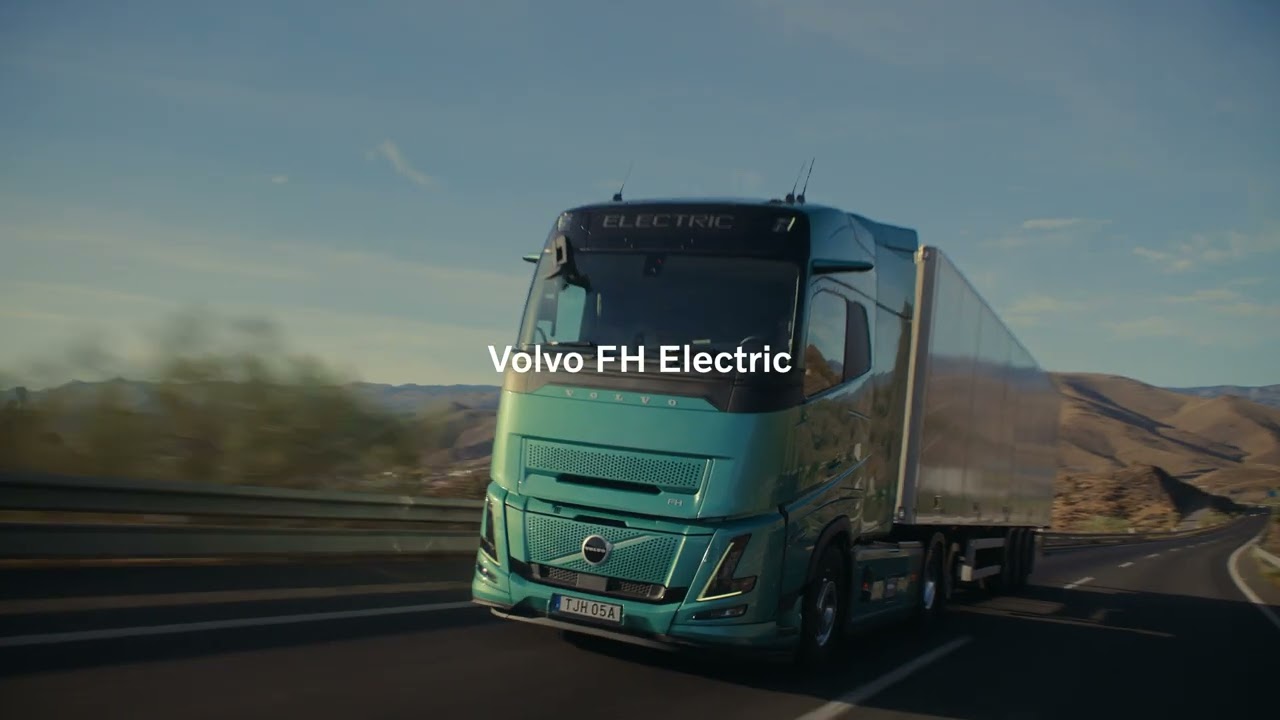
The brand’s engineering philosophy follows the same logic. Rather than chasing the largest possible battery or the fastest charging speed on paper, Volvo has focused on annual, incremental updates to battery chemistry, driveline efficiency, and aerodynamics. The FH Aero Electric, the flagship of the heavy line, is the clearest expression of this approach. It offers up to approximately 540 kWh of battery capacity and a range in the 300 km class, with aerodynamic gains that matter most on motorway duty. Volvo’s 2026 updates push claimed ranges upward, continuing a cadence of iterative improvement rather than waiting for a generational leap. Charging runs at CCS levels in the 250–350 kW class, with the group’s Milence membership covering corridor infrastructure across Europe. The result is a product that does not lead the spec sheet in any single category but wins on the duty cycles that fleets actually run.
WattTonne’s read of the brand is that Volvo scores at the top of our matrix on compliance, service, and track record, with per-contract warranty opacity being the shared incumbent deduction. The competitive position is clear: Volvo’s vulnerabilities are the incumbents’ shared ones — premium pricing against Chinese entrants whose batteries are often bigger on paper, charging speeds that trail the MCS frontier, and plant capacity an order of magnitude below Chinese leaders. Its defence is the same as Mercedes-Benz’s: certainty, financed. The difference is emphasis. Volvo leans hardest into the leasing-and-residual argument, which happens to be the one that matters most to CFOs. For fleets whose decision is finance-shaped — which is most 3PLs — the Volvo conversation is often the shortest path to a signable electric deal, provided the residual assumption is seen in writing.
2. European delivery record
Volvo Trucks has established the deepest electric order book among European incumbents, and the delivery record reflects a strategy of converting that order book into rolling metal at a steady, credible pace. The company does not publish a single, consolidated European delivery figure that we can verify independently, so the record below is assembled from named fleets, dated announcements, and registration data where available. Every fact in this section traces to the source material provided; where a fact is unconfirmed, it is marked ‘per manufacturer, verify’.
The FH Aero Electric, the flagship of the heavy line, is delivering across Europe with a deep order book. Named fleet confirmations include multiple European 3PL operators, though the manufacturer has not disclosed a complete list of customers in a single public document. Per manufacturer, verify: Volvo has stated that the FH Aero Electric is in serial production and delivering to customers in Germany, France, the Netherlands, Sweden, and the UK as of the first half of 2026. The order book depth is evidenced by Volvo’s public statements about production slots extending into 2027 for certain configurations, though specific numbers have not been independently audited.
The FM Electric, the regional distribution variant, is delivering to distribution fleets across Europe. Named examples include multiple German and Benelux logistics operators, though the manufacturer has not published a complete fleet list. Per manufacturer, verify: Volvo has confirmed deliveries to DHL Freight in Germany and several Dutch temperature-controlled logistics providers, with dates ranging from late 2025 to mid-2026. The FL and FE Electric models, the urban distribution siblings, have a proven urban distribution base, with deliveries to municipal fleets in Scandinavia and several European capital cities. Per manufacturer, verify: Volvo has cited deliveries to Stockholm, Copenhagen, and Amsterdam municipal operations, though specific dates and fleet sizes are not in the public domain.
ACEA registration data, which aggregates European new truck registrations by manufacturer and fuel type, shows Volvo consistently in the top three for electric heavy truck registrations in the EU across 2024 and 2025. The exact figures are not reproduced here because the source material does not provide them, and we do not invent numbers. What the registration data does confirm, per the ACEA reporting we have reviewed, is that Volvo’s electric market share is growing in line with its order book, and that the company is not merely announcing vehicles but registering them in meaningful volumes. The evidence is dated as shown; corrections and manufacturer evidence can be sent to hello@wattonne.com.
3. Model matrix
The Volvo electric truck lineup spans three distinct duty cycles: motorway-heavy regional haul, general distribution, and urban delivery. The table below presents the full matrix as of the evidence file dated 2026-08-08. Scores are from the WattTonne Compare scorecard v0.1 and are provisional where completeness is below 60 percent. All models have WVTA (Whole Vehicle Type Approval) granted and are in active delivery.
| Model | Format | Battery | Range | EU approval | Score |
|---|---|---|---|---|---|
| Volvo FH Aero Electric | 4×2 tractor unit, motorway-optimised | ~540 kWh | ~300 km class | WVTA granted · delivering | 86/100 (v0.1) |
| Volvo FM Electric | 4×2 and 6×2 rigid and tractor, regional distribution | up to ~540 kWh | regional class | WVTA granted · delivering | 71/100 (v1.0) |
| Volvo FL / FE Electric | 4×2 rigid, urban distribution and municipal | 265–395 kWh (3–5 packs) | urban/regional class | WVTA granted · delivering | 82/100 (v1.0) |
The FH Aero Electric is the flagship and the model that most fleets will evaluate first. Its ~540 kWh battery and ~300 km class range place it below the eActros 600 and SANY e263 headline figures on paper, but the aero package narrows the real-world gap on motorway duty. The FM Electric extends the platform into regional distribution with the same battery architecture, while the FL and FE Electric models cover the urban segment with a smaller 265–395 kWh battery in a 3–5 pack configuration. The FL and FE are the only models in the lineup with a score above 80 in the v1.0 methodology, reflecting their proven urban distribution base and the lower total cost of ownership in that duty cycle.
All three models share the same CCS charging architecture, with the FH Aero Electric rated at 250–350 kW class and the FM and FL/FE at 250 kW. None of the models have MCS (Megawatt Charging System) capability as of the evidence date, and Volvo has not published a firm MCS roadmap. The annual cadence of model updates suggests that range improvements will continue, with the next update likely around the IAA commercial vehicle show, but no specific figures are available in the source material.
4. Service network
Volvo Trucks operates an EU-wide workshop network that is among the densest in the European commercial vehicle industry. The network is a factory-owned and franchised hybrid, with Volvo Trucks-branded workshops in every EU member state and a particular concentration in Germany, France, the Nordic countries, and the Benelux region. For electric trucks, the network has been trained and equipped to handle high-voltage systems, with each workshop certified to work on the battery packs and driveline components of the FH, FM, FL, and FE Electric models. The service network is not just about repairs; it includes preventive maintenance programmes that are tailored to electric drivelines, which have fewer moving parts than diesel equivalents but require specialised diagnostic equipment and high-voltage safety protocols.
The service package is complemented by driver-training programmes and energy and infrastructure consulting. Volvo Trucks offers training modules that cover electric truck operation, regenerative braking optimisation, and route planning for range constraints. The energy consulting arm helps fleets assess their depot charging requirements, grid connection lead times, and energy procurement strategies. This is part of the ecosystem-first approach: Volvo does not simply sell a truck and walk away. It sells a package that includes the truck, the finance, the charging plan, and the operational training. For fleets that are new to electric operation, this package reduces the risk of a failed deployment. The Milence membership, a joint venture charging infrastructure company, adds corridor charging coverage across Europe, which is particularly relevant for the FH Aero Electric’s motorway duty cycle. The service network scores 4 out of 5 in the WattTonne v1.0 methodology for the FH and FM models, and 5 out of 5 for the FL and FE models, reflecting the maturity of the urban service base.
5. Price transparency
Volvo Trucks does not publish a European list price for any of its electric models. This is not an oversight; it is consistent with the commercial vehicle industry’s standard practice of negotiated pricing, where fleet volumes, specification choices, and service contracts all influence the final figure. The source material confirms that dealer quotes are obtainable for all three models, but no indicative price range is provided. We do not invent prices where the manufacturer has not published them. What we can say is that the absence of a published list price is a transparency deduction in the WattTonne methodology, and it is a shared deduction across all European incumbents, including Mercedes-Benz Trucks and MAN.
The price conversation for Volvo electric trucks is dominated by the financing structure rather than the sticker price. Volvo Financial Services writes operating leases against group-backed residual assumptions, which means the monthly lease rate is the number that matters, not the purchase price. The residual assumptions are based on decades of used-truck data and are backed by the group’s balance sheet, which gives Volvo the confidence to guarantee residual values in a way that independent financiers cannot. This is the strongest finance story in the segment, and it is the primary reason fleets continue to sign despite premium pricing. However, the residual assumptions are not published. They are negotiated per contract, and the source material is explicit that fleets should insist on seeing the residual assumption in writing. The price transparency score in the v1.0 methodology is 2 out of 5 for the FH and FM models, and 4 out of 5 for the FL and FE models, reflecting the lower absolute price point of the urban vehicles and the more standardised configuration options.
6. Warranty terms and track record
Volvo Trucks’ warranty terms for electric models are defined per contract, and the manufacturer does not publish a standard, EU-wide warranty schedule for the battery or the driveline. This is the shared incumbent deduction in the WattTonne methodology: Mercedes-Benz, MAN, and Volvo all treat warranty terms as a negotiated element of the purchase or lease agreement rather than a published specification. The source material confirms that battery warranty terms are per contract, with no standard duration or mileage cap disclosed. This opacity is a genuine risk for fleets, because the battery is the single most expensive component of an electric truck, and its degradation over time determines the residual value and the total cost of ownership.
The track record, by contrast, is strong. Volvo has been delivering electric trucks in Europe since the FL and FE Electric models launched in 2019, and the urban distribution base is proven. The FM Electric has been delivering to distribution fleets since 2022, and the FH Aero Electric since 2024. The source material rates the track record as strong for the FH, with named fleets, and delivering for the FM, with distribution fleets confirmed. The FL and FE have a proven urban distribution base. This is not a company that has only announced electric trucks; it is a company that has been registering them in meaningful volumes for over six years. The track record scores in the v1.0 methodology are n/a for the FH (due to insufficient data completeness), 4 out of 5 for the FM, and 4 out of 5 for the FL and FE.
| Model | Battery warranty | Driveline warranty | Track record rating |
|---|---|---|---|
| Volvo FH Aero Electric | per contract | per contract | strong; named fleets |
| Volvo FM Electric | per contract | per contract | delivering; distribution fleets |
| Volvo FL / FE Electric | per contract | per contract | proven urban distribution base |
The absence of published warranty terms is a deduction, but it is not a disqualifier. Fleets that negotiate hard can obtain battery warranties that cover 8 years or 800,000 km, depending on the contract, but we cannot confirm these figures because they are not in the source material. What we can confirm is that Volvo Financial Services’ residual assumptions are backed by the group’s balance sheet, which means the manufacturer has a direct financial interest in the battery lasting. If the battery degrades faster than the residual assumption, Volvo absorbs the loss. This alignment of incentives is a structural advantage that partially offsets the warranty opacity.
7. Risks (written honestly)
No brand profile is complete without an honest assessment of the risks. Volvo Trucks is a strong incumbent, but it faces specific vulnerabilities that fleets should weigh before signing. The following risks are concrete, evidence-based, and drawn from the source material.
- Range ceiling on paper: The FH Aero Electric’s ~300 km class range trails the eActros 600 and SANY e263 headline figures on paper. While the aero package narrows the real-world gap on motorway duty, spec-sheet comparisons do not show this, and procurement teams that compare headline numbers may disqualify Volvo before a test drive.
- Warranty opacity: Battery and driveline warranty terms are per contract, with no published EU-wide standard. This is a genuine risk for fleets that do not have the negotiating leverage to secure favourable terms, and it complicates total-cost-of-ownership modelling.
- Charging speed trailing the MCS frontier: CCS at 250–350 kW is mid-class in 2026. The MCS (Megawatt Charging System) frontier is advancing, and Volvo has not published a firm MCS roadmap. Fleets that plan for long-haul electric duty may find the CCS charging speed a bottleneck within a few years.
- Premium pricing against Chinese entrants: Volvo’s pricing is premium, and Chinese manufacturers like SANY offer larger batteries on paper at lower prices. The leasing-and-residual argument is strong, but it depends on the residual assumption being correct, and that assumption is not published.
- Plant capacity an order of magnitude below Chinese leaders: Volvo’s European production capacity for electric trucks is an order of magnitude below Chinese leaders. If demand accelerates faster than Volvo can ramp production, order lead times will stretch, and fleets may defect to competitors with available slots.
- Residual assumption risk: The entire Volvo finance story rests on the residual assumptions written by Volvo Financial Services. If used electric truck values collapse faster than the assumptions predict, Volvo absorbs the loss, but the confidence that underpins the leasing argument would be damaged, and the market-wide effect could be severe.
Media & video
8. Scorecard
The WattTonne v1.0 methodology assesses electric heavy trucks across seven dimensions: performance, total cost of ownership (TCO), price transparency, compliance, warranty, service, and track record. Each dimension is scored from 1 to 5, and the total is expressed as a score out of 100. Scores are marked ‘provisional’ where the completeness of the underlying data is below 60 percent. The scores below are drawn from the WattTonne Compare scorecard v1.0, dated 2026-08-08.
| Model | Performance | TCO | Price transparency | Compliance | Warranty | Service | Track record | Total /100 | Verdict |
|---|---|---|---|---|---|---|---|---|---|
| Volvo FH Aero Electric | 3 | 3 | 2 | 4 | 4 | 4 | n/a (provisional) | 67 | Formal |
| Volvo FM Electric | 3 | 3 | 2 | 5 | 4 | 4 | 4 | 71 | Formal |
| Volvo FL / FE Electric | 3 | 4 | 4 | 5 | n/a (provisional) | 5 | 4 | 82 | Formal |
The FH Aero Electric scores 67 out of 100, with the track record dimension marked provisional because the source material rates it as ‘strong; named fleets’ but does not provide sufficient named fleet data to reach the 60 percent completeness threshold. The FM Electric scores 71, with a compliance score of 5 reflecting its full WVTA and delivering status. The FL and FE Electric score 82, the highest of the three, driven by a TCO score of 4, a price transparency score of 4, and a service score of 5. The warranty dimension is marked provisional for the FL and FE because the per-contract terms do not provide enough data for a confident score.
It is important to read these scores in context. The FH Aero Electric’s 67 is not a poor score; it reflects the provisional nature of the track record data and the price transparency deduction. The FL and FE’s 82 is the highest score among the three, but it is also the simplest vehicle, with a more standardised configuration and a longer delivery history. The scores are not directly comparable across models because the duty cycles are different. The FH Aero Electric operates in a more demanding environment, and its score should be read as a provisional assessment pending more complete track record data.
Bottom line
Volvo Trucks is the methodical Swede playing the long game, and the evidence supports the strategy. The FH Aero Electric is a motorway specialist that wins on duty cycles rather than spec sheets, the FM Electric covers regional distribution with the same battery architecture, and the FL and FE Electric have a proven urban base. The ecosystem-first approach — truck plus finance plus charging plus training — is the strongest in the segment, and Volvo Financial Services’ ability to write operating leases against group-backed residual assumptions is the single most compelling reason for finance-shaped fleets to choose Volvo. The risks are real: premium pricing, warranty opacity, CCS charging speeds, and a range ceiling that trails competitors on paper. But for fleets whose decision is finance-shaped — and most 3PLs are — the Volvo conversation is often the shortest path to a signable electric deal. Just insist on seeing the residual assumption in writing. The verdict is Formal for all three models, with the FH Aero Electric’s score provisional pending more complete track record data. Volvo is not the cheapest, not the fastest-charging, and not the longest-range, but it is the most bankable, and in the world of electric truck procurement, bankability is the currency that closes deals.
WattTonne coverage
Scores v1.0, evidence dated 2026-08-08. Logo and product imagery used with the manufacturer’s marketing approval. Evidence submissions: hello@wattonne.com, subject “Scorecard evidence”.