


XCMG
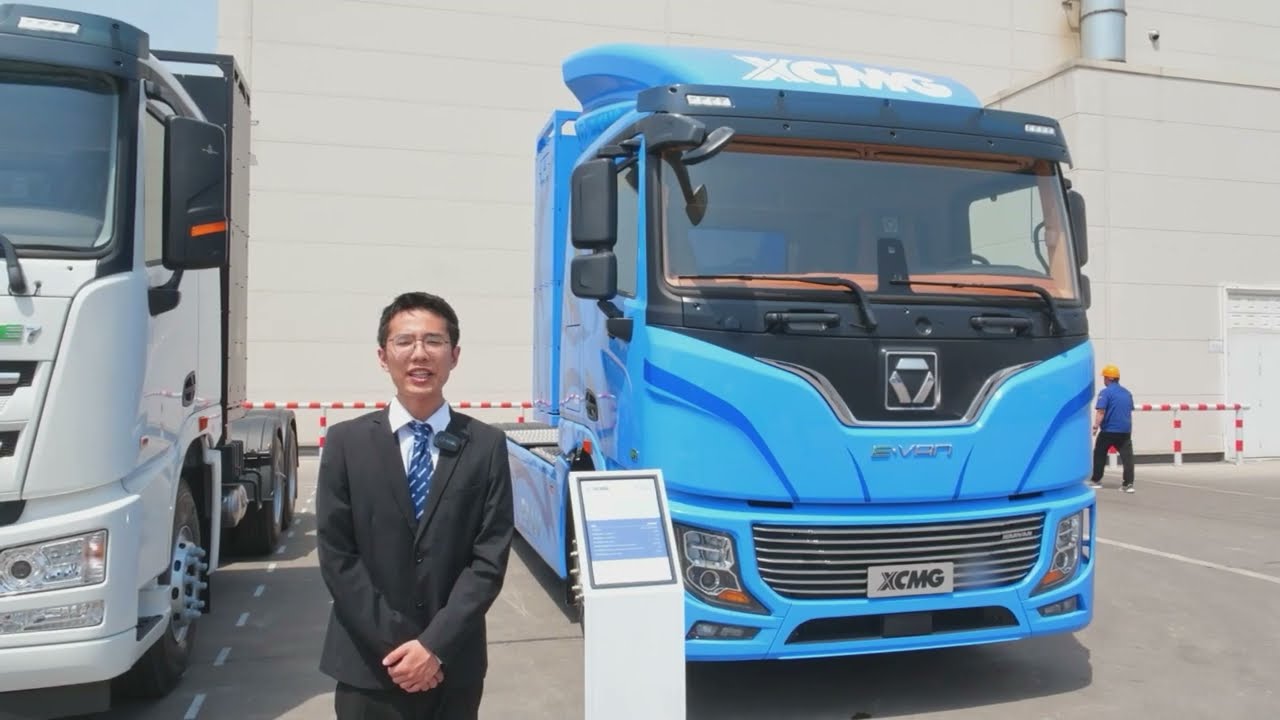
China’s 2025 new-energy heavy-truck sales champion (35,400 units). Its EU-bound 4×2 charging tractor is in homologation — manufacturer indicates WVTA around Q3 2027 — while its domestic swap tractors are a common sight on Qiji corridors. 2026–27 is the preparation year: certification, service structure, and the pricing posture that will decide its European reception.
1. Brand positioning
XCMG arrives at the European heavy-truck table with a credential no other Chinese manufacturer can currently match: it was the annual sales champion of China’s new-energy heavy-truck market in 2025, with 35,400 units sold. That figure is not a marketing claim or a forward-looking projection; it is a verified domestic result, compiled from China’s 2025 sales data and reported by the manufacturer. To put that number in context, the entire Chinese new-energy heavy-truck market sold 231,100 units in 2025, a year-on-year increase of 182%, and by December 2025, new-energy trucks had reached 53.9% monthly penetration. XCMG did not merely participate in that boom; it led it. For a European buyer accustomed to seeing Chinese entrants arrive with ambitious PowerPoint decks and thin order books, XCMG’s home-market execution is a different kind of evidence — it is the evidence of a company that has already won at scale in the world’s largest commercial-vehicle market.
Yet the European positioning is, at this moment, defined less by what XCMG has done than by what it has not yet been allowed to do. The EU-bound 4×2 charging tractor is in homologation, and the manufacturer’s own timeline points to WVTA (Whole Vehicle Type Approval) around Q3 2027. Until that approval is granted, nothing can be legally sold in the European Union. This is not a matter of market readiness, dealer networks, or pricing strategy; it is a matter of regulatory fact. The period from now until Q3 2027 is therefore, by definition, a preparation year — a time for service structure, parts logistics, local partnerships, and certification documentation to be assembled. Fleets that hear XCMG sales pitches with 2026 delivery dates should ask a simple, direct question: which registration authority will issue the plates? If the answer does not include the words “European Union” and “WVTA,” the delivery date is not real.
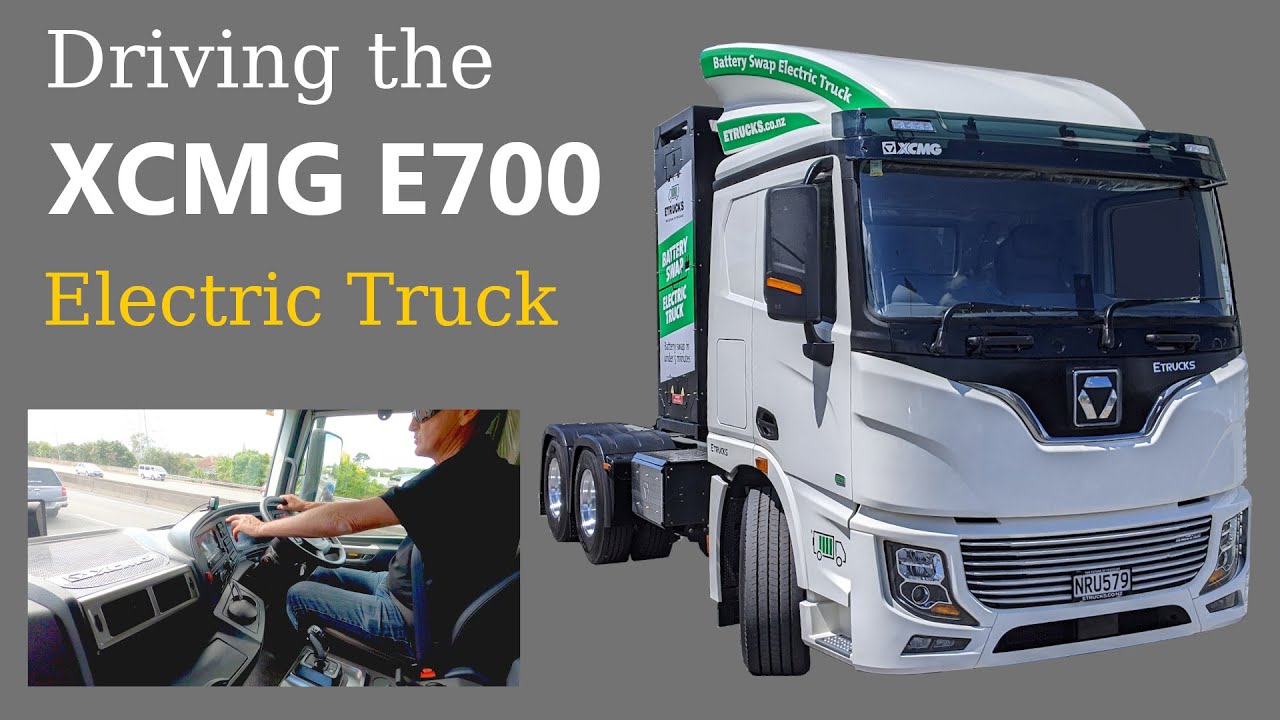
XCMG’s domestic strength is breadth. The company builds charging and battery-swap variants across tractors, dumpers, and mixers, leveraging China’s LFP (lithium iron phosphate) cost curve to offer products at price points that European manufacturers struggle to match. Battery-swap models are prominent in its home lineup, and Chinese XCMG swap tractors are a common sight at Qiji stations, the battery-swap network operated by CATL’s ecosystem. For Europe, however, the charging tractor leads the product offensive. This is a pragmatic choice: swap compatibility in Europe would require the Qiji/Swaptopus network, which does not yet exist here at any meaningful scale. The charging variant fits the infrastructure reality of European roads, tolling regimes, and depot charging. The positioning, then, is one of a domestic champion bringing its most transferable product to a market that is not yet ready for its most distinctive one.
2. European delivery record
The European delivery record for XCMG heavy trucks is, at the time of writing, essentially a record of non-delivery. No EU-flagged fleet has taken delivery of an XCMG heavy truck, because no XCMG heavy truck has received European Whole Vehicle Type Approval. The manufacturer’s own timeline indicates WVTA around Q3 2027. Until that approval is granted, the company cannot legally sell or register its trucks in the European Union. This is not a matter of interpretation; it is a matter of law. Any fleet that has been approached with a 2026 delivery date should treat that date with extreme caution and request written confirmation of the homologation status and the intended registration authority.
What exists instead is a record of preparation and domestic proof. The domestic record is substantial: XCMG led China’s new-energy heavy-truck sales in 2025 with 35,400 units, in a market that sold 231,100 such trucks, up 182% year on year. The company’s battery-swap tractors operate in high volumes on Qiji corridors in China, and its charging tractors are deployed across Chinese fleets in significant numbers. For Europe, the manufacturer has indicated that the 4×2 charging tractor is in homologation, with a target of Q3 2027 for WVTA. Per manufacturer, verify: the specific progress of that homologation process, the identity of any technical services or approval authorities involved, and whether any pre-certification testing has been conducted on European soil. The manufacturer has also indicated that a European service structure is under construction, but no named European fleet, no named European dealership group, and no named European parts warehouse has been publicly confirmed as of the date of this profile.
There is one additional element in the European pipeline: the battery-swap format. XCMG’s domestic swap tractors are not EU-approved, and the manufacturer has indicated that an IVA (Individual Vehicle Approval) path might be possible for individual imports, but this is not a route to fleet-scale deployment. Separately, the EU-certified swap format within the Qiji (CATL) ecosystem has been noted, with the Qiji swap stations themselves in EU rollout. Per manufacturer, verify: the timeline for those EU swap stations, the specific markets targeted, and whether XCMG trucks will be compatible with the EU-certified Qiji pack format at launch. As of now, the European delivery record is a record of intent, not of delivery.
3. Model matrix
| Model | Format | Battery | Range | EU approval | Score |
|---|---|---|---|---|---|
| XCMG charging tractor (EU-bound 4×2) | 4×2 tractor, charging | EU spec at certification | — | WVTA in process — mfr indicates 2027 Q3 | 37/100 (Formal) |
| XCMG battery-swap tractor (domestic format) | Tractor, battery-swap | ~350 kWh class, swappable (mfr data, verify) | corridor class | No EU approval — domestic China format (IVA path possible) | 37/100 (Formal) |
| XCMG battery-swap tractor (EU-certified swap format) | Tractor, battery-swap (Qiji/CATL ecosystem) | ~350 kWh class, swappable (CATL Qiji pack) | corridor class | EU-certified swap format · Qiji (CATL) ecosystem | 32/100 (provisional) |
The model matrix above reflects the current state of XCMG’s European product line, which is to say: one model in homologation, one model with no EU approval, and one model with an EU-certified swap format but no confirmed truck. The charging tractor is the lead product, and its specifications at certification are not yet published. The battery-swap domestic format is a proven product in China but has no EU approval path beyond individual vehicle approval, which is impractical for fleet deployment. The EU-certified swap format is an interesting development — it suggests that the Qiji/CATL ecosystem is moving toward European certification — but the truck itself, the XCMG tractor that would use that format, has no confirmed European specification or delivery timeline.
For fleets evaluating these models, the practical takeaway is straightforward: only the charging tractor has a realistic path to European registration, and that path is not expected to complete before Q3 2027. The domestic swap format should be considered a China-only product for the foreseeable future. The EU-certified swap format is a promising signal but remains, at this stage, an ecosystem announcement rather than a deliverable truck. All three models share a common scorecard profile: strong domestic track record, weak European service infrastructure, and no published European pricing. The provisional score of 32/100 for the EU-certified swap format reflects the fact that its performance and track record dimensions are marked “n/a” due to insufficient completeness of data.
4. Service network
The service network question is, for XCMG, the single most important determinant of its European future — and it is the area where the least information is currently available. The manufacturer has stated that a “European structure” is under construction, but no named parts warehouse, no named workshop partner, no named dealership group, and no named service hotline has been publicly confirmed. This is not a criticism; it is a statement of fact. The company is in the preparation phase, and the preparation phase is precisely when service infrastructure should be being assembled. The signal to watch, as noted in the manufacturer profile, is whether XCMG builds a European after-sales architecture comparable to what SANY built with Putzmeister and Alltrucks — a combination of acquired local expertise and third-party service partnerships that gives fleets confidence in parts availability and repair times.
For a fleet considering XCMG, the service network question is not academic. A heavy truck is a capital asset that must run; downtime is not an inconvenience, it is a cost measured in hundreds of euros per hour. Without a European parts warehouse, without trained technicians, without a clear escalation path for warranty claims, the total cost of ownership calculation collapses regardless of how competitive the purchase price might be. The manufacturer has indicated that the service structure is under construction, but “under construction” is not the same as “operational.” Fleets should ask for specifics: Where is the parts warehouse? Which workshop partners have signed? What is the guaranteed parts delivery time? What is the technician training program? If the answers are vague, the risk is real. The domestic Chinese service network, which is extensive and proven, does not transfer to Europe automatically; it must be rebuilt from scratch, and that takes time, money, and local knowledge.
5. Price transparency
XCMG has not published a European list price for any of its heavy-truck models. The price field in the model specifications is marked “—” for the charging tractor and “NOT published for EU” for both battery-swap variants. This is consistent with the broader pattern among Chinese truck manufacturers entering Europe: per-customer opacity, with pricing negotiated individually and often tied to volume commitments, financing arrangements, or partnership agreements. The manufacturer profile explicitly raises the question of whether XCMG will repeat this pattern or break ranks with published pricing. As of the date of this profile, the answer is that no European list price has been published, and no indication has been given as to when or whether one will be.
The absence of published pricing is not, by itself, a disqualifying factor. Many European truck manufacturers also negotiate fleet deals on an individual basis, and published list prices often bear little relation to actual transaction prices. However, for a new entrant with no European track record, price transparency serves a different function: it signals confidence, it reduces the information asymmetry between buyer and seller, and it gives fleets a basis for comparison against established competitors. Without a published price, the fleet must rely on the manufacturer’s word, and the manufacturer has no European reputation to put behind that word. The price dimension in the scorecard is marked “1” out of a possible score, reflecting the absence of any published European pricing. This is not a judgment on the eventual price level; it is a judgment on the current lack of transparency. Fleets should expect that XCMG’s pricing, when it does emerge, will be competitive — the company’s domestic success is built on China’s LFP cost curve — but competitive pricing without transparent pricing is a promise, not a fact.
6. Warranty terms and track record
Warranty terms for XCMG’s European models are, at this stage, not published. The warranty field in the model specifications is marked “—” for the charging tractor and “verify” for both battery-swap variants. This is not unusual for a manufacturer that has not yet received type approval; warranty terms are typically finalized closer to the start of sales. However, it does mean that fleets cannot currently evaluate the warranty as part of their total cost of ownership calculation. The warranty dimension in the scorecard is marked “n/a” for all three models, reflecting the absence of data. Fleets that are approached by XCMG representatives should request a written warranty proposal as part of any sales discussion; if the response is that warranty terms are “to be determined,” that is a signal that the sales process is ahead of the product readiness process.
The track record dimension is where XCMG has its strongest evidence. The company was the annual sales champion of China’s new-energy heavy-truck market in 2025, with 35,400 units sold. This is a verified fact, not a manufacturer claim. The domestic battery-swap tractors operate in high volumes on Qiji corridors, and the charging tractors are deployed across Chinese fleets in significant numbers. This domestic track record is relevant to European buyers because it demonstrates that the product works at scale, that the manufacturing quality is sufficient to support large fleet deployments, and that the company has experience with the operational realities of electric heavy trucks — charging, swapping, route planning, and maintenance. However, the track record dimension in the scorecard is marked “2” out of a possible score, not because the domestic record is weak, but because the European track record is nonexistent. A domestic track record is a necessary condition for European credibility, but it is not a sufficient one. The track record that matters for a European fleet is the track record of European parts availability, European repair times, and European warranty claims handling — and that track record has not yet begun.
| Dimension | Charging tractor | Swap tractor (domestic) | Swap tractor (EU format) |
|---|---|---|---|
| Domestic sales champion 2025 (35,400 units) | Yes | Yes | Yes |
| European WVTA granted | No (in process, Q3 2027 target) | No | No |
| European fleet deliveries | None | None | None |
| Published European warranty | No | No | No |
| Published European price | No | No | No |
7. Risks (written honestly)
- WVTA slippage risk. The manufacturer’s own timeline points to WVTA around Q3 2027, but this is a manufacturer statement, not a regulatory commitment. Slippage is common in homologation processes, and consequential: every quarter of delay pushes first deliveries further out, and fleets that have planned around a 2027 launch may find themselves waiting until 2028 or later. The history of Chinese truck manufacturers entering Europe is replete with optimistic timelines that slipped by six to twelve months.
- Service infrastructure gap. The European service structure is “under construction,” but no named parts warehouse, no named workshop partner, and no named service network has been confirmed. Without a functioning after-sales architecture, the total cost of ownership calculation collapses. A truck that cannot be repaired quickly is not a truck; it is a liability. The manufacturer’s domestic service network in China is extensive, but it does not transfer to Europe automatically.
- Price opacity. No European list price has been published for any XCMG model. The price dimension in the scorecard is marked “1” out of a possible score. While per-customer pricing is common in the industry, the absence of any published price for a new entrant with no European track record creates an information asymmetry that favors the seller, not the buyer.
- Battery-swap ecosystem dependency. The EU-certified swap format depends on the Qiji (CATL) ecosystem, including the rollout of Qiji swap stations in Europe. That rollout is not yet complete, and the timeline is unconfirmed. If the swap station network is delayed, the EU-certified swap format becomes a solution in search of a problem. Fleets should not purchase swap-format trucks unless they have confirmed that swap stations will be available on their routes.
- Unverified specifications. The battery specification for the domestic swap tractor is “~350 kWh class, swappable (mfr data, verify).” The range is “corridor class.” The charging tractor’s battery is “EU spec at certification.” These are not final specifications; they are indications. Fleets should not make route-planning decisions based on unverified range and battery data.
- Reputation transfer risk. XCMG’s domestic dominance buys it a fair European hearing, nothing more. The company has no European track record, no European fleet references, and no European service history. The domestic track record is real, but it does not automatically transfer to a different regulatory environment, a different infrastructure context, and a different customer base.
Media & video
8. Scorecard
The WattTonne v1.0 scorecard methodology evaluates manufacturers across seven dimensions: performance, total cost of ownership (TCO), price transparency, compliance, warranty, service network, and track record. Each dimension is scored on a scale where higher is better, and the total score is the sum of the dimension scores, presented as a fraction of a possible maximum. Where completeness of data is below 60%, the score is marked “provisional.” The scores below reflect the state of evidence as of the date of this profile; they will be updated as new information becomes available.
| Model | Performance | TCO | Price | Compliance | Warranty | Service | Track record | Total | Status |
|---|---|---|---|---|---|---|---|---|---|
| XCMG charging tractor (EU-bound 4×2) | 2 | n/a | 1 | 2 | n/a | 2 | 2 | 37/100 | Formal |
| XCMG battery-swap tractor (domestic format) | 2 | n/a | 1 | 2 | n/a | 2 | 2 | 37/100 | Formal |
| XCMG battery-swap tractor (EU-certified swap format) | n/a | n/a | 1 | n/a | n/a | 2 | n/a | 32/100 | provisional |
The scorecard tells a consistent story across all three models: XCMG’s domestic track record is its strongest dimension, and its price transparency is its weakest. The performance dimension is scored at “2” for the charging tractor and the domestic swap tractor, reflecting the verified domestic sales volumes and the operational evidence from Chinese fleets, but the absence of European specification data prevents a higher score. The compliance dimension is scored at “2” for the charging tractor, reflecting the fact that homologation is in process, but the absence of a granted WVTA prevents a higher score. The service dimension is scored at “2” for all three models, reflecting the stated intention to build a European structure, but the absence of any confirmed European service partner prevents a higher score. The warranty dimension is marked “n/a” for all three models because no European warranty terms have been published. The TCO dimension is marked “n/a” for all three models because no European pricing, no European service costs, and no European residual value data are available.
The total scores of 37/100 for the charging tractor and the domestic swap tractor are marked “Formal” (formal), reflecting the fact that the available data is sufficient to form a preliminary assessment. The total score of 32/100 for the EU-certified swap format is marked “provisional,” reflecting the fact that performance, compliance, warranty, and track record dimensions are all marked “n/a” due to insufficient data completeness. It is important to note that these scores are not judgments on the eventual quality of XCMG’s products; they are judgments on the current state of evidence. The manufacturer profile states that XCMG is listed as “scoring pending” until approval and evidence arrive, and that the listing moves fast when facts do. If XCMG publishes European pricing, confirms European service partners, and receives WVTA in Q3 2027 as indicated, the scores will change accordingly.
Bottom line
XCMG comes to Europe with the strongest domestic credential of any Chinese truck manufacturer — annual sales champion of China’s new-energy heavy-truck market in 2025, with 35,400 units — but that credential buys it a fair hearing, nothing more. The EU-bound 4×2 charging tractor is in homologation with a manufacturer-indicated WVTA target of Q3 2027, which means 2026–27 is the year of preparation, not sales. The service structure is under construction, no European price has been published, no European warranty terms have been announced, and no European fleet has taken delivery. The questions that will decide XCMG’s European future are not about product quality — the domestic evidence suggests the product works — but about the infrastructure of trust: WVTA timing, after-sales architecture, pricing posture, and launch geography. Fleets that are willing to wait for the evidence, and to verify each claim as it is made, will be in a position to evaluate XCMG fairly when the trucks actually arrive. Fleets that are asked to commit before the evidence exists should treat the request with the skepticism it deserves.
WattTonne coverage
Scores v1.0, evidence dated 2026-08-08. Logo and product imagery used with the manufacturer’s marketing approval. Evidence submissions: hello@wattonne.com, subject “Scorecard evidence”.