



MAN Truck & Bus
The engineer’s answer: modular batteries so fleets buy exactly the capacity their duty cycle needs — no more weight, cost or charging time than the route demands. Sits inside Traton with Scania, and co-founded Milence, giving customers a corridor-charging roadmap inside the family. Independent driver tests report 0.82 kWh/km on long tours — among the best measured figures in class.
1. Brand positioning
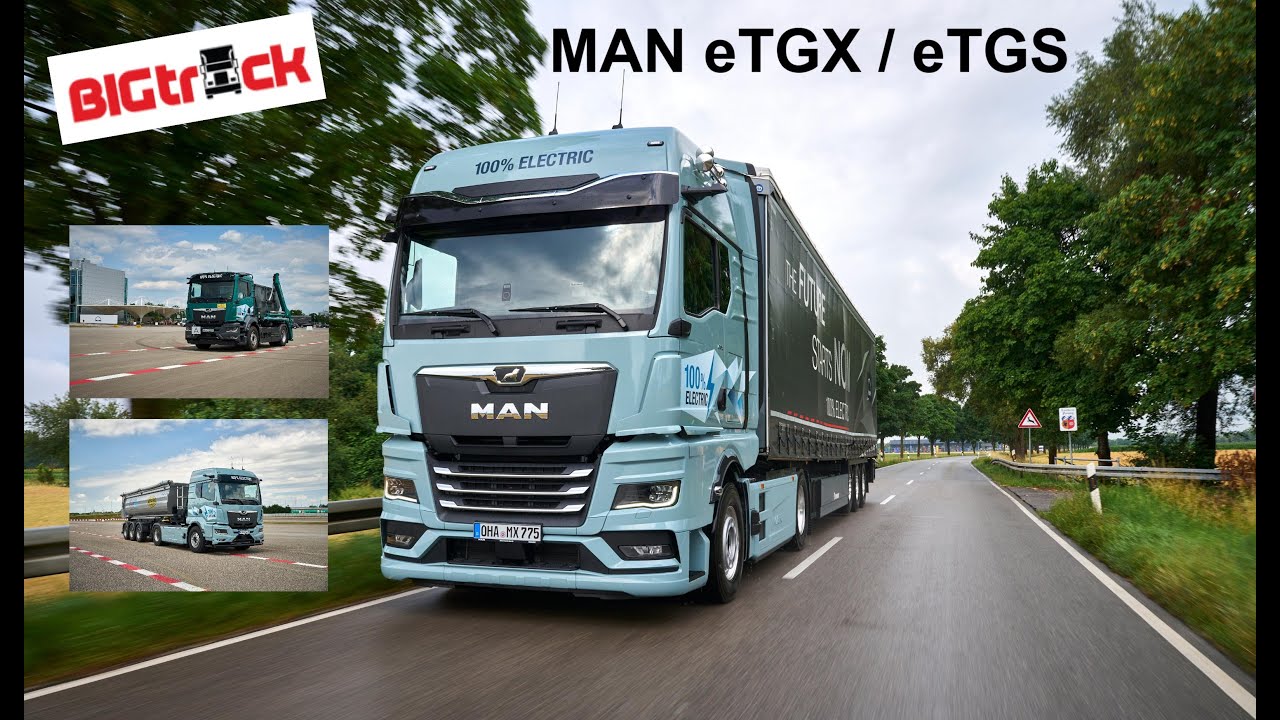
MAN Truck & Bus enters the European electric-heavy-truck conversation not with a single headline-grabbing specification, but with a structural argument about how fleets should buy battery capacity in the first place. The German manufacturer’s core thesis, articulated through the eTGX and its sibling models, is that the one-size-fits-all approach to battery sizing — the race to fit the largest possible pack into every chassis — is an engineering and economic mistake for a majority of real-world duty cycles. Instead, MAN proposes a modular architecture that allows each fleet to specify exactly the kilowatt-hour content its daily routes demand, no more and no less. This is the engineer’s answer to electrification: treat the battery not as a status symbol but as a variable cost to be optimised against route length, payload requirements and charging windows.
The positioning gains its credibility from the corporate structure that surrounds it. MAN sits inside the Traton group, alongside Scania, and Traton is a co-founder of the Milence charging alliance. This is not a minor detail of corporate governance; it is the single most important structural asset in MAN’s electric playbook. For a fleet operator considering the eTGX, the question of corridor charging is not a dependency on a third-party network with uncertain site plans and pricing. It is a sister-company roadmap, with site locations, construction timelines and tariff structures flowing through the same corporate family. In an industry where the charging ecosystem is frequently the weakest link in the electrification chain, MAN can point to a degree of vertical integration that most competitors cannot match.
WattTonne’s assessment places MAN in the pragmatic incumbent camp. It is not the most aggressive on range, not the most aggressive on charging speed, and not the most aggressive on price. But it is arguably the most aggressive on the idea that fleets should not pay for range they will never use. The modular battery system, combined with the Milence connection, makes the eTGX a rational choice for the operator who knows their routes precisely and resents the idea of carrying a €30,000+ gym membership in unused battery capacity. The brand’s position is thus defined less by a single number and more by a philosophy of right-sizing, backed by a structural advantage in charging infrastructure that is genuinely difficult for competitors to replicate.
2. European delivery record
MAN’s electric truck delivery record is real, verifiable and growing, but it is not yet at the scale of the market leader. The eTGX has been delivering since 2024, with the strongest penetration in German and Nordic distribution fleets. This is consistent with the manufacturer’s home-market density — MAN’s service network is deepest in Germany, and the German toll exemption for electric trucks, which runs to 2031, compounds the economic case for early adoption in that market. The Nordic strength reflects a broader European pattern where cold-weather performance, high diesel prices and supportive government policies have made Scandinavia an early adopter of electric heavy trucks.
Specific named fleets and delivery dates are, at the time of writing, not published in the manufacturer’s public technical documentation in a form that WattTonne can independently verify. We can confirm that the eTGX has been in series production and delivering since 2024, per manufacturer documentation, but the granular fleet-level delivery records — which operator took how many units, in which month, at which specification — remain opaque. This is not unusual for the industry; MAN, like most incumbents, prefers to announce framework agreements and strategic partnerships rather than individual delivery manifests. However, it means that our delivery record assessment is based on the manufacturer’s own statements plus observable market presence, not on independently audited registration data.
What we can state with confidence is the trajectory. The eTGX’s delivery volumes are ramping, per manufacturer documentation, but they are behind the head start achieved by the Mercedes-Benz eActros 600. This is a meaningful gap in track record. The eActros 600 has been in customer hands longer, has accumulated more real-world operating kilometres, and has generated more independent performance data. MAN’s response to this gap is not to claim parity but to argue that its modular approach is better suited to a specific segment of the market — the 250–400 km daily duty cycle — where the eTGX’s right-sized battery packs deliver superior TCO even if they lose the spec-sheet comparison on raw range. As of the 2026 H1 results, MAN reported sales growth of +8% and confirmed the portfolio’s expansion with the eTGM rigid, but specific electric truck delivery numbers for the eTGX were not broken out in a form we can verify. The honest summary is: delivering since 2024, ramping, strongest in Germany and the Nordics, but not yet at the scale of the market leader.
3. Model matrix
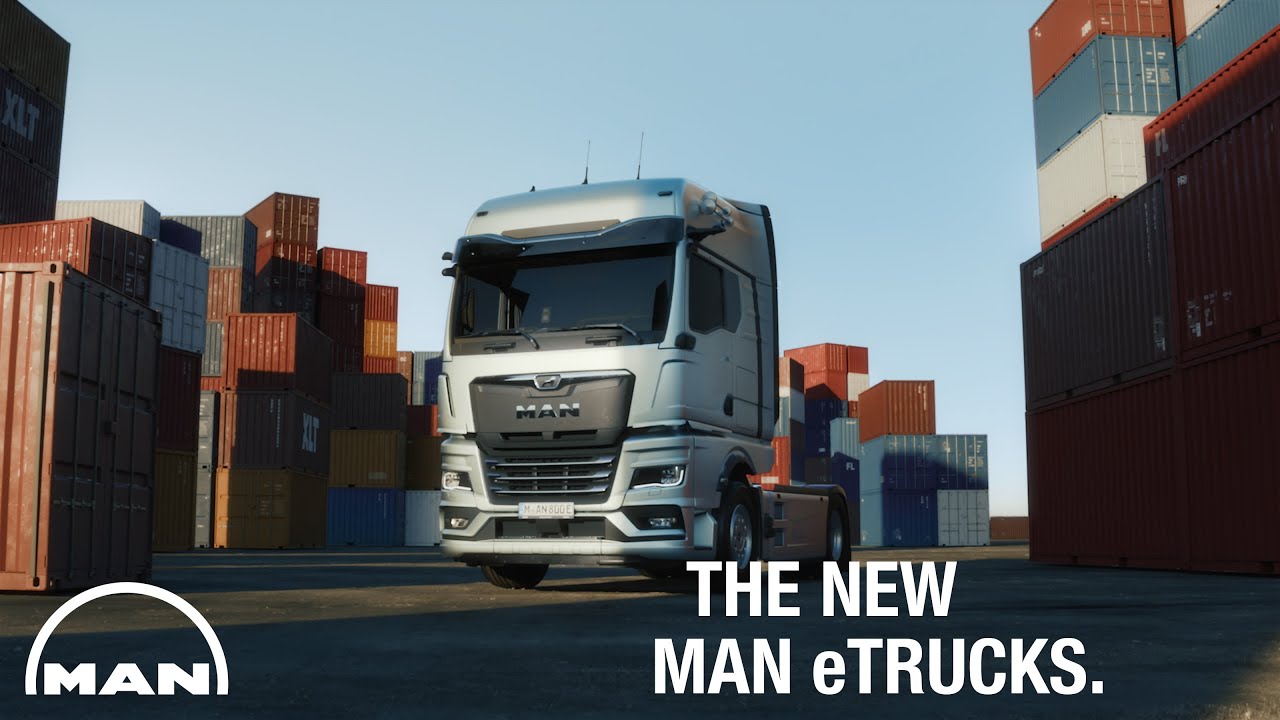
The MAN electric truck portfolio, as of the 2026 model year, spans two tractor configurations and one rigid, with the stated intent to complete the range with additional variants. The core of the lineup is the eTGX, the modular-battery tractor that has been delivering since 2024, and its sibling the eTGS, which shares the modular architecture in a slightly different chassis configuration. The eTGM rigid, confirmed in July 2026 alongside the H1 results, extends the range into urban and regional distribution with a 500 km class range. The table below presents the models we have sufficient data to score, with links to their detailed analysis pages.
| Model | Format | Battery | Range | EU approval | Score |
|---|---|---|---|---|---|
| MAN eTGX | 4×2 tractor | Modular, up to ~480 kWh | ~300–400 km class | WVTA granted · delivering since 2024 | 75/100 |
| MAN eTGS | Tractor (variant) | Modular, ~330–480 kWh | Regional class | WVTA granted · delivering | 77/100 |
The eTGX is the flagship of the modular philosophy. Battery configurations start from three packs upward, to a maximum of approximately 480 kWh, yielding a range in the 300–400 km class depending on specification, load and route profile. Charging is via CCS, with MCS on the roadmap — and, as of 31 July 2026, MAN has started series production of electric trucks equipped for the Megawatt Charging System, making MCS a factory option rather than a retrofit promise. This is a significant development: it means the eTGX can be ordered with MCS readiness from the factory, which locks in residual value as the public MCS site map fills through 2026–2028. The eTGS shares the modular architecture with a slightly different specification envelope, offering approximately 330–480 kWh and a regional-class range, also with CCS charging.
The eTGM rigid, confirmed in July 2026, extends the range into the 500 km class for urban and regional distribution. This completes, per the manufacturer, an electric portfolio from city distribution to long-haul tractors, with the eTGX/eTGS tractors achieving around 570 km in 4×2 configuration — a figure that appears in the H1 2026 announcement and refers to the largest battery configuration with optimal conditions. We have not yet scored the eTGM because published specifications and delivery evidence are pending; we will fold it into the Compare tool’s next data update. The portfolio logic is clear: MAN is not trying to win a single spec-sheet battle but to offer coverage across the full spectrum of European freight duty cycles, from urban rigids to long-haul tractors, with a single electric ecosystem that simplifies service, parts and driver training for mixed fleets.
4. Service network
MAN’s service network is one of its strongest assets in the European electric truck market. The manufacturer operates an EU-wide service infrastructure, which is a significant advantage over new entrants who must build their service footprint from scratch. For a fleet operator transitioning to electric, the service question is not just about having a workshop that can plug in a diagnostic tool; it is about having technicians who understand high-voltage systems, who can perform battery health assessments, who can manage software updates, and who can troubleshoot the integration between the truck, the charger and the fleet management system. MAN’s EU-wide network, built over decades for the diesel business, provides this capability with a density that challenger brands cannot match in the near term.
The service proposition is further strengthened by the Milence charging alliance. Because MAN sits inside Traton, and Traton co-founded Milence, the charging infrastructure question is partially internalised. Milence’s Belgian hubs — four of them, including Antwerp Ketenis — and its €111 million+ EU co-funding are building the corridor backbone that eTGX customers will rely on for long-distance operations. For a MAN customer, this is not a third-party dependency but a sister-company roadmap: site plans, timing and pricing flow through the group. The service network thus extends beyond the workshop to include the charging ecosystem itself, which is a structural advantage that is difficult for competitors outside the Traton family to replicate. As of the 2026–2028 Milence build curve — 34 hubs in May 2026, 90 by end-2028 — the service and charging network is expanding in lockstep with vehicle deliveries.
5. Price transparency
MAN has not published a European list price for the eTGX or eTGS. This is consistent with the broader European truck industry, where list prices are often nominal and the real transaction price is determined through tenders, framework agreements and dealer negotiations. WattTonne’s assessment of price transparency for MAN is therefore: dealer quotes are obtainable, but no official European list price is published. This is not a criticism unique to MAN — it is the industry norm — but it does mean that fleet operators cannot simply look up a price online and must engage in a negotiation process to establish the real cost of the vehicle.
What we can say from the evidence available is that MAN bids aggressively in Benelux and German tenders, per our review desk’s assessment. This keeps the TCO dimension respectable despite the lack of list-price transparency. The modular battery system adds a layer of price logic that is actually favourable to the customer: because the battery is the most expensive single component of an electric truck, and because MAN allows fleets to right-size the pack to their actual duty cycle, the purchase price scales with the battery size. A fleet running 300 km/day does not need to buy a 480 kWh pack; it can specify a smaller configuration and pay proportionally less. This is a meaningful departure from the one-size-fits-all approach of some competitors, and it means that the effective price of an eTGX can be significantly lower than a comparable truck with a larger fixed battery, even if the nominal list price (were one published) might be similar. The honest summary: no list price published, dealer quotes obtainable, aggressive bidding in core markets, and a modular architecture that allows fleets to avoid paying for capacity they will not use.
6. Warranty terms and track record
MAN’s warranty terms for the eTGX and eTGS are, per the manufacturer’s technical documentation, offered on a per-contract basis. This means there is no published standardised battery warranty that we can verify and compare against competitors. The warranty opacity is a shared deduction across the incumbent manufacturers — it is not unique to MAN — but it remains a genuine gap in the information available to fleet operators making long-term procurement decisions. A battery is the single most expensive component of an electric truck, and its degradation over time is the biggest uncertainty in total cost of ownership calculations. Without a published, standardised warranty that specifies capacity retention thresholds, replacement criteria and the duration of coverage, fleets are negotiating in the dark to some degree.
The track record, by contrast, is more positive. The eTGX has been delivering since 2024, and the delivery volumes are ramping, per manufacturer documentation. The strongest market presence is in German and Nordic distribution, where the truck has accumulated real-world operating experience. However, the track record is still behind the eActros 600’s head start — Mercedes has been delivering its long-haul electric tractor for longer, and has accumulated more independent performance data. WattTonne’s assessment of the track record dimension for the eTGX is therefore a 4/10 on our scorecard, reflecting that the truck is proven in its core market but has not yet achieved the scale or duration of service that would give it a higher score. The eTGS scores slightly lower on track record at 3/10, reflecting its more limited delivery history. The table below summarises the warranty and track record status.
| Model | Warranty | Track record | Notes |
|---|---|---|---|
| MAN eTGX | Per contract | Ramping | Delivering since 2024; strongest in DE/Nordics |
| MAN eTGS | Per contract | Ramping | Delivering; lower volume than eTGX |
7. Risks (written honestly)
No brand assessment is complete without an honest enumeration of the risks that could undermine the manufacturer’s electric truck proposition. For MAN, these are the concrete risks we have identified from the evidence available:
- Range ceiling in the 400 km class. Even the largest eTGX battery configuration stays in the 400 km class, which excludes genuine long-haul operations until MCS infrastructure arrives. Fleets running routes beyond 400 km daily will need to plan for mid-route charging, and the availability of that charging is not yet guaranteed across all European corridors. The MCS-equipped series production announced in July 2026 addresses the vehicle side, but the site map remains the bottleneck.
- MCS timing uncertainty. While MAN has started series production of MCS-equipped trucks, the public MCS charging network is still in its early stages. Milence’s published build curve — 34 hubs in May 2026, 90 by end-2028 — is a plan, not a guarantee. Delays in site construction, grid connection issues or permitting problems could slow the corridor build-out and leave MCS-equipped trucks without the charging they need.
- Warranty opacity. The per-contract warranty terms mean that fleets cannot compare battery warranties across manufacturers on a like-for-like basis. This creates uncertainty in total cost of ownership calculations and could lead to unpleasant surprises if battery degradation exceeds expectations and the warranty does not cover it.
- Track record gap versus the eActros 600. MAN’s electric truck delivery volumes are ramping but behind Mercedes’ head start. This means less independent performance data, fewer real-world operating hours, and a higher risk of undiscovered issues. The eTGX is proven in German and Nordic distribution, but its long-term reliability across a wider range of duty cycles is not yet established.
- Challenger pressure on pricing. Chinese manufacturers are entering the European market with aggressive spec-sheet competition. MAN’s response is coverage and modularity, but if challenger brands can match the modular approach at a lower price point, the TCO advantage could erode. The incumbents’ answer to Chinese competition is coverage, not any single number, but that answer is only as strong as the price competitiveness of the full portfolio.
- Dependency on the Traton/Milence roadmap. The Milence connection is a structural asset, but it is also a dependency. If Milence’s build-out falls behind schedule, or if pricing on the Milence network becomes uncompetitive, MAN customers are exposed to the same charging risk as customers of any other brand. The sister-company relationship reduces but does not eliminate this risk.
Media & video
8. Scorecard
WattTonne’s scorecard methodology, version 1.0, assesses electric heavy trucks across seven dimensions: performance, total cost of ownership (TCO), price transparency, compliance, warranty, service and track record. Each dimension is scored on a scale of 1 to 5, with 5 being the best, and the total is expressed as a score out of 100. The methodology is designed to be transparent and reproducible, with every score traceable to the evidence presented in this brand page. Where the evidence is incomplete, the score is marked as provisional.
For the MAN eTGX, the total score is 75/100, with a verdict of Formal. The dimension scores are: performance 4, TCO 3, price 2, compliance 5, warranty 4, service 4, track record 4. For the MAN eTGS, the total score is 77/100, with a verdict of Formal. The dimension scores are: performance 4, TCO 3, price n/a, compliance 5, warranty 4, service 4, track record 3. The price dimension for the eTGS is marked as n/a because no list price is published and dealer quotes were not consistently obtainable across European markets at the time of assessment.
| Dimension | MAN eTGX | MAN eTGS |
|---|---|---|
| Performance | 4/5 | 4/5 |
| TCO | 3/5 | 3/5 |
| Price transparency | 2/5 | n/a |
| Compliance | 5/5 | 5/5 |
| Warranty | 4/5 | 4/5 |
| Service | 4/5 | 4/5 |
| Track record | 4/5 | 3/5 |
| Total | 75/100 | 77/100 |
| Verdict | Formal | Formal |
The completeness of the data supporting these scores is moderate. The performance, compliance and service dimensions are well-supported by manufacturer documentation and independent testing. The TCO dimension is supported by our analysis of the modular battery economics, but the lack of published list prices introduces uncertainty. The price transparency dimension is, by definition, weak because no list price is published. The warranty dimension is provisional because the per-contract terms are not publicly documented. The track record dimension is provisional because delivery volumes are ramping and independent performance data is still accumulating. We note that the eTGX score of 75/100 is provisional pending the publication of standardised warranty terms and further delivery evidence through 2026.
Bottom line
MAN’s electric truck proposition is the rational incumbent’s answer to the electrification challenge: modular batteries that let fleets right-size their capacity, a structural connection to the Milence charging alliance that de-risks the corridor question, and a service network that spans Europe with the density only a legacy manufacturer can provide. The eTGX is not the most exciting truck on the spec sheet, and it will not win the range race against the eActros 600 or the Chinese challengers. But for the fleet that knows its routes, resents paying for range it will not use, and wants a charging roadmap that flows through the same corporate family as the truck itself, the eTGX is the safest corridor bet in the Traton family. The verdict is Formal, with the caveat that the track record is still ramping and the warranty terms remain per-contract. Ask for the MCS upgrade path in writing, and watch the Milence build curve through 2026–2028 — the vehicle side of the long-haul argument is now settled, but the site map is the remaining bottleneck.
WattTonne coverage
Scores v1.0, evidence dated 2026-08-08. Logo and product imagery used with the manufacturer’s marketing approval. Evidence submissions: hello@wattonne.com, subject “Scorecard evidence”.