


CATL and Octopus Energy launch 50:50 swap venture — Europe’s charging-vs-swap fight gets serious
CATL and Octopus Energy launch 50:50 swap venture — Europe’s charging-vs-swap fight gets serious
The Swaptopus joint venture pairs CATL’s Qiji swap hardware with Octopus’s Kraken energy platform, targeting UK super-hubs from 2027 and 30+ stations by 2035. Stations will double as grid assets. Milence finally has a credible opponent.
2026-08-05 · WattTonne review desk · ~7 min read
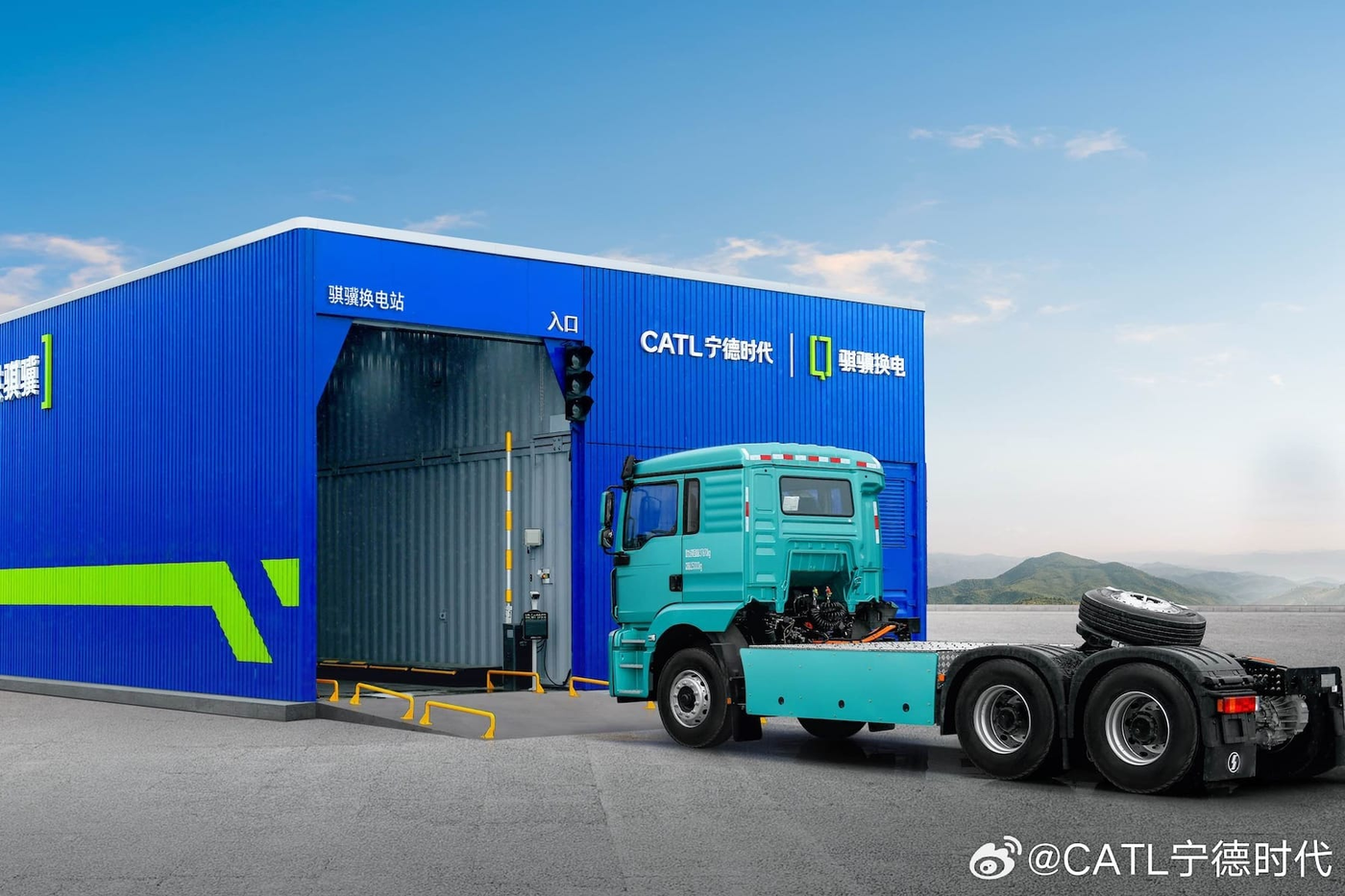
22 June 2026 may come to mark the moment battery swapping stopped being a China-only story. CATL and Octopus Energy announced Swaptopus, a 50:50 joint venture for the UK and Europe: CATL brings the Qiji swap system — hardware, standardised battery blocks, and the operational record of 1,325 stations built in China in a single year — while Octopus brings Kraken, the energy-trading platform that already orchestrates gigawatts of distributed assets, plus UK site development and retail energy relationships.
The business model is the interesting part, and it is not a trucking model. Each swap station holds dozens of charged battery packs; aggregated across a network, that is a dispatchable storage fleet. Kraken can trade that capacity into flexibility markets — the venture’s own materials claim returns above 20% on this basis. In effect the truck business underwrites the battery throughput while the energy business monetises the inventory. It is a structurally different design from the Milence charging alliance, whose hubs sell electrons and convenience but hold no storage.
The hurdles are equally structural, and fleets should price them honestly. Standard control: Qiji swap works with Qiji-standardised batteries in Qiji-compatible trucks — today that means Chinese OEM products. European manufacturers and Milence oppose the CATL standard on openness and IP grounds, and no European OEM has announced a swap-compatible tractor. Utilisation: swap economics fail below roughly 20% station utilisation, which requires committed corridor fleets from day one — the UK plan sensibly starts with high-intensity trunk routes. And grid connection lead times apply to swap stations too, storage or not.
What the venture changes immediately is negotiating geometry. Fleet operators now have two credible infrastructure futures to play against each other; Chinese truck makers gain a Western-standard energy partner whose involvement sanitises the “proprietary Chinese system” objection; and Milence’s members face pressure to open their own roadmaps. Our standing guidance is unchanged: choose by duty cycle. Depot single-shift — charge. Corridor double-shift at high utilisation — now genuinely worth modelling both. Long-haul international — charging, because AFIR-mandated corridor coverage is being built with public money while swap coverage is years away.
What to watch
Three markers before the first UK hub opens: which truck brands announce Qiji-compatible European models, what per-kilometre battery-service pricing Swaptopus publishes, and whether the 2027 first hubs land on time. We track all three in the newsletter.
- CnEVPost (2026-06-22) on the CATL–Octopus JV
- chargedEVs (2026-01-15) on CATL station build-out
- Nikkei reporting on the Milence position
Evidence dated as shown. Corrections and manufacturer evidence: hello@wattonne.com. WattTonne assessments are never for sale; affiliations disclosed on the About page.