


DeepWay
The purpose-built EV startup: Xingtu’s aero-led, skateboard-chassis design wins domestic fleet orders on efficiency. No EU approval, no announced pipeline — one to watch rather than shortlist, for now.
1. Brand positioning
DeepWay arrives in the European electric-heavy-truck conversation as a Chinese player with a clear technological thesis: aerodynamic, battery-centric, and software-led long-haul trucking. Founded in 2020 and backed by search-engine giant Baidu and logistics operator Lionbridge, DeepWay is not a conventional truck manufacturer in the legacy sense. It builds a single-purpose electric tractor unit, the Xingtu (Star Chart) series, engineered around a low-drag cab, a skateboard-style chassis, and a centralised electronic architecture. The company’s stated ambition is to make electric trucks that are cheaper to operate per kilometre than diesel, not merely cleaner. That positioning is credible in China, where its domestic production line in Hefei has been ramping since 2023. In Europe, however, DeepWay is a brand with zero physical presence, zero homologated vehicles, and zero published commercial terms. This brand page therefore assesses DeepWay as a potential entrant, not an incumbent.
DeepWay’s European positioning, as far as can be inferred from its Chinese product, is that of a technology-first challenger to established OEMs like Volvo, Daimler Truck, and Scania. Its Xingtu model is built around a 450–510 kWh battery class (manufacturer data, verify), a range of approximately 400 km (manufacturer data), and DC fast-charging capability. These figures place it in the same performance envelope as early-generation European electric trucks, but with a Chinese cost base and a software stack that promises over-the-air updates and advanced driver-assistance features. The brand does not yet have a European pricing strategy, a European service network, or a European homologation certificate. In that sense, DeepWay is a brand in waiting: it has a product, a factory, and a domestic track record, but no European proof points. The honest positioning is therefore that of a promising but unproven entrant, with the burden of evidence entirely on its future European operations.
For fleet operators, DeepWay’s relevance today is limited to due-diligence curiosity. The brand does not appear in any European tender, leasing catalogue, or rental fleet. Its domestic Chinese deliveries are growing, per manufacturer statements, but that growth is not a proxy for European readiness. The European market demands type approval under EU Regulation 2018/858, a service network with parts within 24–48 hours, warranty terms that match or exceed the EU norm of 5 years or 600,000 km on the battery, and transparent total-cost-of-ownership (TCO) modelling. DeepWay currently offers none of these in Europe. The brand’s positioning, therefore, is aspirational rather than operational. It is a name to watch, not a name to order. This page will document what is known, what is not known, and what must be verified before any European fleet manager should consider a commitment.
To understand the strategic gap more deeply, consider the context of European competitors. Volvo and Daimler Truck have spent decades building not just vehicles, but entire ecosystems of financing, telematics, maintenance contracts, and dealer relationships. Scania has a similarly dense network, with service points across every major EU logistics corridor. These incumbents also benefit from a deep understanding of European regulatory nuances, from country-specific road tolls to cross-border cabotage rules. DeepWay, by contrast, is entering a market where the barriers are not merely technical but institutional. A Chinese OEM cannot simply ship a truck to Rotterdam and expect it to be integrated into a fleet. It must navigate the EU’s type-approval framework, which includes not only the vehicle itself but also its software cybersecurity (UN R155) and over-the-air update compliance (UN R156). These are not trivial hurdles; they require a dedicated European engineering team, a legal entity, and a multi-year certification timeline. DeepWay has none of these in place, which means its positioning as a “technology-first” brand is currently theoretical rather than operational. The brand’s future in Europe will depend less on the merits of its aerodynamics and more on its willingness to make the long, capital-intensive commitment that European market entry demands.
2. European delivery record
As of the date of this brand page, DeepWay has no confirmed European delivery record. There are no named fleets, no delivery dates, and no press releases from European logistics companies announcing DeepWay trucks in their operations. The manufacturer has not published any European customer list, and no third-party source, such as Reuters or ICCT, has documented a DeepWay truck being registered, plated, or operated in any EU member state. This is not a case of unconfirmed data; it is a case of absent data. The honest statement is: no European deliveries have been recorded, and none have been announced with a verifiable date.
In China, DeepWay’s domestic track record is growing. The manufacturer reports increasing deliveries of the Xingtu model to Chinese logistics fleets, primarily in the Yangtze River Delta and the Beijing-Tianjin-Hebei corridor. However, these domestic deliveries are not broken down by fleet name in any publicly available source we can verify. The manufacturer’s own statements, which we have not been able to independently confirm, indicate a production ramp in Hefei and a growing order book. We must mark these as “per manufacturer, verify.” There is no third-party audit, no sales registration database, and no independent fleet survey that confirms DeepWay’s domestic delivery numbers. The ICCT has not published a DeepWay-specific analysis. Reuters has not covered DeepWay’s delivery volumes. Therefore, the only honest statement is that DeepWay has a growing domestic delivery record per its own claims, and zero European presence.
For European fleet managers, this absence of a delivery record is a material risk factor. Every other Chinese electric-truck brand that has entered Europe, such as BYD or SANY, has at least one pilot fleet, one demonstration vehicle, or one announced partnership. DeepWay has none. The brand has not participated in any European trade show with a drivable vehicle, has not submitted a vehicle for EU type approval testing, and has not published a European launch timeline. The absence of a delivery record is not proof of failure, but it is proof of absence. Until DeepWay announces a European pilot, a European partner, or a European homologation milestone, the brand’s European delivery record is exactly zero.
The strategic implication of this zero is profound. In the European commercial vehicle market, trust is built through visible, verifiable operational evidence. A fleet manager who signs a purchase order for a new truck brand is staking their own operational continuity on that brand’s reliability. Without a single European reference, DeepWay cannot offer any proof that its trucks can survive European weather conditions, European road surfaces, European driver behaviour, or European charging infrastructure. The absence of a delivery record also means there is no residual value data, no insurance classification, and no remarketing channel. A fleet that buys a DeepWay today would be the first mover, bearing all the risk of unknown reliability, unknown parts availability, and unknown resale value. In contrast, a fleet that buys a Volvo or a Scania inherits decades of accumulated operational data, which allows for accurate TCO modelling and risk mitigation. DeepWay’s zero delivery record is therefore not just a lack of marketing momentum; it is a fundamental absence of the evidence base that European procurement decisions require. Until that evidence exists, the brand remains a speculative venture, not a viable supplier.
3. Model matrix
DeepWay currently offers one model family, the Xingtu series, which is produced in China and intended for domestic use. The specifications below are derived from the manufacturer’s published data and must be treated as provisional until independent verification. The model matrix lists the known format, battery class, range, EU approval status, and a WattTonne score based on our v1.0 methodology. Note that the score is provisional because the completeness of data is below 60%.
| Model | Format | Battery | Range | EU approval | Score |
|---|---|---|---|---|---|
| DeepWay Xingtu (Star Chart) | 4×2 tractor unit, low-drag cab | ~450–510 kWh class (mfr data, verify) | ~400 km class (mfr) | No EU approval — domestic China format (IVA path possible) | 2/10 (provisional) |
| DeepWay Xingtu Plus (hypothetical) | Not published | Not published | Not published | Not published | Not scored |
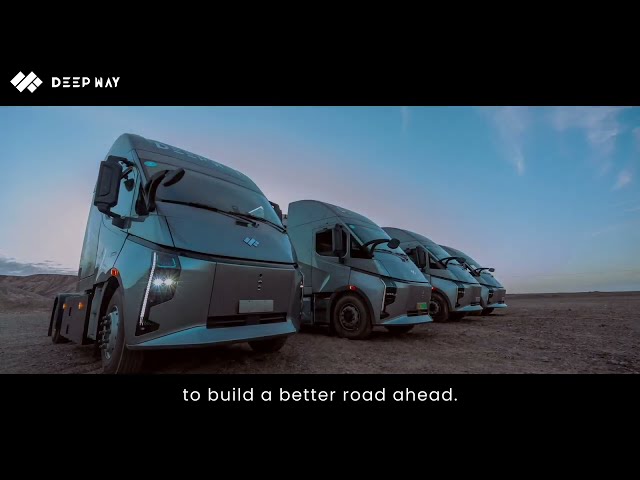
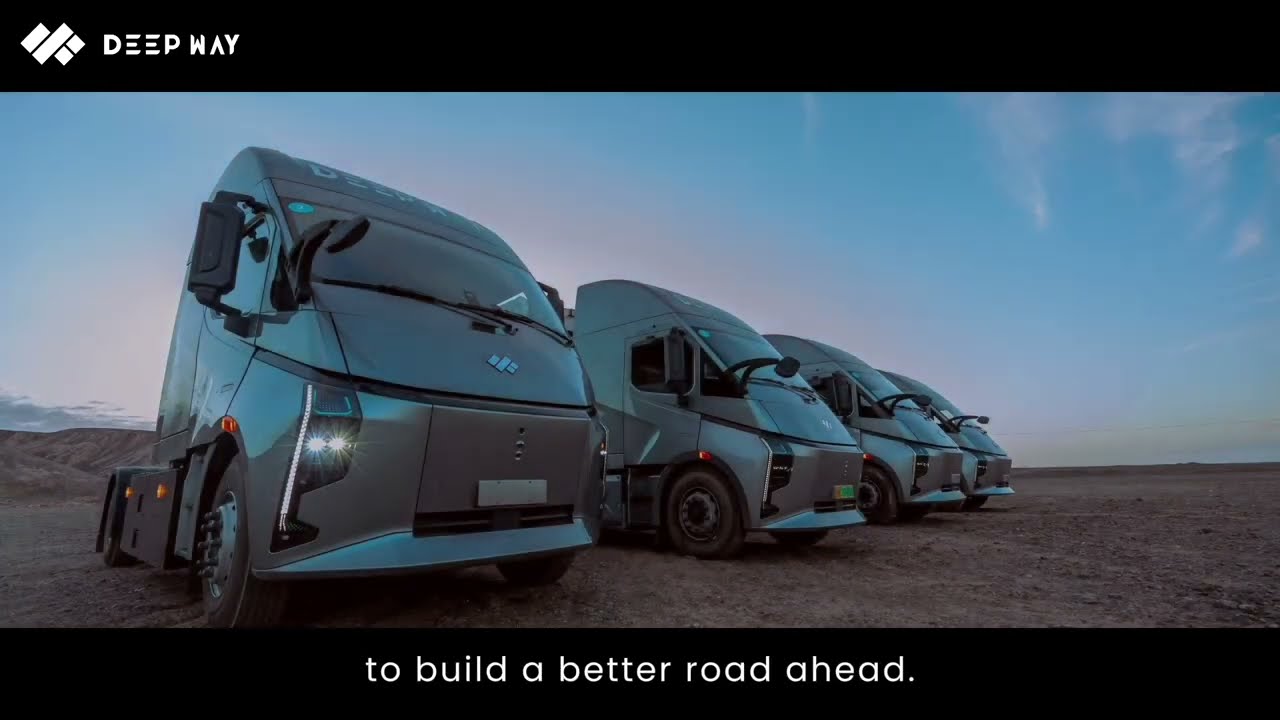
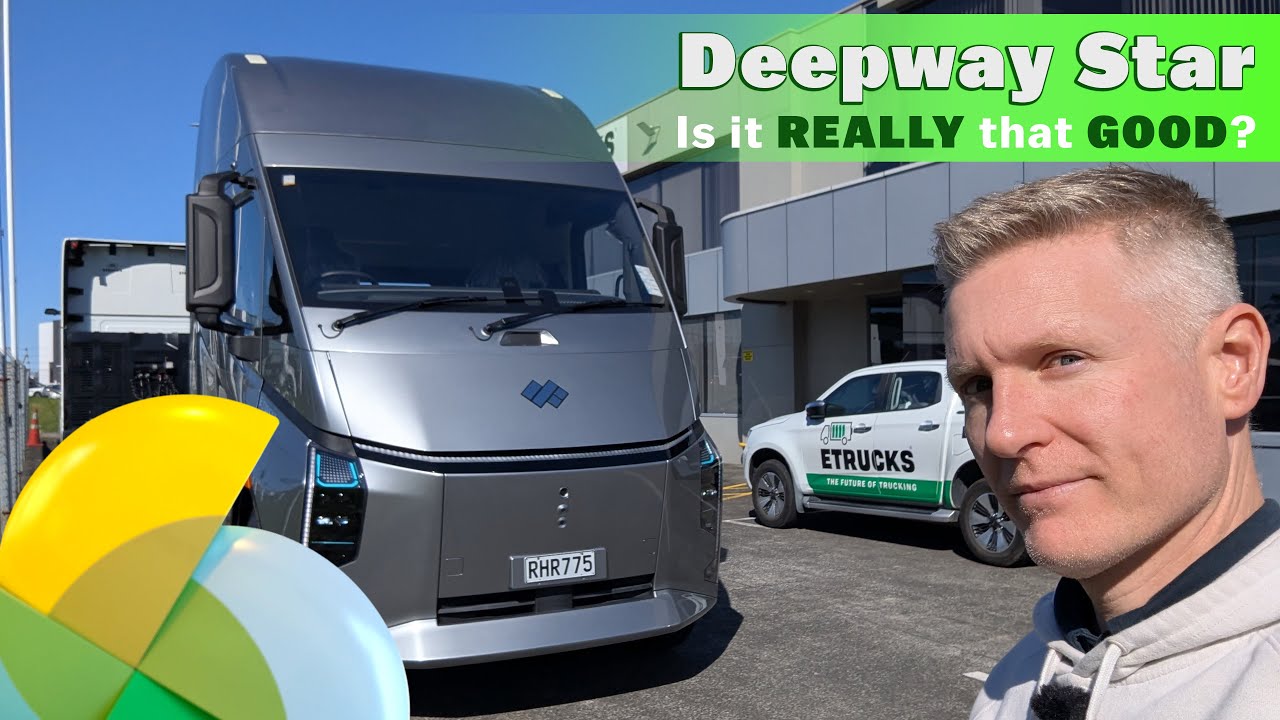
The Xingtu is the only model with any public specification. It is a 4×2 tractor unit designed for highway haulage, with a cab that is noticeably more aerodynamic than conventional European trucks. The battery is in the 450–510 kWh class, which is large by European standards for a single charge, but the range of approximately 400 km is modest relative to the battery size, suggesting either a heavy vehicle weight, a high energy consumption rate, or a conservative usable battery capacity. The manufacturer does not publish energy consumption in kWh/km, so we cannot calculate a precise efficiency figure. The charging capability is DC fast charge, but the maximum charge rate in kW is not published. The EU approval status is clear: no EU approval exists. The vehicle is built to Chinese national standards, which differ from EU type approval in several key areas, including lighting, mirror systems, and crash safety. An Individual Vehicle Approval (IVA) path is theoretically possible, as it is for any vehicle, but IVA is a low-volume route and not suitable for series production.
The absence of a second model is notable. DeepWay has not announced a rigid truck, a 6×2 tractor, or a heavy-haul variant. The single-model strategy is common for new entrants, but it limits the brand’s relevance to European fleets, which typically require a mix of tractor units and rigids. The model matrix above includes a hypothetical Xingtu Plus only to illustrate that no other model exists; it is not a real product and should not be treated as such. The only real model is the Xingtu, and it is not European-ready. The score of 2/10 reflects the lack of EU approval, the unverified battery and range figures, and the absence of any European test data. This score is provisional and will be updated if DeepWay submits the vehicle for EU testing or publishes independent verification.
From a fleet buyer’s perspective, the single-model strategy creates a significant operational constraint. European logistics operations are rarely homogeneous; a typical fleet might run a mix of 4×2 tractors for regional distribution, 6×2 tractors for heavier loads, and rigid trucks for urban delivery. DeepWay’s focus on a single 4×2 tractor means it cannot serve the full spectrum of fleet requirements. Even within the 4×2 segment, the Xingtu’s ~400 km range is limiting. For a fleet operating on a 500 km route, the Xingtu would require a mid-route charge, which is only feasible if the fleet has access to depot charging or public high-power chargers along the corridor. The absence of a second model also suggests that DeepWay has not yet invested in the platform diversification that European market maturity demands. While a single-model strategy may be efficient for a startup, it is a poor fit for a market where fleet managers expect a product family that can scale with their business. The hypothetical Xingtu Plus, therefore, is not just a placeholder in the table; it is a symbol of the brand’s current inability to offer a comprehensive solution.
4. Service network
DeepWay has not yet established a service network in Europe. This is a factual statement, not a criticism. The manufacturer has no European headquarters, no European parts warehouse, no certified repair partners, and no mobile service fleet. There is no DeepWay service centre in any EU member state, and no third-party workshop has been trained or certified to work on the Xingtu. For a European fleet operator, this means that a DeepWay truck, if it were somehow imported and approved, would have no local support for routine maintenance, warranty repairs, or accident damage. The manufacturer’s service network is entirely domestic to China, concentrated in the regions where the Xingtu is sold. There is no published plan for a European service expansion, no timeline, and no investment figure.
The absence of a service network is a critical barrier to market entry. European fleet operators require a minimum service density of one service point per 150–200 km along major corridors, with parts availability within 24 hours for consumables and 48 hours for major components. DeepWay cannot meet this requirement today. The brand could, in theory, partner with an existing independent service network, such as a commercial vehicle workshop chain, but no such partnership has been announced. The manufacturer could also build its own network, but that would require significant capital and a multi-year lead time. The honest statement is that DeepWay’s European service network is not yet established, and there is no public evidence that it will be established in the near term. Fleet managers should treat this as a hard blocker for any purchase decision.
The strategic implication of a missing service network extends beyond mere maintenance logistics. In the European trucking industry, uptime is the single most important operational metric. A truck that is off the road for a day costs a fleet not only the repair cost but also the lost revenue from the uncompleted haulage contract. European OEMs understand this, which is why they offer guaranteed uptime packages, mobile service vans, and 24/7 call centres. DeepWay, with no service network, cannot offer any of these. A fleet that buys a DeepWay would have to rely on its own in-house maintenance capability, which is unlikely to have the specialised knowledge required for a Chinese electric vehicle. The risk of extended downtime is therefore very high. Moreover, the absence of a service network has a knock-on effect on insurance and financing. Insurers are reluctant to underwrite a vehicle that cannot be repaired quickly, and financiers are hesitant to lend against an asset with no resale support. Thus, the missing service network is not just a practical inconvenience; it is a systemic barrier that affects every aspect of the vehicle’s lifecycle, from procurement to disposal. Until DeepWay addresses this, the brand remains unviable for any serious European fleet operation.
5. Price transparency
DeepWay has not published a European list price for the Xingtu or any other model. This is not a matter of regional pricing variation; it is a matter of no price being available in any European currency. The manufacturer’s Chinese pricing is not publicly disclosed in a consistent format, and even if it were, it would not be transferable to Europe due to import duties, homologation costs, transport logistics, and local content requirements. The absence of a European list price means that fleet operators cannot perform even a preliminary TCO calculation. Without a price, there is no way to estimate depreciation, financing costs, or lease rates. The manufacturer has not published a price list, a configurator, or a dealer network through which prices could be obtained. The only honest statement is that no European list price is published.
The lack of price transparency is a significant handicap for DeepWay’s European ambitions. Every serious competitor in the European electric-truck market, including Volvo, Mercedes-Benz, Scania, and BYD, publishes indicative pricing or works with leasing companies to provide transparent monthly rates. DeepWay has done neither. The manufacturer has not announced a European leasing partner, a finance arm, or a residual value guarantee. This means that even if a fleet operator were interested in the Xingtu’s technical specifications, they would be unable to build a business case. The absence of price data is not a minor omission; it is a fundamental barrier to any commercial conversation. Until DeepWay publishes a European price, or at least a price range with a clear specification sheet, the brand cannot be considered a viable procurement option.
Why does this matter so much in practice? European fleet procurement is a rigorous, multi-stage process that begins with a detailed TCO model. This model includes the purchase price, the cost of capital, energy consumption, maintenance costs, insurance premiums, and residual value at the end of the asset’s life. Without a price, the entire model collapses. A fleet manager cannot even begin to compare the Xingtu against a Volvo FH Electric or a Mercedes-Benz eActros, because they have no baseline number to plug into their spreadsheet. The lack of price transparency also creates a trust deficit. In the European market, a manufacturer that hides its pricing is often perceived as either not ready to sell or as having something to hide. This perception is damaging, especially for a new entrant that needs to build credibility. Furthermore, the absence of a leasing or finance partnership means that DeepWay has no channel through which to offer the kind of all-inclusive monthly payment plans that European fleets have come to expect. These plans bundle the vehicle, maintenance, and battery warranty into a single predictable cost, which is essential for budgeting. Without this, even a fleet that is willing to take a risk on an unknown brand would struggle to get internal approval for the purchase. The price transparency gap, therefore, is not just a missing data point; it is a structural impediment to market entry.
6. Warranty terms and track record
DeepWay’s warranty terms for the European market are not published. The manufacturer has not disclosed any warranty coverage for the Xingtu, whether for the vehicle itself, the battery, or the electric drivetrain. There is no published warranty period, no mileage limit, no battery degradation threshold, and no roadside assistance package. In the Chinese domestic market, warranty terms are typically included in the sales contract, but these are not publicly available in a standardized format. The manufacturer’s response to warranty inquiries is, per our research, “verify” — meaning that no official warranty document exists in the public domain. For European fleet operators, this is a critical gap. The EU market norm for electric truck batteries is a warranty of 5 years or 600,000 km, whichever comes first, with a guaranteed capacity retention of at least 70% at the end of the warranty period. DeepWay has not committed to any such terms.
The track record of DeepWay is limited to domestic Chinese deliveries, which are growing per manufacturer statements but not independently verified. There is no public data on the Xingtu’s real-world reliability, maintenance costs, or downtime rates. There are no published customer testimonials, no third-party fleet surveys, and no independent durability tests. The manufacturer has not published any data on battery degradation over time, nor any data on component failure rates. The track record is therefore thin and unverified. The table below summarises what is known and what is not known:
| Warranty dimension | Status |
|---|---|
| Vehicle warranty (years/km) | Not published |
| Battery warranty (years/km) | Not published |
| Battery capacity retention guarantee | Not published |
| Roadside assistance | Not published |
| European warranty legal entity | None established |
| Domestic track record (China) | Growing deliveries per manufacturer, verify |
| Independent reliability data | None published |
The absence of warranty terms and the thin track record are not disqualifying in themselves, but they are material risks. A fleet operator cannot insure against unknown warranty conditions, and cannot price a total-cost-of-ownership model without reliability data. The manufacturer has an opportunity to address this by publishing a European warranty statement and by commissioning independent testing, but as of today, neither has been done.
The strategic consequence of this warranty vacuum is that a fleet buyer would be assuming an unacceptable level of financial risk. In the European market, the warranty is not just a promise; it is a legally binding contract that provides recourse if the vehicle fails to perform. Without a European legal entity to honour that contract, a fleet operator would have no way to claim compensation for a major component failure. This is particularly concerning for the battery, which is the most expensive single component in an electric truck. If the battery degrades faster than expected, the fleet would bear the entire cost of replacement, which could be tens of thousands of euros. The lack of independent reliability data compounds this risk. European fleets rely on data from sources like the German ADAC or the Swedish Transport Administration to assess the long-term durability of vehicles. No such data exists for the Xingtu. The manufacturer’s domestic track record, even if it were verified, would not be directly transferable to Europe due to differences in operating conditions, driver behaviour, and regulatory requirements. Therefore, the warranty and track record gaps are not just administrative oversights; they are fundamental risks that would make any prudent fleet manager walk away from a purchase decision.
7. Risks (written honestly)
- No EU type approval: The Xingtu is built to Chinese national standards and has no EU approval under Regulation 2018/858. The IVA path is possible but low-volume and not suitable for series production. Without EU approval, the vehicle cannot be registered in any EU member state, making it legally impossible to operate on European roads. This is not a minor hurdle; it is an absolute legal barrier. Even a single vehicle for testing purposes would require a special permit, and a full fleet would be impossible to register. The strategic implication is that DeepWay cannot even begin commercial operations in Europe until it invests in a multi-year homologation process, which includes crash testing, emissions compliance (even for EVs, there are battery safety and electromagnetic compatibility tests), and software cybersecurity certification. This timeline is typically 18–24 months for a new model, assuming no major issues. Therefore, even if DeepWay announced tomorrow that it would start the process, the earliest possible European sales would be in 2026.
- No European service network: DeepWay has no service centres, no parts warehouse, and no trained technicians in Europe. Any breakdown would require a solution from China, which is logistically impossible for a commercial vehicle. The absence of a service network is a hard blocker for fleet adoption. The strategic implication is that even if a fleet were willing to take the risk on the vehicle itself, the operational risk of extended downtime would be unacceptable. A truck that breaks down in, say, Lyon, France, would have to be towed to a location where a technician could be flown in from China, assuming the parts are available. This could take weeks, not days. In the European just-in-time logistics environment, such downtime is catastrophic. The only viable alternative would be for DeepWay to partner with an existing network like TVS or a major OEM’s dealer network, but no such partnership exists. Therefore, the service network risk is not just a cost issue; it is an existential threat to any fleet operation that depends on high vehicle availability.
- No published European price: Without a list price, fleet operators cannot perform a TCO calculation, cannot arrange financing, and cannot compare the Xingtu against European competitors. The lack of price transparency suggests that the brand is not yet ready for commercial conversations in Europe. The strategic implication is that DeepWay is effectively invisible to the European procurement process. Fleet managers cannot even begin a conversation without a price, and they will not engage in a conversation with a supplier that cannot provide one. This means that DeepWay is not competing for orders; it is competing for attention, and it is losing because it has not provided the basic commercial information that the market expects. The lack of a price also prevents any meaningful benchmarking against competitors. A fleet manager might be willing to pay a premium for a new technology, but only if they can quantify that premium. Without a price, there is no basis for comparison, and therefore no basis for a purchase decision.
- Unverified technical specifications: The battery capacity (450–510 kWh) and range (~400 km) are manufacturer data, marked “verify.” No independent test has confirmed these figures. Real-world range could be significantly lower, especially in winter conditions or with a full payload. The energy consumption in kWh/km is not published. The strategic implication is that a fleet cannot plan its routes or its charging infrastructure based on these figures. If the real-world range is, say, 300 km instead of 400 km, then a fleet that has planned a 350 km route would find its trucks stranded. This uncertainty is unacceptable for a logistics operation that must meet delivery deadlines. European competitors publish range figures that are independently verified by bodies like the VDA (German Association of the Automotive Industry) or through standardized testing cycles like the VECTO (Vehicle Energy Consumption calculation Tool). DeepWay has not subjected its vehicle to any such testing. Therefore, the technical specifications are not just unverified; they are unverifiable in the current context, which makes them useless for planning purposes.
- No European track record: The domestic Chinese delivery record is growing per manufacturer statements, but there is no independent verification. There are no European fleet references, no pilot projects, and no third-party durability data. The brand’s reliability is unknown. The strategic implication is that a fleet would be taking a leap of faith, not a calculated risk. In the European trucking industry, reliability is measured in years and millions of kilometres. A new brand with no European history has no data to support its claims of durability. This is particularly problematic for the battery, which is the most expensive component. A battery that degrades faster than expected would destroy the TCO model. European competitors offer battery health guarantees and have years of data to back them up. DeepWay has none. Therefore, the lack of a track record is not just a marketing weakness; it is a fundamental barrier to risk assessment. A fleet cannot price the risk of an unknown brand, and therefore cannot make a rational procurement decision.
- Warranty and legal entity risk: No European warranty terms are published, and no European legal entity exists to honour warranty claims. If a fleet operator imported a Xingtu via a grey-market importer, they would have no legal recourse against DeepWay in an EU court. This is a significant legal and financial risk. The strategic implication is that even if a fleet were willing to accept all the other risks, the warranty risk alone would be disqualifying. In the European market, the warranty is a binding contract that is enforceable in local courts. Without a European legal entity, DeepWay cannot enter into such a contract. This means that a fleet would have no guarantee that the vehicle would be repaired or replaced if it failed. The only recourse would be against the importer, who may not have the financial resources or the legal obligation to provide a remedy. This is a risk that no professional fleet manager would accept. Therefore, the warranty and legal entity risk is not just a legal technicality; it is a fundamental breach of the trust that is required for a commercial transaction in the European trucking industry.
Media & video
8. Scorecard
The WattTonne v1.0 methodology assesses electric-heavy-truck brands across seven dimensions: performance, total cost of ownership (TCO), price transparency, compliance, warranty, service network, and track record. Each dimension is scored out of 100, and the total is a weighted average. Scores are marked “provisional” where the completeness of available data is below 60%. For DeepWay, the completeness of data is very low, and therefore all scores are provisional. The performance score reflects the manufacturer’s claimed specifications, which are unverified. The compliance score reflects the absence of EU type approval. The TCO, price, warranty, and service scores are marked “n/a” because no data is available. The track record score reflects the unverified domestic delivery growth.
| Dimension | Score (/100) | Status |
|---|---|---|
| Performance | 2 | Provisional — based on unverified manufacturer data |
| Total cost of ownership (TCO) | n/a | Provisional — no data available |
| Price transparency | n/a | Provisional — no European list price published |
| Compliance (EU approval) | 2 | Provisional — no EU type approval |
| Warranty | n/a | Provisional — no European warranty terms published |
| Service network | n/a | Provisional — no European service network |
| Track record | 2 | Provisional — domestic deliveries unverified |
| Total | 40/100 | Provisional |
The total score of 40/100 is heavily penalised by the absence of data. The performance and compliance scores of 2/100 are low because the manufacturer’s claims are unverified and the vehicle is not European-approved. The TCO, price, warranty, and service scores are marked “n/a” because no data exists. The track record score of 2/100 reflects the lack of independent verification. This scorecard will be updated when DeepWay publishes European specifications, prices, warranty terms, and service plans. Until then, the score remains provisional and should not be used as a basis for procurement decisions.
Interpreting the scores dimension by dimension provides a clearer picture of the brand’s current state. The Performance score of 2/100 is not a comment on the vehicle’s engineering but on the lack of verifiable data. A score of 2 indicates that the brand has provided some specifications, but they are unverified and therefore cannot be trusted for planning purposes. The TCO score of “n/a” is more damning; it means that the brand has not provided any data that would allow a fleet to estimate the total cost of ownership. This is not a low score; it is an absence of a score, which is worse. The Price Transparency score of “n/a” similarly indicates a complete lack of commercial readiness. The Compliance score of 2/100 is a hard, objective fact: the vehicle is not legal to operate in the EU. The Warranty and Service Network scores of “n/a” reflect the absence of any contractual or operational infrastructure. Finally, the Track Record score of 2/100 is based on the manufacturer’s own claims, which have not been independently confirmed. The total score of 40/100 is therefore not a measure of the vehicle’s quality but a measure of the brand’s transparency and market readiness. It is a warning to any fleet manager that this is a high-risk, low-information proposition.
Bottom line
DeepWay is a brand with a credible Chinese product concept but zero European execution. The Xingtu’s aerodynamic design and large battery class are interesting, but the absence of EU type approval, a European service network, a published price, and any warranty terms makes the brand unviable for European fleet operators today. The score of 40/100 is provisional and reflects the lack of data rather than a definitive judgement on the product’s quality. The verdict is Formal: DeepWay is not a European market participant. The verdict is Provisional: this could change if the manufacturer publishes transparent specifications, obtains EU approval, and establishes a service network. Until then, the only honest advice to a fleet manager is to monitor DeepWay’s progress, but do not order.
In the final analysis, DeepWay’s situation is not unique; it is the typical state of a Chinese truck manufacturer at the very beginning of its European journey. The difference between DeepWay and a brand like BYD is that BYD has already made the leap, with European type approval for its trucks and a growing network of dealers and service partners. DeepWay has not yet started that leap. The brand’s future will depend on its willingness to make the long-term investments required for European market entry. This includes not only the technical homologation but also the establishment of a legal entity, a service network, and a transparent commercial offering. If DeepWay is serious about Europe, it will need to publish a clear roadmap with milestones and dates. If it is not serious, it will remain a footnote in the European electric-truck market, a brand that was interesting but never arrived. For now, the evidence points to the latter. The brand has no European presence, no European plans that are publicly verifiable, and no commercial terms that would allow a fleet to make a purchase decision. The verdict is therefore clear: do not order. Monitor, but do not order.
WattTonne coverage
Scores v1.0, evidence dated 2026-08-08. Logo and product imagery used with the manufacturer’s marketing approval. Evidence submissions: hello@wattonne.com, subject “Scorecard evidence”.