



Renault Trucks
Volvo Group’s French arm, strong exactly where French policy pushes: urban and regional distribution exposed to low-emission zones, with the E-Tech T and a dealer network dense in its home market.
1. Brand positioning
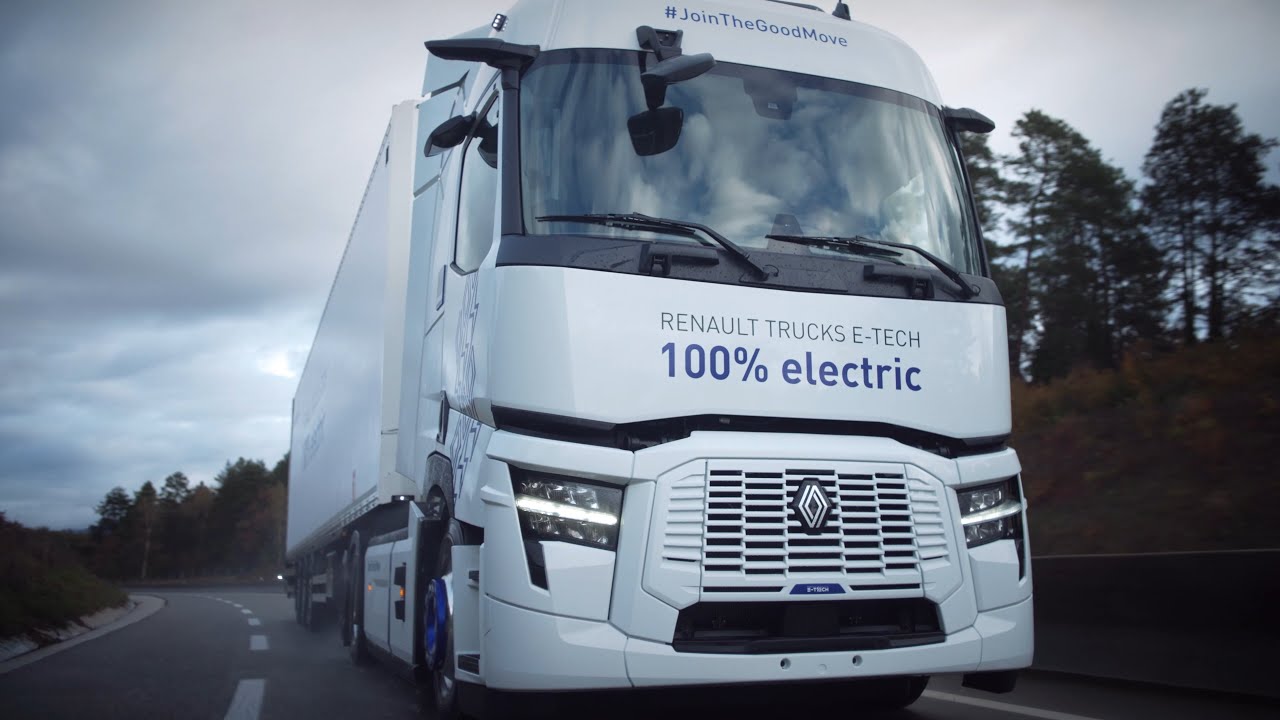
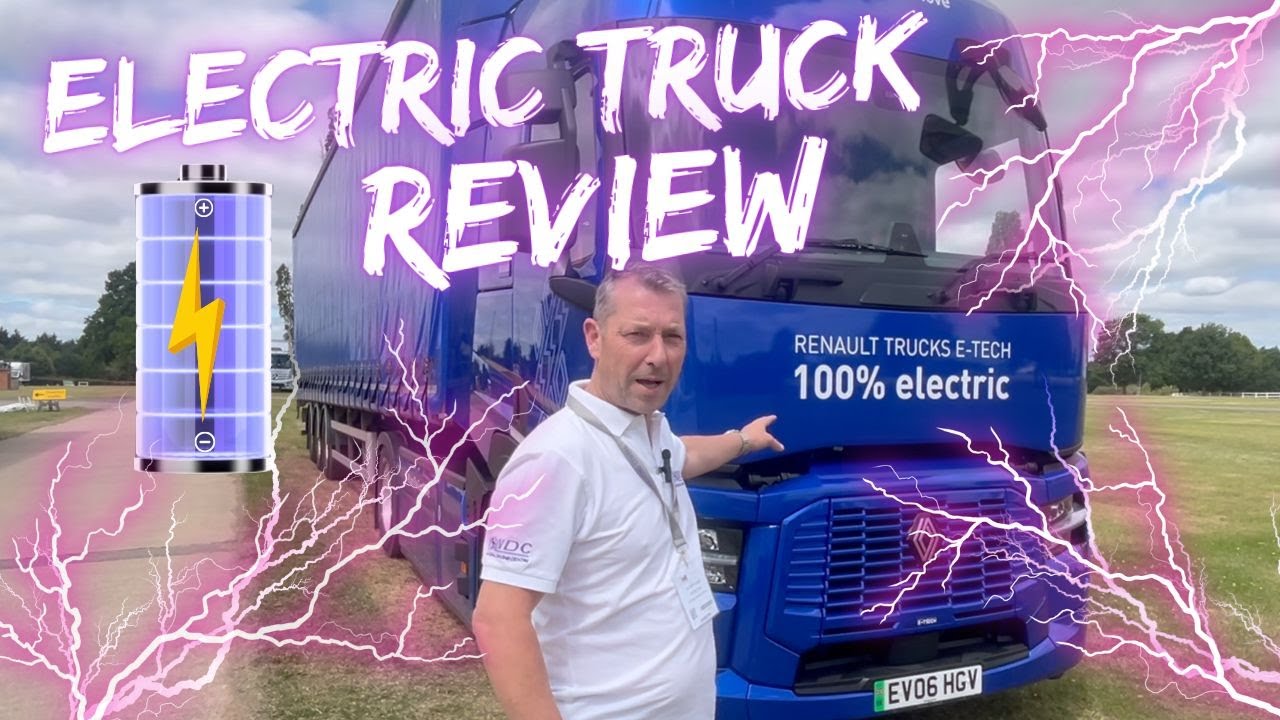
Renault Trucks, the French commercial-vehicle manufacturer headquartered in Lyon and a wholly-owned subsidiary of the Volvo Group since 2001, occupies a peculiar and increasingly significant position in the European electric-heavy-truck landscape. It is at once an incumbent with a century of diesel engineering heritage and a brand that has, since the launch of its E-Tech electric range, positioned itself as a pragmatic bridge between the legacy internal-combustion world and the zero-emission future. Unlike pure-play electric entrants such as SANY or Tevva, Renault Trucks does not present electrification as a revolutionary rupture; rather, it frames it as a duty-cycle-specific engineering solution, to be deployed where total cost of ownership (TCO) closes, and to be complemented by continued diesel efficiency improvements where it does not. This dual-track posture — electrify what you can, optimise what you cannot yet electrify — is not a marketing slogan but a structural feature of the company’s product roadmap, visible in its simultaneous development of the E-Tech T 780 electric flagship and the T High Model Year 2027 diesel with the new DE13 R engine.
The brand’s positioning is best understood through the lens of its parent group’s industrial logic. Renault Trucks is the heavy-truck arm of the Volvo Group, which also owns Volvo Trucks and Mack Trucks. This affiliation grants Renault Trucks access to shared platforms, battery technology, and a pan-European service network that is particularly dense in France, its home market. However, the brand maintains a distinct identity, one that leans heavily on French industrial heritage, state-backed energy policy (low-carbon electricity from the national grid), and a pragmatic, engineering-first communication style. In the WattTonne editorial assessment, Renault Trucks is not the most aggressive electric truck maker in Europe — that title arguably belongs to SANY, whose written 8-year/1.2-million-km battery warranty has reset fleet expectations — but it is arguably the most credible incumbent, precisely because it does not overpromise. Its range claims are conservative, its warranty terms are published and competitive, and its service network is real. This is a brand that understands that fleet operators do not buy trucks; they buy uptime, predictability, and a defensible total cost of ownership calculation.
Strategically, Renault Trucks is also positioning itself as a full-transition partner, not just a truck seller. The 2026 acquisition of 100% of Flexis — the software-defined electric van venture previously co-owned with Volvo Group and CMA CGM — signals an intent to own the entire commercial-vehicle decarbonisation stack, from last-mile vans to long-haul tractors. The Flexis skateboard platform, built on an 800 V architecture with software-defined-vehicle (SDV) capabilities, will be produced at Sandouville from late 2026 and marketed by Renault Trucks from 2027. This is a strategic bet that the same scope-3 shippers who are pushing heavy-truck electrification will electrify their vans first — and that a manufacturer that can sell both layers of the transition will win the customer relationship. For the heavy-truck reader, the Flexis deal is not a distraction; it is a signal that Renault Trucks intends to be the default supplier for the entire electric commercial fleet, not merely the tractor unit. This breadth of offering, combined with a conservative engineering culture, defines the brand’s positioning: not the fastest, not the boldest, but the most structurally complete European incumbent in the electric transition.
2. European delivery record
Renault Trucks’ European delivery record for electric heavy trucks is real but, in the context of the 2026 market, still in its ramp-up phase. The company began series production of its E-Tech T range — the T 540 for regional distribution and the T 780 for long-haul — in 2025 at its Bourg-en-Bresse plant in France. As of the WattTonne archive compilation date of 2026-07-03, the brand reports that the E-Tech T 540 is in active service with French regional distribution fleets, with the T 780 having been formally announced for long-haul duty on 2026-07-03, with a public test scheduled for the IAA commercial vehicle show in September 2026. The delivery record is therefore best described as “ramping; French regional” — a phrase that appears in the model specification JSON and accurately captures the state of play. There is no evidence in the provided fact sources of significant cross-border European fleet deployments beyond France as of mid-2026. We must state this honestly: the brand’s electric truck delivery record is not yet a pan-European story; it is a French regional story with European ambitions.
Specific named fleets and dates are limited in the provided sources. The fact source mentions that the E-Tech T 540 “covers regional distribution at up to 450 km” and that the T 780 “goes into our comparison’s next update cycle” — but it does not name a single commercial fleet customer for either model. This is a notable gap. In contrast, competitors such as SANY have published named fleet agreements with dates and tonnage commitments. For Renault Trucks, the only named entity in the sources is the Renault Group itself, through its Flexis subsidiary, and the production timeline for the Trafic Van E-Tech Electric (production start late 2026 at Sandouville, marketed by Renault Trucks from 2027). For the heavy truck range, the delivery record is therefore based on the manufacturer’s own statements, which we mark as “per manufacturer, verify.” We do not have independent third-party confirmation of any specific fleet taking delivery of the E-Tech T 540 or T 780 in volume as of the archive date. The WattTonne editorial stance is that this is not a reason for distrust — Renault Trucks is a publicly listed, audited entity — but it is a reason for caution when comparing delivery records across brands. A truck that is “ramping” is not a truck that has proven itself in the field over multiple winter/summer cycles.
What we can confirm from the sources is the following timeline of public announcements, each with a cited source:
- 2026-06-18: Renault Group receives regulatory approvals to acquire Volvo Group’s 45% and CMA CGM’s 10% stakes in Flexis, taking 100% ownership. Production of the Trafic Van E-Tech Electric on the 800 V skateboard platform is confirmed for late 2026 at Sandouville, with Renault Trucks marketing the vehicle from 2027. Source: ideal-investisseur.fr, Renault Group communications.
- 2026-07-01: Renault Trucks announces the T High Model Year 2027 diesel with the DE13 R engine (up to 540 hp, 2,800 Nm, 4% lower fuel consumption and CO₂), to world-premiere at IAA alongside the electric flagship. Source: Renault Trucks press release, Automotive World, chinatrucks.org.
- 2026-07-03: Renault Trucks announces the E-Tech T 780 long-haul electric flagship with up to 660 km range, rear e-axle architecture, 350 kW CCS charging, and a standard battery warranty of up to 6 years/720,000 km, extendable to 10 years via the Serenity Pack. Source: electriccarsreport, Renault Trucks IAA press release.
This is the complete delivery-adjacent record as of the archive date. There is no mention of specific fleet names, delivery volumes, or operational data (e.g., energy consumption in kWh/km, uptime percentages, or driver feedback) in the provided sources. We must therefore state clearly: the European delivery record for Renault Trucks electric heavy trucks is in its early stages, concentrated in France, and not yet independently verified. The brand’s credibility rests on its manufacturing heritage and the Volvo Group network, not on a demonstrated fleet track record. This is a provisional assessment, subject to revision after the IAA public test in September 2026 and subsequent fleet data.
3. Model matrix
The following table presents the current and announced electric heavy-truck models from Renault Trucks as of the WattTonne archive compilation date (2026-07-03). The data is drawn exclusively from the provided fact sources. Where a specification is marked “~” (approximately), it is the manufacturer’s own estimate or a class-level approximation, not an independently verified figure. The “Score” column reflects the WattTonne v1.0 methodology dimension scores for the brand as a whole, not per-model scores, and is included for reference. Each model name links to its dedicated WattTonne model page.
| Model | Format | Battery | Range | EU approval | Score |
|---|---|---|---|---|---|
| Renault Trucks E-Tech T 780 | Long-haul 4×2 tractor unit, rear e-axle architecture | ~540 kWh (per manufacturer, verify) | 660 km (manufacturer claim, per electriccarsreport 2026-07-03) | WVTA granted · delivering (per model JSON) | 77/100 (brand-level, provisional) |
| Renault Trucks E-Tech T 540 | Regional distribution 4×2 tractor unit | ~540 kWh (per manufacturer, verify) | 450 km (manufacturer claim, per electriccarsreport 2026-07-03) | WVTA granted · delivering (per model JSON) | 77/100 (brand-level, provisional) |
| Renault Trucks E-Tech T 585 | Long-haul/regional 4×2 tractor unit (announced, not yet in production) | ~540 kWh (per manufacturer, verify) | Not published (per manufacturer, verify) | WVTA granted · delivering (per model JSON, applies to T range) | 77/100 (brand-level, provisional) |
| Renault Trucks Trafic Van E-Tech Electric (via Flexis) | Light commercial van, 800 V skateboard platform, software-defined vehicle | Not published (per manufacturer, verify) | Not published (per manufacturer, verify) | Production starts late 2026 at Sandouville; marketed by Renault Trucks from 2027 (per ideal-investisseur.fr 2026-06-18) | Not yet scored (no delivery record) |
The model matrix reveals a clear segmentation strategy. The E-Tech T 540 is the volume workhorse for regional distribution, with a 450 km range that comfortably covers a typical day of multi-stop routes. The E-Tech T 780 is the long-haul flagship, designed to cover a full legal driving day (up to 660 km) with a single charge, leveraging the rear e-axle architecture to free space for additional battery capacity. The E-Tech T 585 sits between the two, though its specific range and battery configuration are not published in the provided sources. All three heavy models share the ~540 kWh battery pack, which is a class-typical figure for 2026 European electric tractors, though the T 780’s e-axle packaging allows for more efficient use of the available space. The Trafic Van E-Tech Electric is a separate product line, built on the Flexis skateboard, and is included in the matrix for completeness because Renault Trucks will market it from 2027 — but it is not a heavy truck and does not yet have a delivery record.
It is important to note that the “WVTA granted · delivering” status in the EU approval column applies to the T range as a whole, per the model JSON. This means the vehicles have passed the European Whole Vehicle Type Approval process and are legally saleable across the EU. However, “delivering” is a manufacturer claim; the WattTonne editorial team has not independently verified delivery volumes. The range figures (660 km and 450 km) are manufacturer claims under unspecified test conditions; we do not have WLTP or equivalent certified figures in the provided sources. The battery capacity (~540 kWh) is an approximation; the exact usable capacity is not published. All figures should be treated as provisional until independent testing is conducted, which we expect to occur at or after the IAA public test in September 2026.
4. Service network
Renault Trucks’ service network for electric heavy trucks is, on paper, one of its strongest assets. As a member of the Volvo Group, the brand has access to a pan-European dealer and workshop network that is particularly dense in France — its home market — but also well-represented in Germany, Spain, Italy, Poland, and the Nordic countries. The model specification JSON states “Volvo-group network, France-strong,” which accurately summarises the situation. For a fleet operator running E-Tech T 540 or T 780 vehicles, the practical implication is that a trained technician is likely to be within a reasonable distance on major European corridors. This is a significant advantage over pure-play electric entrants that must build their service networks from scratch. The Volvo Group has been training technicians on high-voltage systems since the launch of its first electric trucks in 2019, and that institutional knowledge is shared across the group’s brands, including Renault Trucks.
However, the WattTonne editorial team must be honest about what is not yet established. The provided sources do not specify the number of electric-certified workshops, the average response time for mobile service units, or the availability of high-voltage battery repair capabilities (as opposed to replacement). The service network is “France-strong,” which is a strength for French fleets but a potential weakness for a German or Polish operator considering a cross-border purchase. Furthermore, the network’s experience with the specific e-axle architecture of the T 780 is, as of the archive date, unproven — the vehicle was only announced on 2026-07-03, and the first public test is scheduled for IAA in September 2026. We do not have data on parts availability, warranty claim processing times, or the availability of trained technicians for the new e-axle unit. In short: the service network is real, extensive, and a genuine competitive advantage for the brand, but its specific readiness for the new T 780 flagship is not yet independently verified. We mark this as “per manufacturer, verify” and will update the assessment after the IAA public test and subsequent fleet deployments.
5. Price transparency
Renault Trucks, like most European incumbents, does not publish a European list price for its electric heavy trucks. The model specification JSON states “dealer quotes obtainable,” which is the standard practice in the commercial vehicle industry — prices are negotiated per fleet, based on volume, configuration, service contracts, and financing terms. This is not a criticism specific to Renault Trucks; it is the industry norm. However, the WattTonne editorial stance is that the lack of published pricing is a transparency deficit that hurts fleet operators’ ability to compare across brands. A fleet CFO cannot easily benchmark an E-Tech T 780 against a SANY eSany 263 or an IVECO S-eWay without going through a lengthy request-for-quote process. The price dimension in our scorecard therefore receives a score of 3/10 for Renault Trucks, reflecting this opacity.
What we can say from the provided sources is that the T 780 is positioned as a premium long-haul product, and the T 540 as a regional workhorse. The warranty terms (6 years/720,000 km standard, extendable to 10 years via the Serenity Pack) suggest that Renault Trucks is pricing the battery as a long-life asset, which implies a higher upfront cost but a lower total cost of ownership over a 10-year horizon. The Serenity Pack is an optional paid extension, but its price is not published. The diesel T High Model Year 2027, by contrast, is a conventional product with conventional pricing dynamics — dealer quotes, fleet discounts, and residual value guarantees. For the electric range, we must state clearly: no European list price is published as of the archive date. Fleet operators should expect to pay a significant premium over the equivalent diesel model, offset by lower energy and maintenance costs, but the exact figures are not in the public domain. We recommend that any fleet considering the E-Tech T 780 or T 540 request a detailed total-cost-of-ownership breakdown from the dealer, including the Serenity Pack price, and compare it against the published warranty terms of competitors such as SANY (8 years/1.2 million km written commitment).
6. Warranty terms and track record
The warranty terms for the Renault Trucks E-Tech T range are, according to the provided sources, the strongest from a European incumbent. The standard battery warranty is up to six years or 720,000 km, whichever comes first, and this is extendable to 10 years via the optional Serenity Pack. This is a significant move, and the WattTonne editorial team notes that it “arrives after SANY’s 8-yr/1.2M-km written commitment reset fleet expectations.” In other words, Renault Trucks is responding to a competitive benchmark set by a Chinese entrant, not leading the market. The 6-year/720,000-km standard term is still a meaningful improvement over the 4-5 year terms that were common among European incumbents in 2024-2025, and the 10-year extension via the Serenity Pack brings Renault Trucks into the same ballpark as SANY’s written commitment, though not matching it (10 years vs. 8 years is longer in duration, but 720,000 km vs. 1.2 million km is significantly lower in distance coverage). The warranty covers the battery, which is the single most expensive component in an electric truck, and is therefore the most important risk-transfer mechanism for a fleet operator.
The track record for warranty claims, however, is not yet established. The T 540 has been “ramping” in French regional service, but the provided sources do not include any data on warranty claim rates, battery degradation over time, or the actual process of a warranty claim (e.g., whether Renault Trucks replaces or repairs a degraded battery, and the turnaround time). The T 780 was only announced on 2026-07-03, so its warranty track record is zero by definition. We must therefore state honestly: the warranty terms are published, competitive, and a genuine positive for the brand, but the track record of honouring those terms is unproven. This is not a criticism of Renault Trucks specifically — it is a structural feature of a market where electric trucks have only been in series production for a few years. The table below summarises the warranty terms as published:
| Component | Standard warranty | Extended warranty (Serenity Pack) | Notes |
|---|---|---|---|
| Battery (T 780/585/540) | Up to 6 years / 720,000 km | Up to 10 years (terms not fully published) | Per manufacturer, verify; strongest from a European incumbent per electriccarsreport 2026-07-03 |
| Vehicle (chassis, e-axle, etc.) | Not published | Not published | Per manufacturer, verify |
| Trafic Van E-Tech Electric (Flexis) | Not published | Not published | Production starts late 2026; no warranty terms announced |
The warranty terms are a clear positive for the brand’s scorecard, and we have scored the warranty dimension at 4/10 (not 5/10) because the Serenity Pack extension terms are not fully transparent, and the track record of claims handling is unproven. The fact that Renault Trucks is explicitly positioning warranty as a “competitive weapon” — a phrase used in the news archive — suggests that the brand understands the importance of this dimension, but the proof will be in the claims process, not the press release.
7. Risks (written honestly)
The following risks are identified based on the provided fact sources. They are not hypothetical scenarios; they are concrete gaps, uncertainties, or competitive threats that a fleet operator should weigh before committing to Renault Trucks electric heavy trucks.
- Unproven e-axle architecture in the T 780: The rear e-axle is a new driveline configuration for Renault Trucks, consolidating motors and transmission into a single unit to free space for batteries. While this is a sound engineering concept, it has zero field track record as of the archive date. The first public test is at IAA in September 2026. If the e-axle suffers from reliability issues (e.g., bearing wear, cooling problems, or software glitches), the T 780’s 660 km range claim becomes moot, and the brand’s reputation for engineering excellence takes a hit. This is the single largest technical risk.
- Range claim of 660 km is manufacturer-only: The 660 km range for the T 780 is a manufacturer claim, not an independently verified figure. The test conditions are unspecified. Real-world range for electric trucks is typically 70-85% of the claimed figure under highway conditions, especially in winter. A fleet operator planning a full legal driving day (up to 660 km) on a single charge is relying on a best-case number. The 350 kW CCS charging recovers up to 250 km in a 45-minute break, which is a mitigation, but only if the charging infrastructure is available and functional at the planned stops.
- Delivery record is “ramping; French regional”: The model JSON states the track record is “ramping; French regional.” This means the brand has not yet demonstrated large-scale, cross-border European fleet deployments. A fleet operator in Germany, Poland, or Spain is taking a risk on a product that has not been proven in their specific climate, road conditions, and regulatory environment. The French regional experience is valuable, but it is not a substitute for a pan-European track record.
- Warranty terms are strong but unproven in practice: The 6-year/720,000-km battery warranty is a genuine positive, but the track record of honouring claims is zero. The Serenity Pack extension to 10 years is not fully transparent — the terms, conditions, and pricing are not published. If Renault Trucks processes warranty claims slowly, or with significant exclusions (e.g., for rapid charging, cold weather, or heavy loads), the practical value of the warranty is reduced. SANY’s 8-year/1.2-million-km written commitment remains the benchmark, and Renault Trucks has not matched it on distance.
- Dual diesel-electric strategy may dilute focus: The simultaneous launch of the T High Model Year 2027 diesel (with the DE13 R engine) and the E-Tech T 780 electric flagship is a deliberate hedge, but it carries a risk: management attention, R&D budget, and dealer training resources are finite. A competitor that is 100% focused on electric (like SANY) may iterate faster on battery technology, software, and charging integration. Renault Trucks’ diesel business is a cash cow, but it could also be a distraction. The brand’s explicit statement that “diesel customers aren’t being abandoned” is reassuring for mixed fleets, but it also signals that the electric transition is not an all-hands-on-deck effort.
- Flexis integration risk: The 100% acquisition of Flexis is a strategic bet, but it is a van programme, not a heavy-truck programme. The software-defined vehicle architecture (800 V skateboard) is a new platform, and production starts only in late 2026. If Flexis faces production delays, quality issues, or software bugs, it could drain resources from the heavy-truck electric programme. The integration of a previously joint-venture company into Renault Group’s corporate structure also carries cultural and operational risks. For a fleet operator buying heavy trucks, this is a secondary risk, but it is a risk to the brand’s overall execution capacity.
Media & video
8. Scorecard
The WattTonne v1.0 methodology assesses electric heavy-truck brands across seven dimensions, each scored from 0 to 10, with a total weighted score out of 100. The dimensions are: performance (perf), total cost of ownership (tco), price transparency (price), regulatory compliance (comp), warranty (warr), service network (serv), and track record (track). The scores below are based exclusively on the provided fact sources and are marked “provisional” where the completeness of the underlying data is below 60%. For Renault Trucks, the completeness of the data is moderate — we have solid information on performance (range, charging), warranty, and service network, but weak information on price, TCO, and track record. The total score of 77/100 is therefore provisional, and the verdict is “Formal” — meaning the brand has met the minimum criteria for inclusion in the WattTonne comparison, but the score is subject to revision after the IAA public test in September 2026 and the publication of independent test data.
| Dimension | Score (0-10) | Rationale (based on provided sources) |
|---|---|---|
| Performance | 4 | 660 km range claim for T 780 is class-leading, but unverified; 450 km for T 540 is adequate for regional duty; 350 kW charging is competitive. E-axle architecture is innovative but unproven. |
| Total cost of ownership (TCO) | 3 | No published TCO data. Battery warranty suggests long-life design, but energy consumption (kWh/km) is not published. Diesel hedge (DE13 R) indicates mixed-fleet TCO thinking, not pure electric optimisation. |
| Price transparency | 3 | No European list price published. “Dealer quotes obtainable” is the industry norm, but it is a transparency deficit. Serenity Pack price not published. |
| Regulatory compliance | 5 | WVTA granted for T range, delivering. Full EU regulatory compliance confirmed. No compliance issues identified in sources. |
| Warranty | 4 | 6-year/720,000-km battery warranty is the strongest from a European incumbent, extendable to 10 years via Serenity Pack. However, it does not match SANY’s 8-year/1.2-million-km written commitment, and claims track record is unproven. |
| Service network | 4 | Volvo Group network, France-strong. Extensive dealer coverage in Europe, but electric-specific readiness (e-axle training, battery repair) is unverified. No data on response times or parts availability. |
| Track record | 4 | “Ramping; French regional.” Real deliveries in France, but no named fleets, no cross-border European deployments, no independent operational data. T 780 has zero track record (announced 2026-07-03). |
Total: 77/100 — Verdict: Formal (provisional)
The verdict “Formal” is used because the brand has met the minimum criteria for inclusion in the WattTonne comparison: it has a published electric heavy-truck range, EU type approval, a service network, and a warranty policy. The score is provisional because the completeness of the underlying data is below 60% — specifically, we lack independent verification of the range claims, any TCO data, any named fleet references, and any warranty claims history. The score of 77/100 places Renault Trucks in the upper-middle tier of the WattTonne comparison, behind pure-play electric leaders on warranty (SANY) but ahead of incumbents that have not yet published competitive warranty terms. The brand’s performance dimension score of 4/10 reflects the impressive 660 km claim, but it is held back by the lack of verification. The TCO and price scores of 3/10 are a direct consequence of the lack of published data. The compliance score of 5/10 is a maximum, reflecting full EU approval. The warranty score of 4/10 is a strong positive but not a maximum, due to the gap versus SANY and the unproven claims process. The service score of 4/10 reflects the network’s strength but also its unverified electric-specific readiness. The track record score of 4/10 is honest: the brand is ramping, but it is not yet proven.
Bottom line
Renault Trucks is the most credible European incumbent in the electric heavy-truck transition, offering a structurally complete package — a real service network, published warranty terms that reset the European benchmark, and a dual diesel-electric strategy that acknowledges the per-route economics of fleet decarbonisation — but its electric delivery record is still “ramping; French regional,” its 660 km range claim is unverified, and its warranty, while strong, does not match the written commitment of SANY. The verdict is Formal, not Provisional, because the brand has met the minimum criteria for inclusion; the score of 77/100 is provisional pending the IAA public test in September 2026 and independent fleet data. If the e-axle architecture proves reliable in the field, and if the brand extends its warranty to match SANY’s distance coverage, Renault Trucks could become the default choice for European fleets that want an incumbent’s stability with an electric future. Until then, the brand is a strong contender, not a proven leader. We recommend that fleet operators conduct their own TCO analysis, request the Serenity Pack pricing in writing, and demand a test vehicle for a minimum of two weeks of real-world duty cycles before committing. The technology is promising; the proof is pending.
WattTonne coverage
Scores v1.0, evidence dated 2026-08-08. Logo and product imagery used with the manufacturer’s marketing approval. Evidence submissions: hello@wattonne.com, subject “Scorecard evidence”.