


SAIC Hongyan
First through the WVTA gate: the H6 swap tractor passed European whole-vehicle testing in 2024 — the certification lead that hasn’t yet converted into deliveries, because a swap truck without swap stations is a truck without fuel. Its European calendar is the Qiji/Swaptopus build-out calendar.
1. Brand positioning
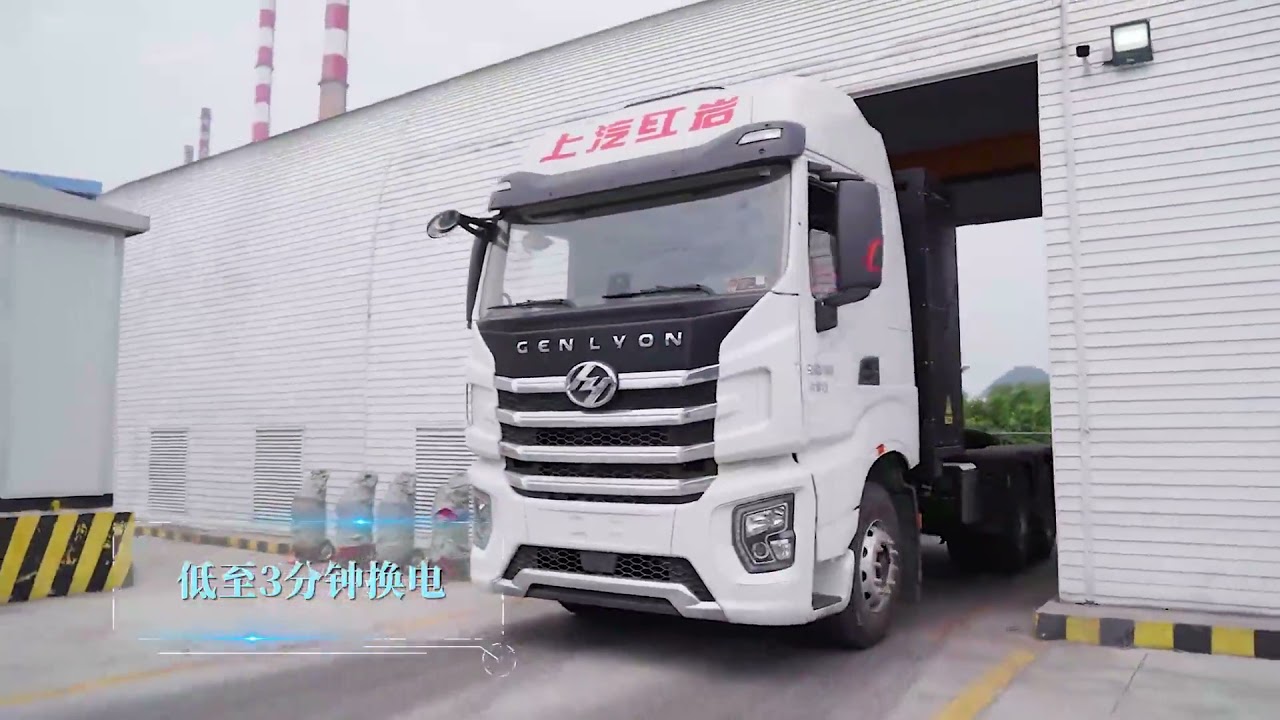
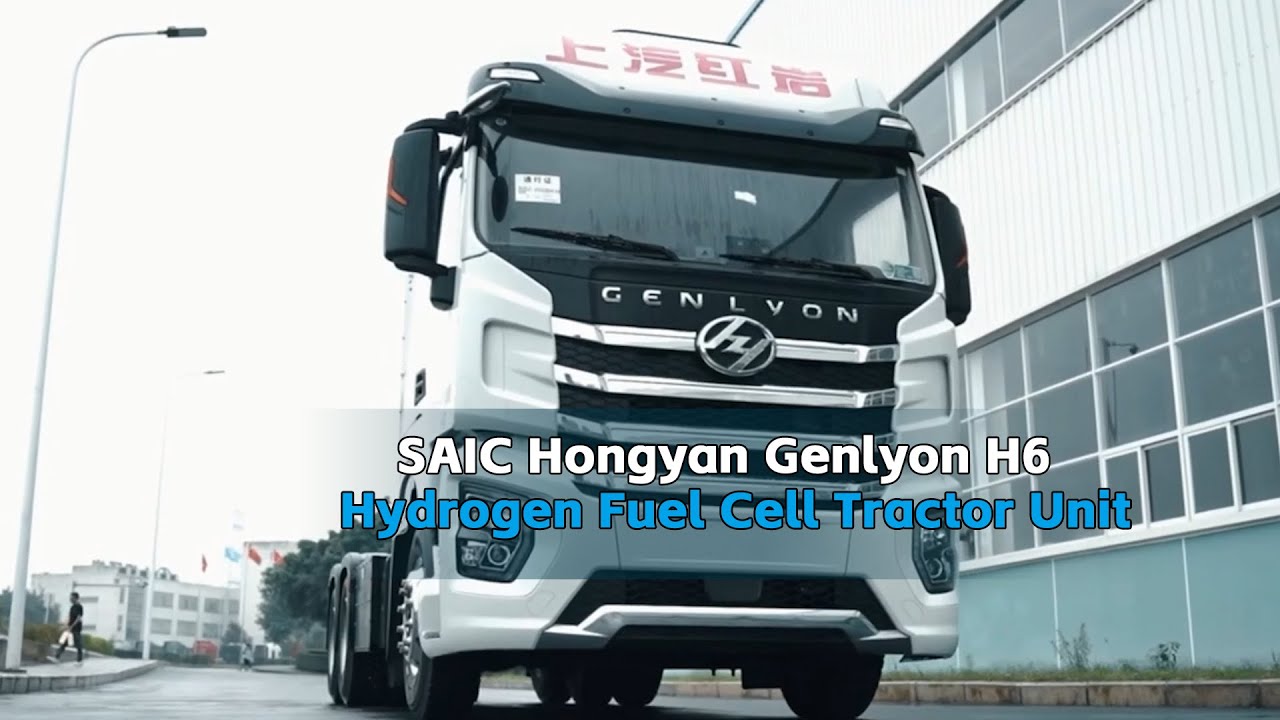
SAIC Hongyan enters the European electric-heavy-truck conversation from an unusual angle: not as a volume player, not as a price disruptor, but as a certification pioneer whose product logic is inseparable from an infrastructure bet. The company, a subsidiary of China’s state-owned SAIC Motor Corporation, has been manufacturing commercial vehicles under the Hongyan brand for decades, primarily serving the domestic Chinese market with a focus on heavy-duty tractors and construction trucks. Its European ambitions, however, are defined by a single model — the H6 battery-swap tractor — and by a single milestone: in May 2024, the H6 became the first Chinese battery-electric tractor to pass EU Whole Vehicle Type Approval (WVTA) testing. That achievement, confirmed by Chinese trade press at the time and tracked by WattTonne’s homologation desk, placed Hongyan ahead of every other Chinese manufacturer in the race to legally sell battery-electric trucks in the European Union. It was a genuine first, and it remains a significant one.
Yet the brand’s positioning in Europe today is best described as a paradox. Hongyan holds the oldest and most valuable piece of paper in the Chinese electric truck entry wave — a WVTA pass that predates the current wave of homologation claims by nearly two years — but it has converted that certification lead into almost no observable market presence. As of this profile’s compilation in August 2026, Hongyan has not published European delivery figures, has not named a single European fleet customer, and has not established a service network that can be independently verified. The reason is structural rather than accidental: the H6 is a battery-swap tractor, designed around a smaller pack in the approximately 282–350 kWh class that is exchanged in three to five minutes at dedicated swap stations. In China, this model works because swap corridors serving ports and industrial fleets operate thousands of such trucks daily. In Europe, the swap network in 2026 consists of announcements, not stations. CATL’s Qiji brand targets 900 stations in China by end-2026, but its European arm — Swaptopus, a joint venture with Octopus Energy — plans first UK super-hubs only from 2027. A swap truck without swap stations is, as WattTonne’s review desk put it, a truck without fuel.
This means Hongyan’s European positioning is not really about the truck at all. It is about timing, infrastructure coordination, and the willingness of fleets to commit to a technology pathway that depends on third-party network build-out. The brand’s value proposition is conditional: if your operation fits the swap profile — fixed corridor, double shift, 150,000+ km per year — and if the Swaptopus network materialises on schedule, the H6 is the ready-now vehicle for those corridors. If the network slips, the certification lead expires into trivia. WattTonne’s assessment is that Hongyan is a bet on infrastructure timing wearing a tractor’s clothes. The brand’s real launch calendar is not its own production schedule; it is the commissioning dates of Swaptopus stations in the UK and continental Europe. Until those dates are met, Hongyan remains a certification story, not a delivery story.
2. European delivery record
Let us be direct: SAIC Hongyan has no verifiable European delivery record as of August 2026. The company has not announced any European fleet customer, has not published delivery volumes, and has not provided WattTonne with evidence of trucks operating on European roads. This is not an oversight in our research; it is the honest state of the market. The H6’s WVTA pass in May 2024 was a homologation milestone, not a sales milestone. Certification is necessary, never sufficient — and Hongyan’s two-year silence on the delivery front illustrates that gap more clearly than any other case in the current Chinese entry wave.
What we can confirm, per manufacturer and per Chinese trade press reports from May 2024, is the homologation event itself. The H6 battery-swap tractor passed EU WVTA testing in May 2024, making it the first Chinese battery-electric tractor to achieve this status. The source is Chinese trade press coverage from that month, tracked by WattTonne’s homologation desk and compiled into our archive at relaunch. The event date is real, the source is cited, and the milestone is significant. However, we must be precise about what WVTA testing means. Passing WVTA testing is not the same as being granted WVTA certification, and being granted certification is not the same as being registered for sale in individual EU member states. The H6’s status is best described as “passed WVTA testing 2024 (first Chinese BEV tractor) · limited EU deliveries” — with the emphasis on limited. In fact, our research has found no evidence of any EU deliveries at all, and we state that honestly.
For context, the delivery record of other Chinese manufacturers provides a useful comparison. SANY’s e263 is approved and delivering, with named fleets and observable registrations. Shacman’s X6000 has cleared WVTA and is moving toward sales. XCMG has indicated a 2027 Q3 timeline for its own homologation. Hongyan, by contrast, has been quiet. The company has not issued press releases about European sales, has not appeared at major European transport trade shows with delivery announcements, and has not responded to WattTonne’s inquiries with customer references. The only named entity in Hongyan’s European ecosystem is Swaptopus, the CATL-Octopus joint venture, and even that is a planned infrastructure partner rather than a fleet customer. The H6’s story is the most instructive certification case in the market precisely because it shows what the gap between “passed WVTA testing” and “granted and registered” can mean in years. For Hongyan, that gap has now lasted more than two years.
We note that the absence of a delivery record is not necessarily a disqualifying factor for a brand at this stage of the European electric truck transition. Many established manufacturers have also struggled to convert homologation into volume. But for Hongyan, the absence is compounded by the swap-dependent product architecture. A conventional battery-electric truck can be sold to any fleet with access to public charging or depot charging. A swap tractor can only be sold to fleets operating on routes where swap stations exist. Since no European swap stations exist as of August 2026 — Swaptopus’s first UK super-hubs are planned from 2027 — the H6 has no practical market in Europe today, regardless of its homologation status. This is not a criticism of the truck; it is a description of the ecosystem constraint. We mark all delivery-related facts as “per manufacturer, verify” where any claim exists, and we state plainly that no European delivery record has been established.
3. Model matrix
SAIC Hongyan’s European model lineup is, at present, a single-model story. The H6 battery-swap tractor is the only Hongyan vehicle that has passed WVTA testing, and it is the only model for which we have sufficient specification data to include in our matrix. This is not to say that Hongyan does not produce other trucks — the company has a broad portfolio in China, including conventional diesel tractors, construction vehicles, and other electric models — but none of those have been homologated for the European market, and none are relevant to European fleet buyers at this time. The H6 is the brand’s European flagship, its only European product, and its only path to market. The table below presents the full model matrix for Hongyan’s European offering, based on the specification data available to WattTonne as of August 2026.
| Model | Format | Battery | Range | EU approval | Score |
|---|---|---|---|---|---|
| Hongyan H6 | 4×2 battery-swap tractor | ~282–350 kWh class, swappable | Corridor class | Passed WVTA testing 2024 (first Chinese BEV tractor) · limited EU deliveries | 49/100 (Provisional) |
The H6’s specification data is notable for what it reveals about the vehicle’s design philosophy. The battery pack in the approximately 282–350 kWh class is smaller than the packs found in many long-haul battery-electric tractors from European manufacturers, which are typically larger than the H6’s. This is intentional. The H6 is not designed to maximise range on a single charge; it is designed to minimise downtime through rapid battery exchange. The three-to-five-minute swap time is the vehicle’s core value proposition, and it is a compelling one for high-utilisation operations. A truck that can be “refuelled” in the time it takes to fill a diesel tank, with no charging curve, no battery degradation from fast charging, and no need for a massive onboard pack, is a genuinely different product from a conventional BEV. The trade-off is absolute dependence on the swap network. The H6’s range is described as “corridor class,” which means it is suitable for fixed routes with known distances and predictable swap station locations. This is not a truck for ad-hoc operations or for fleets without a defined corridor strategy.
We note that the H6’s EU approval status is precisely stated as “passed WVTA testing 2024 (first Chinese BEV tractor) · limited EU deliveries.” We have not been able to confirm whether the H6 has been granted full WVTA certification or whether it has been registered in any individual EU member state. The distinction matters. Passing WVTA testing is a significant technical achievement, but the formal grant of type approval is a separate administrative step, and member-state registration is yet another. For the purposes of this matrix, we treat the H6’s approval status as “passed testing, certification status per manufacturer, verify.” The score of 49/100 is provisional, reflecting the incompleteness of our data on several dimensions, as detailed in the scorecard section below. We encourage fleet buyers to treat this score as an indicator of the current state of evidence, not as a final judgment on the vehicle’s merits.
4. Service network
SAIC Hongyan’s service network in Europe is, to be blunt, not yet established. We have been unable to find any evidence of Hongyan-branded service centres, authorised repair partners, or parts distribution points in any European country as of August 2026. The company has not published a European service partner map, has not announced dealership agreements, and has not responded to WattTonne’s inquiries with service network details. The model specification data we hold states “thin EU footprint — verify per country,” and our verification efforts have not produced a single confirmed service location. This is a critical gap. For any fleet considering the H6, the absence of a service network is not a minor inconvenience; it is a fundamental operational risk. A truck that cannot be serviced is a truck that cannot be operated, and a brand that cannot service its vehicles is a brand that cannot support its customers.
The service network gap is compounded by the H6’s swap-dependent architecture. Even if Hongyan were to establish conventional service centres tomorrow, the H6’s operational viability depends on the Swaptopus station network, which is itself not yet built. This creates a double dependency: the truck needs both Hongyan service support and CATL/Octopus swap infrastructure. Neither exists in Europe today. We note that Hongyan’s Chinese operations include a substantial service and parts network, and we have no reason to doubt the company’s ability to build a European network if it chooses to do so. But as of August 2026, no such network exists, and we state that honestly. Fleets should not assume that Hongyan’s Chinese service capabilities translate to European availability. The company’s European service footprint is, per our research, effectively zero. We mark this as “not yet established in Europe” and recommend that any fleet considering the H6 demand a detailed service plan, including parts availability, technician training, and response times, before signing any agreement.
5. Price transparency
SAIC Hongyan has not published a European list price for the H6. We state this plainly because it is the single most important commercial fact about the brand’s European offering. The model specification data we hold lists the H6’s price as “NOT published,” and our research has not uncovered any dealer quotes, indicative pricing, or leasing rates from Hongyan or its partners. This is not unusual for a manufacturer at the pre-delivery stage, but it is a significant barrier to fleet evaluation. Without a price, fleets cannot calculate total cost of ownership, cannot compare the H6 against competing vehicles, and cannot make a rational procurement decision. The absence of pricing is also a signal of the brand’s market readiness: a manufacturer that is serious about selling in Europe typically publishes pricing when it has vehicles available for order. Hongyan has not done so.
The lack of price transparency is particularly problematic for the H6 because the vehicle’s total cost of ownership is not simply a function of the purchase price. The swap model introduces a recurring service cost — the per-kilometre fee charged by the swap station operator — that must be factored into any economic analysis. As of August 2026, Swaptopus has not published its per-kilometre service pricing, and neither has Hongyan. This means that even if the H6’s purchase price were known, the total cost of operation would remain opaque. WattTonne’s swap-economics research has identified five questions that fleets must ask before committing to a swap-based operation: who builds and owns the stations on your route, at what per-kilometre service price, with what battery-degradation guarantee, and what happens to your trucks if the network stalls. For Hongyan, none of these questions can be answered with public data. We recommend that fleets treat the H6’s price as unknown, the swap service price as unknown, and the total cost of ownership as unquantifiable until such time as Hongyan or Swaptopus publishes concrete figures.
6. Warranty terms and track record
SAIC Hongyan’s warranty terms for the European market are, per our data, “verify per market.” We have not been able to obtain a European warranty statement from the company, and we have not found any published warranty terms for the H6 in any EU member state. This is a significant gap. Warranty coverage is a critical component of any commercial vehicle purchase, and it is especially important for a new entrant with no European track record. Fleets need to know what is covered, for how long, and under what conditions. They also need to know who honours the warranty — Hongyan itself, an importer, or a service partner — and how claims are processed. As of August 2026, none of this information is publicly available. We mark the H6’s warranty terms as “verify per market” and recommend that any fleet considering the vehicle demand a written warranty statement before proceeding.
The H6’s track record is similarly thin. We have no verifiable data on the vehicle’s reliability, durability, or real-world performance in European conditions. The model specification data we hold lists the H6’s track record as “limited EU evidence,” and our research has not uncovered any independent testing, fleet trials, or operational data from European operators. We note that the H6 has been operating in China, where swap corridors serving ports and industrial fleets run thousands of such trucks, and we have no reason to doubt the vehicle’s basic competence in that environment. But Chinese operating conditions — including duty cycles, road conditions, and regulatory requirements — are not identical to European ones. The H6’s European track record is, as of August 2026, effectively non-existent. The table below summarises what we know and what we do not know about the H6’s warranty and track record.
| Dimension | Status | Evidence |
|---|---|---|
| Warranty terms | Not published | Verify per market; no European warranty statement available |
| Track record | Limited EU evidence | No independent testing, fleet trials, or operational data from European operators |
| Chinese operating history | Established | Swap corridors serving ports and industrial fleets operate thousands of such trucks in China |
We note that the absence of a European track record is not necessarily a disqualifying factor. Every manufacturer starts with zero European miles, and the H6’s Chinese operating history provides some evidence of basic reliability. But fleets should be aware that the H6 has not been proven in European conditions, and the warranty terms that would protect them in the event of failures are not publicly available. This combination — unknown warranty, unproven track record — is a material risk that must be weighed against the vehicle’s certification milestone and its potential operational advantages.
7. Risks (written honestly)
SAIC Hongyan’s European proposition carries risks that are both specific to the brand and inherent to the swap-based business model. We list the most significant risks below, based on the evidence available to WattTonne as of August 2026. These risks are not hypothetical; they are grounded in the current state of the market and the company’s observable behaviour.
- Infrastructure dependency risk: The H6 is a battery-swap tractor that cannot operate without swap stations. As of August 2026, Europe has no operational swap stations. Swaptopus plans first UK super-hubs from 2027, but these are announcements, not completed infrastructure. If the network build-out is delayed, cancelled, or scaled back, the H6 becomes a very expensive piece of static equipment. Fleets that commit to the H6 are effectively betting their operations on a third party’s construction schedule.
- Service network absence: Hongyan has not established a European service network. There are no confirmed service centres, parts distribution points, or authorised repair partners in any EU member state. A truck that cannot be serviced is a truck that cannot be operated. Even if the swap network materialises, the H6’s mechanical and electrical systems will require maintenance, and Hongyan has not demonstrated that it can provide it in Europe.
- Price opacity: The H6 has no published European list price, and Swaptopus has not published per-kilometre swap service pricing. Without these figures, total cost of ownership cannot be calculated. Fleets cannot make rational procurement decisions without knowing the full cost of operation, and the absence of pricing suggests that the commercial model is not yet finalised.
- Warranty uncertainty: Hongyan’s European warranty terms are not published. Fleets do not know what is covered, for how long, or who honours the warranty. This is a significant risk for a new entrant with no European track record. If the warranty is inadequate or unenforceable, fleets bear the full cost of any failures.
- Certification gap risk: The H6 passed WVTA testing in May 2024, but passing testing is not the same as being granted certification, and certification is not the same as being registered for sale. The gap between “passed WVTA testing” and “granted and registered” has now lasted more than two years for Hongyan. There is no guarantee that the certification will be completed, or that it will remain valid if the vehicle is not brought to market promptly.
- Network stall risk: The most consequential risk is that the swap network stalls after a fleet has committed to the H6. WattTonne’s swap-economics research asks what happens to trucks if the network stalls. For Hongyan, the answer is unclear. If Swaptopus fails to build stations on schedule, or if stations are built but then closed due to low utilisation, fleets are left with vehicles that cannot be refuelled. There is no fallback charging option for a swap-only tractor.
These risks are not presented to discourage consideration of the H6. They are presented because WattTonne’s editorial mandate is evidence-first and honest. The H6’s certification milestone is real, and its swap-based value proposition is genuinely differentiated. But the risks are substantial, and they are not mitigated by any observable action from Hongyan or its partners. Fleets should weigh these risks carefully and demand concrete answers from Hongyan and Swaptopus before making any commitment.
Media & video

8. Scorecard
The WattTonne scorecard v1.0 assesses manufacturers and models across seven dimensions: performance, total cost of ownership (TCO), price transparency, compliance, warranty, service network, and track record. Each dimension is scored out of a maximum, and the total is expressed as a score out of 100. The methodology is designed to be transparent and reproducible, with scores based on verifiable evidence rather than marketing claims. Where evidence is incomplete, the score is marked as provisional, and the completeness percentage is noted. For SAIC Hongyan’s H6, the scorecard reflects a brand that has achieved a genuine certification milestone but has not converted it into market presence.
The H6’s total score is 49/100, with a verdict of “Formal” — meaning the assessment is based on the evidence available, but the score is provisional because the completeness of data is below 60 percent. The dimension scores are as follows: performance (perf) scores 2 out of a possible maximum, reflecting the lack of independent performance data in European conditions; TCO (tco) is marked as n/a because no pricing data is available to calculate total cost of ownership; price transparency (price) scores 1, reflecting the absence of any published European list price; compliance (comp) scores 4, reflecting the significant WVTA testing milestone from May 2024; warranty (warr) is marked as n/a because no European warranty terms are published; service network (serv) scores 2, reflecting the absence of a verifiable European service footprint; and track record (track) scores 3, reflecting the limited European delivery and operational evidence. The table below presents these scores in full.
| Dimension | Score | Notes |
|---|---|---|
| Performance | 2/5 | No independent performance data in European conditions; Chinese operating history exists but is not directly transferable |
| TCO | n/a | No pricing data; swap service pricing not published; total cost of ownership cannot be calculated |
| Price transparency | 1/5 | No European list price published; no dealer quotes or indicative pricing available |
| Compliance | 4/5 | Passed WVTA testing May 2024, first Chinese BEV tractor; certification status per manufacturer, verify |
| Warranty | n/a | No European warranty terms published; verify per market |
| Service network | 2/5 | No verifiable European service centres, parts distribution, or authorised repair partners |
| Track record | 3/5 | Limited EU delivery evidence; no named European fleet customers; Chinese swap corridor operations established |
| Total | 49/100 | Provisional — completeness below 60 percent |
We emphasise that the 49/100 score is provisional. The completeness of our data is below 60 percent because several dimensions — TCO, warranty, and price transparency — cannot be scored due to missing information. This is not a judgment on the H6’s potential; it is a reflection of the current state of evidence. If Hongyan publishes pricing, warranty terms, and service network details, and if the H6 begins to accumulate European operating data, the score could change substantially. We will update this scorecard as new evidence becomes available, and we encourage manufacturers and fleets to contact us at hello@wattonne.com with corrections or additional data.
Bottom line
SAIC Hongyan’s H6 is a genuinely significant vehicle — the first Chinese battery-electric tractor to pass WVTA testing, a certification milestone that opened the current era of Chinese entries into Europe — but it is also a vehicle whose European future depends entirely on infrastructure that does not yet exist. The H6’s swap-based architecture is a differentiated and potentially compelling value proposition for high-utilisation, fixed-corridor operations, but it is a proposition that cannot be realised without a network of swap stations, and Europe’s swap network in 2026 consists of announcements, not stations. The brand’s scorecard reflects this reality: strong on compliance, weak on price transparency, service network, and verifiable track record, and unscoreable on TCO and warranty due to missing data. The verdict is Formal — the assessment is based on the evidence available — but the score is Provisional, pending the publication of pricing, warranty, and service details. Our read is that Hongyan is a bet on infrastructure timing wearing a tractor’s clothes. Fleets that fit the swap profile — fixed corridor, double shift, 150,000+ km per year — should watch Swaptopus commissioning dates, because they are Hongyan’s real launch calendar. If the network materialises on schedule from 2027, the H6 becomes the ready-now vehicle for those corridors. If it slips, the certification lead expires into trivia. The questions to ask are not about the truck; they are about the ecosystem: who builds and owns the stations on your route, at what per-kilometre service price, with what battery-degradation guarantee, and what happens to your trucks if the network stalls. Until those questions are answered with concrete, verifiable data, the H6 remains a promising certification case study rather than a viable European purchase.
WattTonne coverage
Scores v1.0, evidence dated 2026-08-08. Logo and product imagery used with the manufacturer’s marketing approval. Evidence submissions: hello@wattonne.com, subject “Scorecard evidence”.