


Eleven ministries set the 2030 frame: 40% NE heavy-truck penetration, 1.6 million on the road, swap stations as standard road infrastructure
Eleven ministries set the 2030 frame: 40% NE heavy-truck penetration, 1.6 million on the road, swap stations as standard road infrastructure
June 2026: China’s Ministry of Transport, NDRC and nine other departments jointly issued the Implementation Plan for large-scale NE heavy-truck application — codifying targets, battery traceability for swap stations, and vehicle-battery separation business models.
2026-06-13 · WattTonne news desk · archive edition (compiled at relaunch, event date as shown)
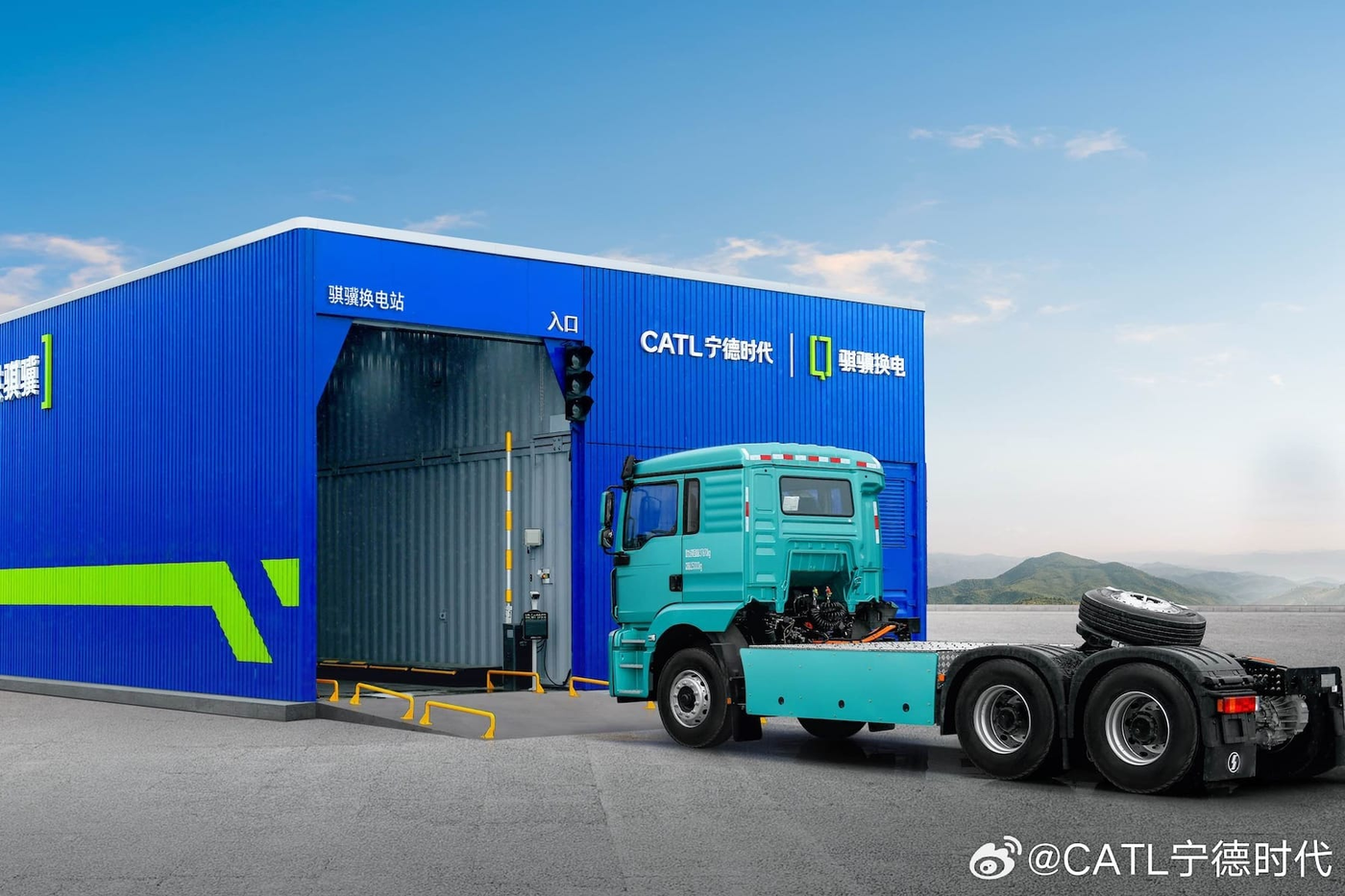
On 13 June 2026, eleven Chinese ministries led by the Ministry of Transport and the National Development and Reform Commission jointly issued the ‘Implementation Plan for Promoting the Large-scale Application of New Energy Heavy Trucks’. The headline targets: 40% new-energy penetration of heavy-truck sales by 2030, and a 1.6-million-vehicle new-energy heavy-truck parc (roughly 20% of the fleet) by the same date.
The plan’s operational content matters more than its targets. It explicitly encourages vehicle-battery separation and battery-leasing business models — state endorsement of the swap/BaaS architecture; requires full-lifecycle battery traceability systems inside swap stations (a safety-regulation layer the industry had been asking how to build); and commits to making charging and swapping stations standard components of road infrastructure — the phrase that turns energy retail into public works. Application scenarios are to expand across logistics, mining and ports.
For Europe, the document is the policy receipt for everything our China coverage tracks: when eleven ministries write swap into road-infrastructure law, the build rates CATL posts (305 Qiji truck stations in 2025) stop being corporate ambition and become programme delivery. The European contrast is instructive: the EU’s CO₂ framework targets manufacturers’ sales mix, while China’s plan names vehicles, batteries, stations and business models in one integrated industrial policy. Two different theories of transition — both now in writing.
- CnEVPost (2026-06-13) on the 11-ministry plan
- Baidu Baike plan tracker
- State media summaries
Archive news entry: real event, original date and source cited; compiled into the WattTonne archive at relaunch. Corrections: hello@wattonne.com.